Gyeongju Cultural Heritage Research Institute Publishes 'Report on Gyeongju Wooden Coffin Tomb Ma-ju and Ma-gap'
Detailed Description of 28t Ma-gap Relic Relocation Process... Expected Public Release as Early as June
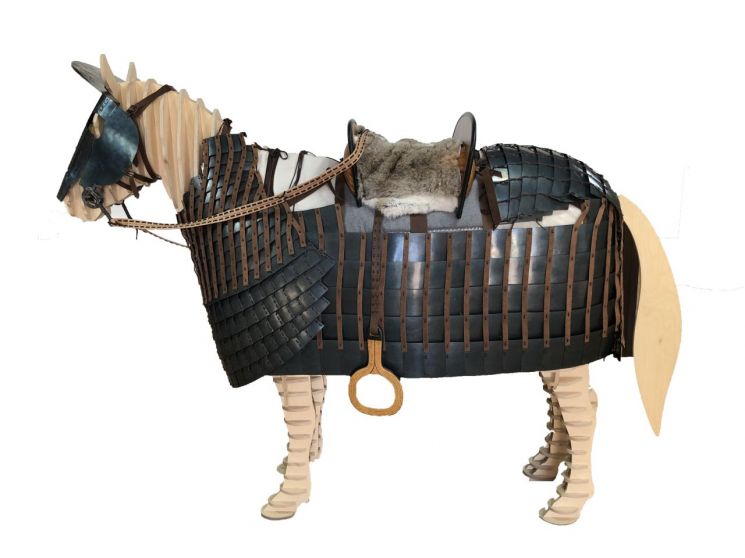
[Asia Economy Reporter Lee Jong-gil] In 2009, horse armor was excavated from the C10 wooden coffin tomb (木槨墓, a type of coffin tomb) in the Jjoksaem district of Gyeongju, Gyeongbuk. It was an artifact that offered a glimpse into Silla’s equestrian culture. The horse armor, known as magap (馬甲), which the horse wore, was laid on the wooden coffin floor, and on top of it was a scale armor called chalgap (札甲), presumed to have been worn by the mounted general. The magap, consisting of as many as 740 plates, measured approximately 290 cm in length and 90 cm in width. To prevent damage from moisture and ultraviolet rays, it was moved to a laboratory and underwent preservation treatment for about 10 years. It was only made public to the media in October of last year.
The Gyeongju Cultural Heritage Research Institute recently compiled the research results on the magap, which had been resting in the tomb for over 1,500 years before seeing the light of day, and published the report titled “Gyeongju Jjoksaem District Silla Tomb Site X - Investigation and Research Report on the Horse and Horse Armor Excavated from Wooden Coffin Tomb C10.” According to the report, the magap was neatly laid from west to east covering the neck, chest, torso (130 cm x 100 cm), and hip areas. Various horse gear, including a horse face mask called maju (馬胄), saddle, bit, and stirrups, were excavated from the auxiliary enclosure (副郭).
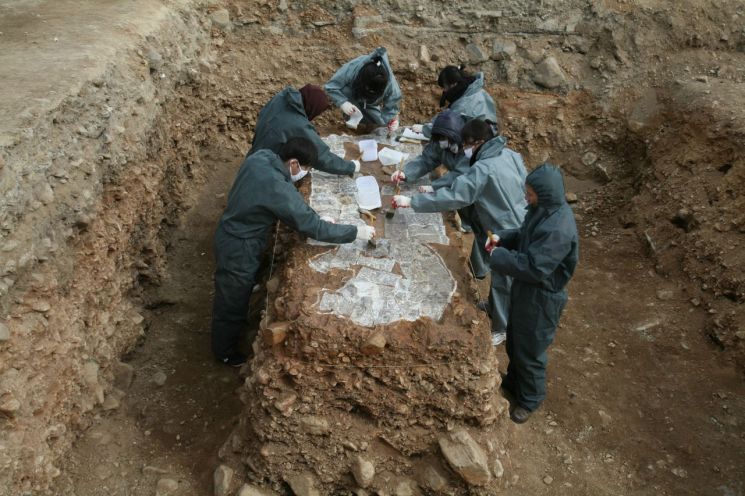
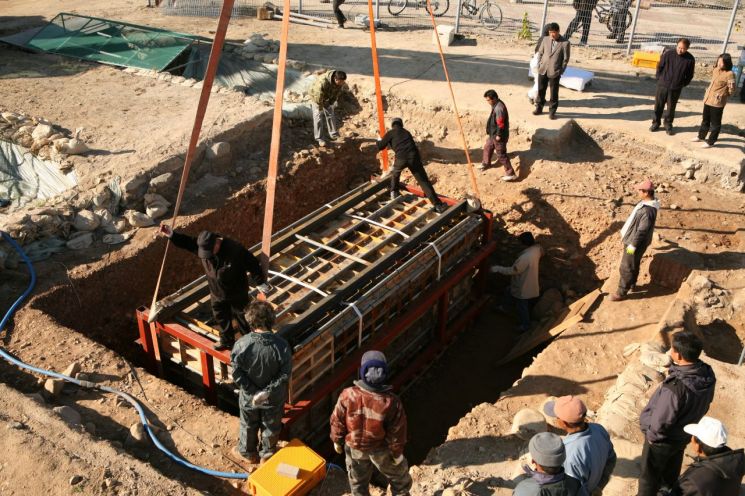
The institute constructed a temporary building to preserve the magap relic, which weighed up to 28 tons. They installed cooling and dehumidifying facilities to minimize temperature differences with the outside and remove moisture. There had been no precedent in Korea for recovering such a massive magap relic. Moreover, the soil layer of the C10 wooden coffin tomb contained almost no clay soil and included river stones ranging from 10 to 30 cm in size, making it challenging to bear the weight and maintain balance during transport. The institute conducted simulation experiments. To reinforce the surface of the artifact, cellulose-based and acrylic substances were applied, and reinforcement was done using materials that dissolve easily into the relic. The concentration of the reinforcing agent varied from 5% to 20%, and traditional Korean paper (hanji) was attached. Plaster bandages were wrapped on top, and about 20 cm of foam polyurethane was applied. Then, to practice lifting the relic, soil was excavated 40 cm wide, and vinyl was inserted before foaming the polyurethane.
After completing the preparations, the institute first removed armor pieces that were loose or separating and performed surface reinforcement. Additionally, they excavated around the relic to a depth of 1.5 meters, deeper than the practice excavation. During the first crane operation, the relic weighed 28 tons. The relic was flipped, and the polyurethane and soil were removed to pass through the preservation treatment room door. In the second crane operation, the weight was reduced to 18 tons, allowing the magap and soil to be separated relatively easily.
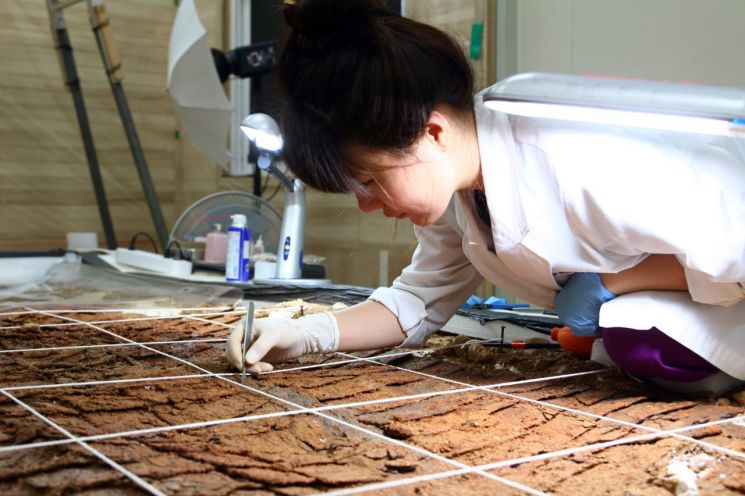
During the preservation process, the institute confirmed that the fabric was made of pyeonggyeon (平絹, plain-woven silk) and hemp. They also identified that the wood traces remaining on the magap were from pine trees. The report stated, “Among wooden coffins from the Silla period with analyzed tree species, only the chestnut wood from Cheonmachong and the zelkova wood from Hwangnamdaechong have been identified. Further research is needed to understand how pine was used.” Regarding the breed of the horse that owned the magap, the report referenced the analysis of horse bones excavated from Wolseong (Moon Castle) in Gyeongju, the royal fortress of Silla. Based on the 5th-century horse bones from Wolseong, the horses at that time were estimated to be 120 to 136 cm tall. The report noted, “This size is similar to or slightly larger than that of modern ponies, and such horses were likely considered superior breeds at the time.”
The report also includes various drawings, photographs, and X-ray imaging results. It contains analyses on the methods of connecting and wearing the magap for restoration purposes. Based on these achievements, the institute produced replicas and even outfitted them on Jeju Hanrama horses. As early as June, they plan to exhibit the magap, replicas, chalgap, and weaponry, and in the future, they intend to publish a report on the chalgap.
© The Asia Business Daily(www.asiae.co.kr). All rights reserved.














