Mixed Mortgage Loan Interest Rates Slightly Rise
Impact of Increased Financial Bond Rates Used as Interest Rate Benchmark
[Asia Economy Reporter Kim Min-young] It has been revealed that the mixed-type mortgage loan interest rates of major banks have increased. Although deposit interest rates fell following the Bank of Korea's base rate cut, the long-term financial bond yields, which affect mixed-type mortgage loan interest rates, have risen.
According to the financial sector on the 31st, the 5-year fixed (mixed-type) mortgage loan interest rates of the four major banks?Shinhan, KB Kookmin, Woori, and Hana Bank?rose by 0.13 to 0.16 percentage points compared to the previous week.
By bank, Shinhan Bank's mixed-type mortgage loan interest rate was adjusted upward by 0.16 percentage points to an annual rate of 2.72?3.73%. Hana Bank (2.63?3.93%) and Woori Bank (2.59?3.59%) also increased by 0.13 and 0.16 percentage points, respectively. Kookmin Bank's corresponding loan interest rate was 2.44?3.94%. As of the end of last year, the proportion of fixed-rate loans including mixed-type loans in the banking sector was 48.0%.
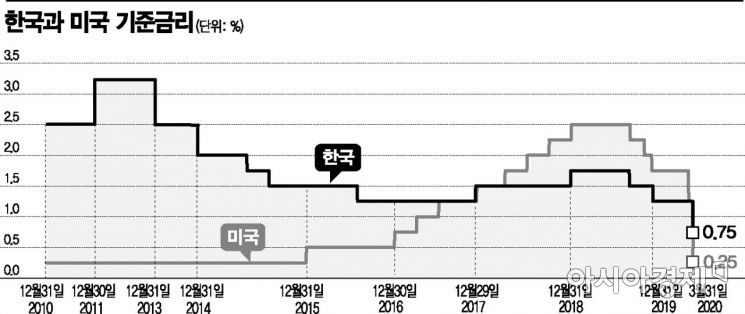
Although the Bank of Korea implemented a big cut (0.5 percentage point reduction) on the 16th, lowering the base rate to 0.75%, this was not reflected at all in commercial bank loan interest rates.
There is an underlying reason. Bank loan interest rates are based on financial bonds, which are announced daily, and COFIX (Cost of Funds Index), which changes monthly. On top of this, additional interest rates are applied according to the customer's credit rating. Mortgage loans are divided into fixed-type (mixed-type) products, which have a fixed rate for the first five years before switching to a variable rate, and variable-type loans, where the interest rate changes every six months after subscription.
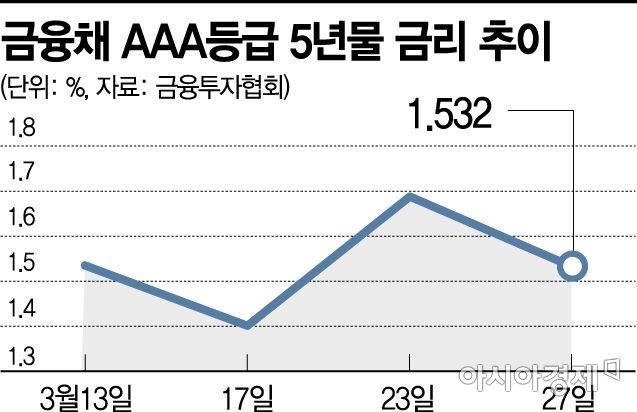
The increase in mixed-type mortgage loan interest rates is due to the recent rise in the 5-year AAA-rated financial bond yields, which serve as the benchmark. The financial bond yield was 1.535% on the 13th, the trading day before the Bank of Korea's base rate cut, but rose to 1.688% on the 23rd. Typically, when the base rate falls, bond yields also decline. However, due to recent concerns about the economic crisis, many have rushed to secure cash, causing a sharp drop in demand for long-term bonds and resulting in the opposite phenomenon of rising bond yields.
On the other hand, variable-rate mortgage loan interest rates fell to an average of 2.55% in the banking sector, influenced by the decline in COFIX, which serves as the benchmark for variable rates.
Unlike loan interest rates, banks have quickly lowered deposit interest rates, leading to consumer dissatisfaction. Deposit and savings interest rates have dropped to the 0% range following the base rate cut. According to the Bankers Association on this day, the 12-month fixed deposit interest rate (simple interest) at the five major banks, including NH Nonghyup Bank, is only 0.98% per annum. If ultra-low interest rates persist for a long time, banks are expected to further reduce various deposit interest rates.
A financial sector official predicted, "Since mixed-type mortgage loans are greatly influenced by financial bond yields, there is room for interest rates to decrease once the bond market stabilizes."
© The Asia Business Daily(www.asiae.co.kr). All rights reserved.













