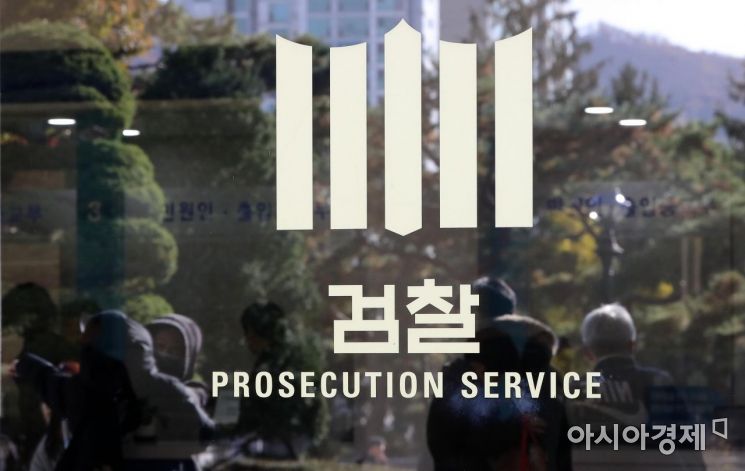
[Asia Economy Reporter Song Seung-yoon] The Ministry of Justice has presented a revised proposal for the prosecution organization reform plan that significantly reduces the prosecution's direct investigation departments. This is interpreted as a step back in response to strong opposition from within the prosecution following the announcement of the original reform plan.
According to the legal community on the 18th, the Ministry of Justice announced that it has prepared a revised reform plan allowing 2 out of the 13 direct investigation departments, which were to be converted into criminal and trial divisions, to retain their dedicated investigative functions.
Accordingly, the Anti-Corruption Investigation Division 3 of the Seoul Central District Prosecutors' Office, which was originally slated for abolition, will be renamed the Public Official Crime Criminal Division, and the Food and Drug Investigation Division of the Seoul Western District Prosecutors' Office will be renamed the Food and Drug Criminal Division, both maintaining their existing case responsibilities.
The Tax Crime Investigation Division of the Seoul Central District Prosecutors' Office, which is to be abolished, will be converted into a criminal division as originally planned. The prosecution office focusing on tax crime cases will be relocated to the Seoul Northern District Prosecutors' Office, and one criminal division will be renamed the Tax Crime Criminal Division.
The Ministry of Justice explained, "We partially reflected the Supreme Prosecutors' Office's opinion that maintaining dedicated departments is necessary for efficient response in specialized fields," adding, "The revision is a partial modification and does not mean reviving the direct investigation departments."
Earlier on the 13th, the Ministry of Justice publicly disclosed a reform plan that drastically reduces the prosecution's direct investigation departments. The plan includes abolishing 13 direct investigation divisions, with 10 of them to be operated as criminal divisions and 3 as trial divisions.
If the prosecution organization reform is implemented, early personnel changes for mid-level executives such as deputy chiefs and chief prosecutors will also become possible. Inside and outside the prosecution, it is expected that personnel changes will take place immediately after the reform plan is approved at the Cabinet meeting on the 21st.
© The Asia Business Daily(www.asiae.co.kr). All rights reserved.













