International Oil Prices Stabilize; Processed Foods Up 2.8%
Sharp Price Increases for Lettuce, Cucumber, and Other Seasonal Vegetables
Lee Hyungil: "Holiday Livelihood Stabilization Measures to Proceed Smoothly"
The consumer price inflation rate in January stood at 2.0%, marking a 0.3 percentage point slowdown compared to December 2025 (2.3%). The decline in international oil prices and the stabilization of agricultural product prices contributed to the overall decrease in inflation. However, food prices, particularly for processed foods and certain livestock and seafood products, continue to be cited as a burden for households. This is due to the structural difficulty in reducing prices for processed foods and key seasonal products, where cost pressures have accumulated.
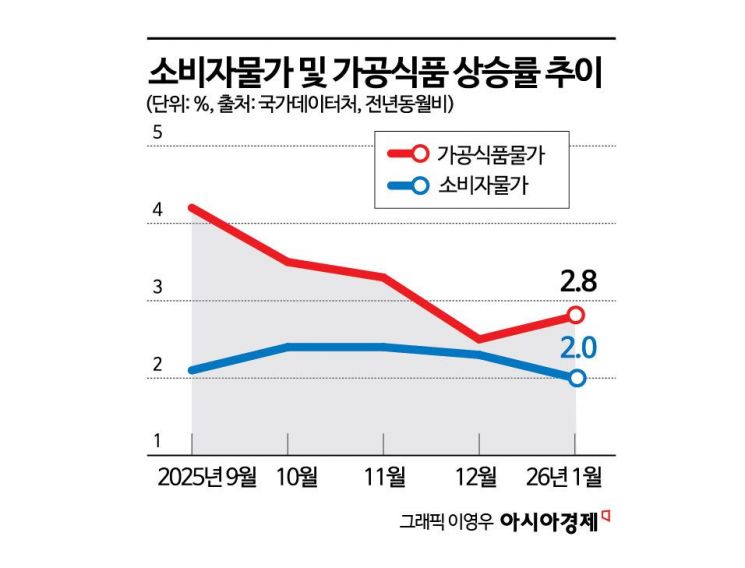
According to the National Data Office on February 3, the consumer price inflation rate in January rose by 2.0% year-on-year, marking the smallest increase in five months. After recording 2.1% in September 2025 and 2.4% in both October and November, the inflation rate eased to 2.3% in December and continued to slow for a second consecutive month in January.
The primary factor behind this month’s inflation slowdown was the sharp decline in petroleum prices. In December 2025, petroleum prices had increased by 6.1% year-on-year, but in January 2026, the growth rate dropped to 0.0%. This was due to the average international oil price falling from $80.4 per barrel in January 2025 to $61.7 per barrel in January 2026. While the exchange rate saw little change, moving from 1,455 won to 1,458 won during the same period, the impact of lower oil prices was more significant. Gasoline and diesel prices also fell by more than 2% compared to the previous month, reducing inflationary pressure in the transportation sector. Lee Dowon, Director of Economic Trend Statistics at the National Data Office, analyzed, "The simultaneous slowdown in the price increases of agricultural, livestock, and fishery products, as well as petroleum, was the key factor behind the overall decline in inflation."
Price increases for agricultural, livestock, and fishery products also slowed noticeably. The inflation rate for these products decreased from 4.1% in December 2025 to 2.6% in January 2026, the lowest rate in four months since September 2025 (1.9%). For agricultural products specifically, the rate fell from 2.9% to 0.9%, attributed to increased shipments and imports of certain fruits and vegetables. For example, the price of tangerines dropped from a 15.1% increase in December 2025 to a 5.3% increase last month. Vegetable prices saw a greater decline, with the rate falling from 5.1% to 6.6%, due to expanded cultivation areas and increased production of winter vegetables such as cabbage and radish.
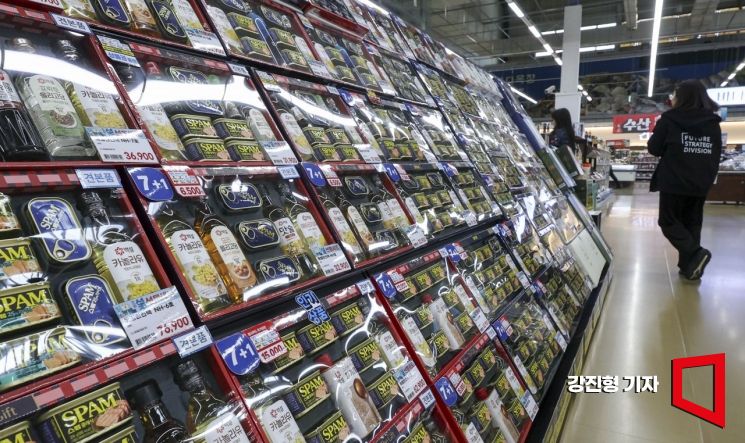 Ahead of the Lunar New Year holiday, gift sets for the holiday are displayed on February 2 at the Nonghyup Hanaro Mart Yangjae branch in Seocho-gu, Seoul. Nonghyup Distribution will officially sell the Lunar New Year gift sets from today until the 16th. 2026.2.2 Photo by Kang Jinhyung
However, not all vegetable prices stabilized compared to the previous month. Prices for lettuce (26.9%), cucumber (21.8%), perilla leaves (27.5%), and zucchini (39.8%) surged sharply in the short term due to a sudden drop in temperature. Director Lee explained, "While prices have fallen year-on-year due to base effects, some items sensitive to weather conditions have seen temporary increases compared to the previous month."
Despite the slowdown in the inflation rate, prices of processed foods and livestock and seafood products continue to be a source of perceived burden for consumers. In January, processed food prices rose by 2.8% year-on-year. Although the rate of increase has slowed from the 4% range to the 2% range due to base effects from significant price hikes over the past two years, certain items such as instant noodles (8.2%), bread (3.3%), and chocolate (16.6%) continue to show strong upward trends.
In particular, chocolate prices have continued to rise over the past four to five years. After increasing by 15.8% in 2023, 9.3% in 2024, and 17.0% in 2025, chocolate prices still posted a rise of over 16% in January 2026. This is attributed to the accumulated impact of rising raw material prices and labor costs, making it difficult for prices to stabilize in the short term. The National Data Office stated, "Processed foods have recorded high growth rates over the past two years due to the cumulative impact of raw material and labor costs. Although the rate of increase has slowed this year, some items still pose a significant burden."
Prices for livestock and seafood products also continued to rise faster than the overall inflation rate. Livestock prices rose by 4.1%, and seafood prices by 5.9%. Domestic beef prices increased by 3.7%, pork by 2.9%, and imported beef by 7.2%. While the rate of increase for pork slowed due to higher shipments and imports, imported beef prices continued to rise due to higher import costs. Egg prices remained high, rising by 6.8% year-on-year due to reduced shipments caused by the spread of highly pathogenic avian influenza.
 Lee Hyungil, Deputy Minister of Finance and Economy, is presiding over an emergency market situation inspection meeting held on the 3rd at the Government Seoul Office in Jongno-gu, Seoul. Ministry of Finance and Economy
Regarding concerns about rising prices of key Lunar New Year products, the government believes that the impact of the holiday has not yet been fully reflected. Director Lee stated, "The high prices of livestock and seafood products are part of a recent structural trend, and it is difficult to attribute them solely to the upcoming Lunar New Year. However, with the holiday in February, increased demand may become a factor, so relevant ministries will implement measures to stabilize prices of key holiday products."
Service prices showed relatively stable trends. In January 2026, service prices rose by 2.3%, and personal service prices increased by 2.8%. However, travel and accommodation-related items saw a slower rate of increase due to base effects from last year's Lunar New Year holiday. Lee Hyungil, First Vice Minister of Finance and Economy, stated, "The consumer price inflation rate in January reached the price stability target of 2.0% due to slower increases in agricultural, livestock, and fishery product prices and the stabilization of petroleum prices. However, the continued strength in some food items remains a burden for ordinary people. We will thoroughly implement measures to stabilize livelihoods during the holiday and make every effort to stabilize prices and supply of agricultural, livestock, and fishery products."
© The Asia Business Daily(www.asiae.co.kr). All rights reserved.














![The Special Connection Between the Statue of Martyr Lee Jun in Jangchungdan Park and Mayor Oh Sehoon ③ [Current Affairs Show]](https://cwcontent.asiae.co.kr/asiaresize/319/2026012110001599450_1768957215.jpg)


