Cuban Spiky, Native to the Caribbean Sea
Rare Isopod Gains Attention as a New Pet Trend
"Could Cause Serious Damage to the Ecosystem"
A fingernail-sized coastal insect is gaining attention as a new type of pet in the United States. It is reportedly common for a single specimen to be sold for over 1 million won.
The New York Times recently reported on the growing craze for the "Cuban Spiky" in the United States. The Cuban Spiky is a small isopod, about the size of a human fingernail, that primarily inhabits coral reefs and coastal areas of the Caribbean. It is characterized by its orange shell and sharp, spike-like scales protruding from its back.
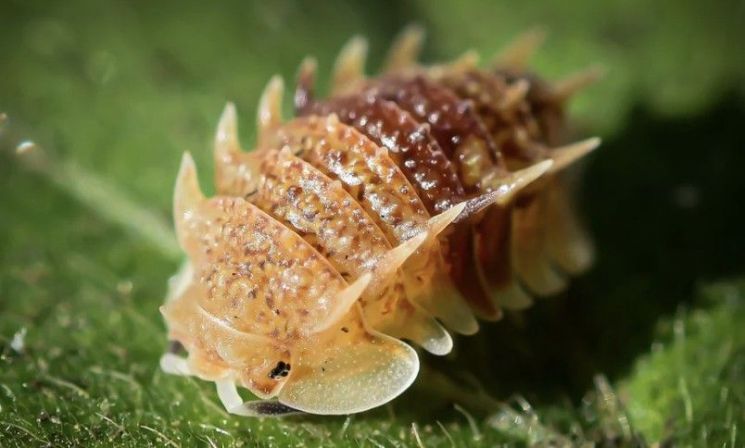
At a pet expo held in White Plains, New York, the Cuban Spiky reportedly enjoyed unrivaled popularity. According to the media outlet, this creature is typically sold to pet enthusiasts for around $350 (approximately 500,000 won). On some pet adoption websites, the price has soared to $850 (about 1.22 million won) per individual.
The problem is that the Cuban Spiky is an extremely rare species. Its habitat is located within a Cuban nature reserve. In October of last year, the international journal Conservation Biology published a warning that the increasing illegal capture of Cuban Spiky could lead to its extinction.
The extinction of the Cuban Spiky would not simply mean the loss of a rare species. Isopods serve as "nature's janitors," feeding on organic matter buried in the soil and helping to purify the land and preserve ecosystems. They also play a crucial role in the food chain, serving as prey for reptiles and other animals.
Currently, there are reportedly few effective measures in place to prevent poaching. Overharvested isopods are sold through online auctions such as eBay and promoted on various social networking services (SNS), but there is no legal basis to block these activities.
Nathan Jones, author of the paper published in Conservation Biology, warned, "Some isopod species currently being sold online have origins that are completely unknown. Even a single act of poaching can cause serious damage to the entire population, and people need to realize that trading such animals can unknowingly threaten the ecosystem."
© The Asia Business Daily(www.asiae.co.kr). All rights reserved.









![The Special Connection Between the Statue of Martyr Lee Jun in Jangchungdan Park and Mayor Oh Sehoon ③ [Current Affairs Show]](https://cwcontent.asiae.co.kr/asiaresize/319/2026012110001599450_1768957215.jpg)
