President Lee Refrains from Comments at Cabinet Meeting
Presidential Office on South Korea-U.S. Security Advisors’ Talks:
"Close Communication on Pending Issues"
Three-Week Extension of the 'Tariff Time Bomb'...
A Diplomatic Test for the Lee Administration
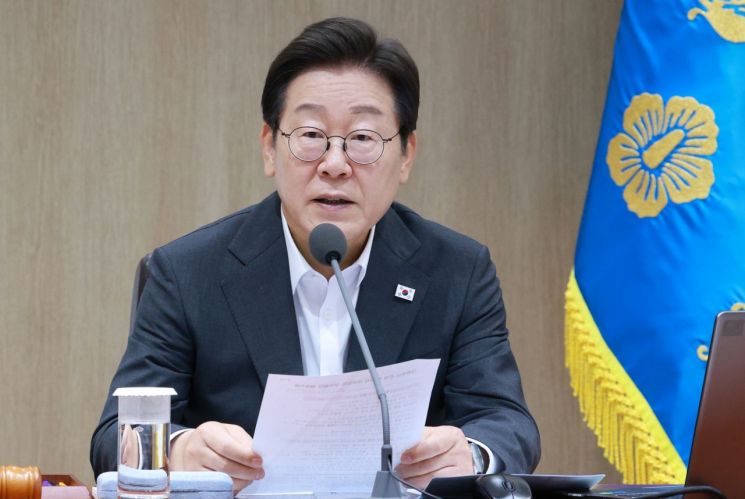
On July 8, during his opening remarks at a Cabinet meeting held at the presidential office in Yongsan, Seoul, President Lee Jaemyung refrained from making comments regarding the South Korea-U.S. tariff negotiations. Earlier that morning, the presidential office explained the outcome of National Security Advisor Wi Sunglak’s visit to the United States, stating, "We have agreed to continue close communication on pending issues between South Korea and the U.S., as well as on the future direction of the South Korea-U.S. alliance."
The presidential office’s prompt statement regarding the outcome of the South Korea-U.S. national security advisors’ meeting is closely related to the significance of the tariff negotiations between the two countries. On July 7 (local time), U.S. President Donald Trump sent what is being referred to as a "tariff letter" to the South Korean government, an issue that could have a considerable impact on South Korea’s industry and economy. President Trump sent this "tariff letter" to 14 countries, including South Korea, announcing his intention to impose reciprocal tariffs on all products exported to the United States from August 1. The reciprocal tariff rate notified to South Korea is 25%.
President Lee’s decision to refrain from commenting on the South Korea-U.S. tariff negotiations during the Cabinet meeting is seen as a strategic move emphasizing caution. In fact, during the meeting, President Lee made remarks regarding the "Ruling and Opposition Parties’ Livelihood Policy Council" and "Defense Industry Day," but did not make any separate comments related to the tariff negotiations. This reflects an intention to respond to the issue with prudence, given that there is still time left for negotiations.
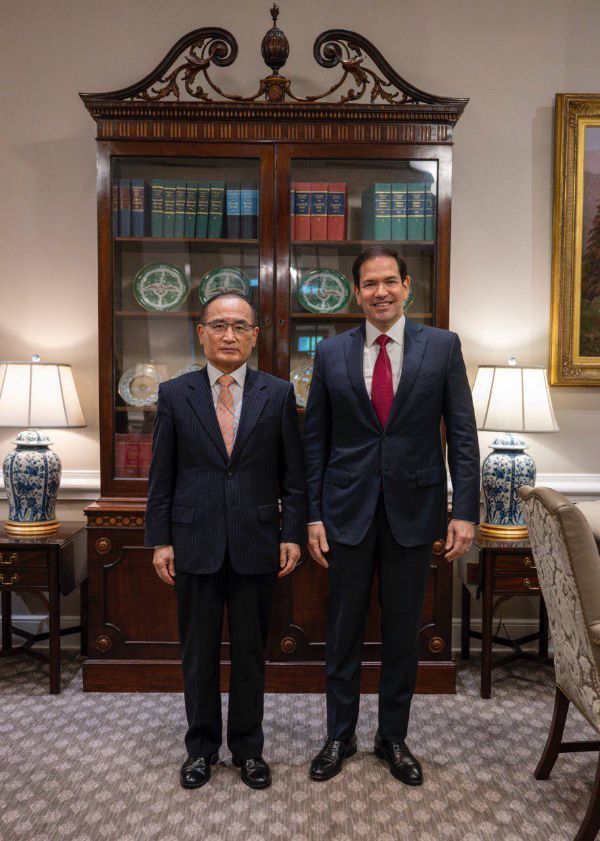
National Security Advisor Wi, who visited the United States to discuss urgent South Korea-U.S. issues with senior officials of the Trump administration, held talks with U.S. Secretary of State and National Security Advisor Marco Rubio in Washington, D.C., on July 7. During the meeting, they emphasized the importance of a mutually beneficial relationship and discussed issues such as reciprocal tariffs and a potential South Korea-U.S. summit.
At the meeting, the South Korean delegation, including Advisor Wi, agreed to hold close consultations aimed at further strengthening the alliance between the two countries in addressing pending issues. In particular, the South Korean side expressed hope that "by holding a South Korea-U.S. summit at the earliest possible date, mutually beneficial outcomes on all issues can be advanced," to which the U.S. side expressed its agreement, according to the presidential office.
With regard to the reciprocal tariff negotiations, both sides agreed to strengthen communication up to the newly extended deadline of August 1, as indicated in President Trump’s "tariff letter" that day. Prior to Advisor Wi’s visit, Trade Minister Yeo Hankoo of the Ministry of Trade, Industry and Energy had met with Jamieson Greer, the U.S. Trade Representative (USTR), to conduct tariff negotiations. The U.S. side stated, "Tariff letters have been sent to major countries, including South Korea," and added, "Since there is still time until the actual imposition of tariffs on August 1, we hope the two countries will communicate closely to reach an agreement before then," according to the presidential office.
Regarding cooperation between South Korea and the U.S. in the shipbuilding sector, both governments agreed that mobilizing capabilities from various sectors, including government and industry, is key to developing practical and mutually beneficial cooperation measures, and decided to coordinate closely in this area.
In response, the presidential office plans to hold an emergency "South Korea-U.S. Trade Issues Interagency Countermeasures Meeting" on the afternoon of July 8 to discuss negotiation strategies over the next three weeks. The meeting will be chaired by Presidential Policy Chief Kim Yongbeom, with Economic Growth Secretary Ha Junkyung, Third Deputy National Security Advisor Oh Hyunju, and Industrial Policy Secretary Yoon Sunghyuk from the presidential office in attendance. Also participating will be Cabinet Office Chief Yoon Changryul, as well as vice ministers from the Ministry of Trade, Industry and Energy, the Ministry of Economy and Finance, and the Ministry of Foreign Affairs.
Meanwhile, on July 8, marking the first "Defense Industry Day," President Lee stated, "During the Korean War, our Republic of Korea did not have a single tank, but in the 75 years since, we have grown into the world’s tenth-largest defense industry power." He added, "I ask that you consider establishing a control tower to foster the defense industry and regularizing meetings on strategies to promote defense and exports, in order to achieve our goal of becoming one of the world’s top four defense industry powers." Referring to the recent 9 trillion won K-2 tank export contract with Poland, President Lee emphasized, "The defense industry is a new growth engine for our economy and a solid foundation for our national defense," and requested "cross-ministerial efforts in nurturing talent and investing in research and development (R&D)."
© The Asia Business Daily(www.asiae.co.kr). All rights reserved.