A platform technology that can detect local changes within liver tissue to predict disease and help set personalized treatment targets has been developed in South Korea.
KAIST announced on June 12 that a joint research team led by Professor Jong Eun Park from the Graduate School of Medical Science and Engineering at KAIST and Dr. Cheon Ah Kim from the Aging Convergence Research Center at the Korea Research Institute of Bioscience and Biotechnology (KRIBB) has developed a technology called "Fibrotic Niche enrichment sequencing" (FiNi-seq), which captures locally occurring fibrotic microenvironments within aging liver tissue and enables precise analysis at the single-cell transcriptome level.
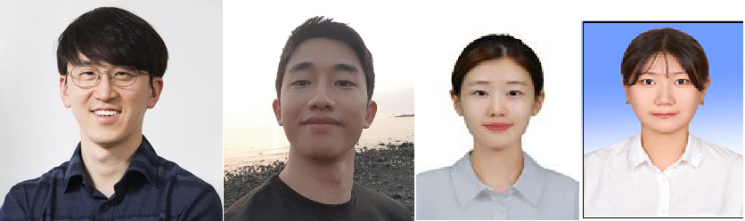 (From left) Professor Jong Eun Park, Dr. Kwon Yong Tak, PhD candidate Myung Sun Park, PhD candidate Ju Yeon Kim. Provided by KAIST
Single-cell transcriptome analysis is a method that measures how actively individual cells are using specific genes, allowing for the identification and characterization of diseased cells on a per-cell basis.
The joint research team developed a technique that selectively enriches the early aging microenvironment, where regeneration is delayed or fibrosis accumulates, by using the physical properties of tissue regions in aging liver that are highly resistant to tissue degradation.
Through this process, the team was able to identify, with high resolution, immune-exhausted cells such as fibrosis-associated vascular endothelial cells, fibroblasts interacting with the immune system, and PD-1 high-expressing CD8 T cells, which were difficult to capture with conventional single-cell analysis technologies.
In particular, the joint research team discovered through FiNi-seq that certain cells observed in the fibrotic regions of aging liver tissue can induce secondary aging of the surrounding environment by secreting signaling factors, thus expanding the aging environment.
The team also elucidated a mechanism in which vascular endothelial cells lose their tissue-specific identity and induce innate immune responses, thereby promoting immune cell infiltration. At the same time, spatial transcriptome analysis enabled the quantification of the spatial distribution of fibroblasts interacting with immune cells, revealing their involvement in tissue regeneration, induction of inflammatory responses, and progression to chronic fibrosis.
Through these findings, the joint research team expects that the FiNi-seq technology will serve as a useful platform for capturing pathophysiological signals at high resolution in most chronic liver diseases, including aging processes that induce fibrosis.
Professor Jong Eun Park stated, "FiNi-seq is an analytical technology capable of detecting subtle changes in liver tissue that occur in the early stages of aging and chronic diseases," adding, "We expect it will play a significant role in identifying effective therapeutic targets for diseases in the future."
Meanwhile, Dr. Kwon Yong Tak, the first author and a hepatology specialist in the Department of Gastroenterology at Seoul St. Mary's Hospital, designed this study while pursuing his PhD at the KAIST Graduate School of Medical Science and Engineering with support from the physician-scientist training program, aiming to establish a foundation for early diagnosis and treatment of liver fibrosis progression.
PhD candidate Myung Sun Park, who participated as a co-first author from the KAIST Graduate School of Medical Science and Engineering, was responsible for the technical implementation of FiNi-seq, while PhD candidate Ju Yeon Kim from the KRIBB Aging Convergence Research Center played a key role in imaging analysis of aging tissue.
© The Asia Business Daily(www.asiae.co.kr). All rights reserved.