South Korea Started Late, But Is Catching Up Quickly
Ministry of Food and Drug Safety: "Supporting Rapid Commercialization Through Flexible and Innovative Regulations"
As of the 21st, there are currently 92 prototypes of digital therapeutics (Digital Therapeutics·DTx) that have received clinical trial approval in South Korea.
According to the Ministry of Food and Drug Safety, 92 prototypes from 52 companies are undergoing clinical trials, including NewNaps' therapeutic device for improving visual field defects after brain injury, SR Patetherapeutics' therapeutic device for pediatric myopia patients, F&IKorea's nicotine addiction treatment device, and MindsAI's emotional disorder treatment software. Even if only about half of these receive final approval, the number of digital therapeutics released in the domestic market will exceed 50.
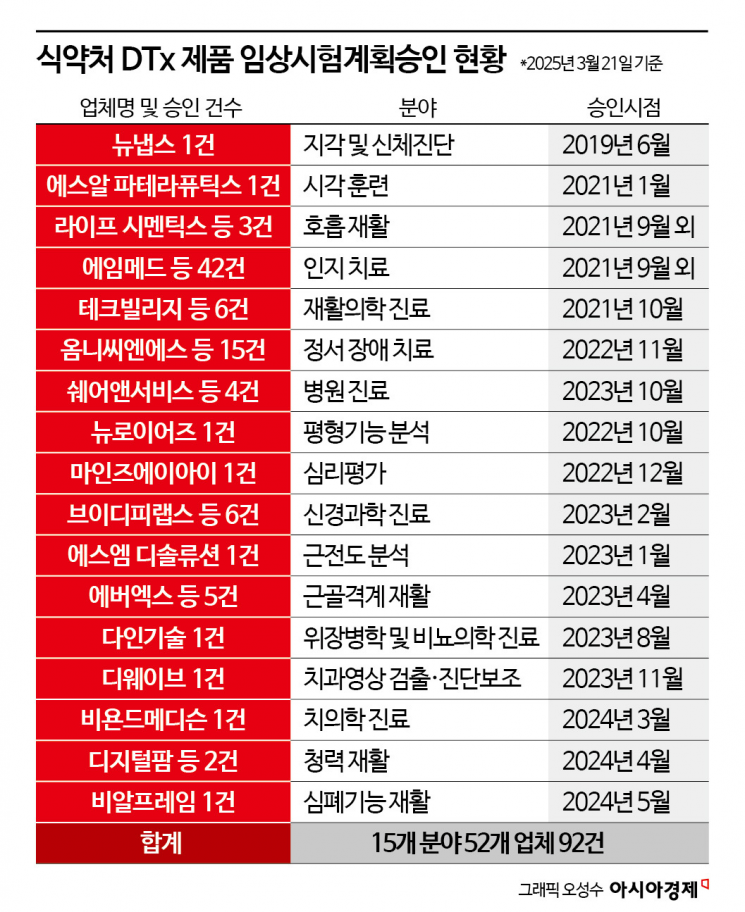
Digital therapeutics began to emerge in earnest in South Korea starting in 2023. Following the Ministry of Food and Drug Safety's approval of AimMed's insomnia treatment 'Somz' as the first digital therapeutic in February last year, a total of five products have received marketing authorization to date.
Digital therapeutics are also rapidly spreading in the global market. According to IQVIA, a pharmaceutical market research organization, as of October 2023, 37 DTx products have been launched in the United States, 56 in Germany, and 20 in the United Kingdom. The U.S. FDA first approved 'reSET' in 2017, and Germany enacted the Digital Healthcare Act (DVG) in 2019, establishing approval procedures and insurance coverage systems.
Although South Korea started somewhat later, the pace of regulatory development is fast. The Digital Medical Device Act, enacted in January, codified a separate regulatory framework for digital technology-based medical devices, including DTx. Accordingly, the Ministry of Food and Drug Safety has prepared approval and review guidelines, expanded communication with the industry, and supports clinical trials and approval procedures.
Nam Hyun-woo, a professor in the Department of Computer Science at Dongduk Women's University, advised, "It is encouraging that the Ministry of Food and Drug Safety is presenting standards and directions, but an objective evaluation system that can prove the safety and clinical efficacy of digital therapeutics should also be established."
Lee Nam-hee, Director of the Medical Device Safety Bureau at the Ministry of Food and Drug Safety, stated, "The Digital Medical Device Act has created a transparent and predictable regulatory environment," adding, "We will support the rapid commercialization of digital therapeutics through flexible and innovative regulations and contribute to the development of the digital health industry."
© The Asia Business Daily(www.asiae.co.kr). All rights reserved.










![$29 Monthly Subscription AI Plant Appliance... US Startup Challenges LG [CES 2026]](https://cwcontent.asiae.co.kr/asiaresize/319/2026010819285284553_1767868133.png)