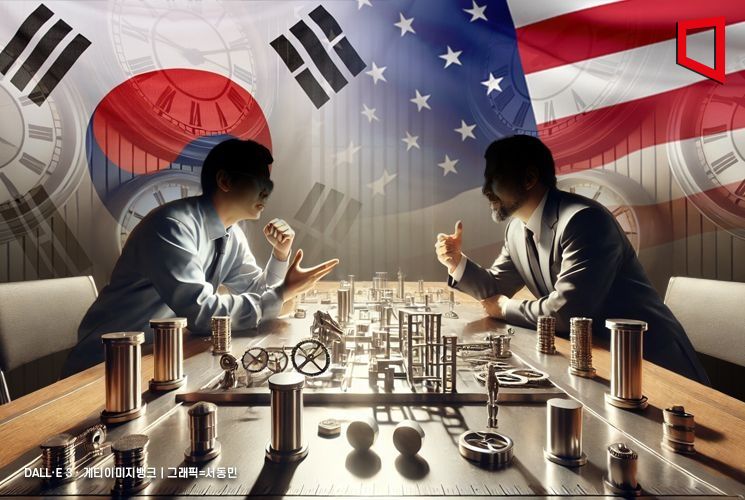
The United States has expanded the application of countervailing duties (CVD) on Korean products to include small and medium-sized enterprises (SMEs) and mid-sized companies, increasing the burden on domestic firms. There are concerns that the implementation of the 'K-Chips Act,' which expands semiconductor investment tax credits, could serve as a new justification for the U.S. to impose additional tariffs. Nevertheless, given Korea's high export dependence on the U.S., retaliatory measures are virtually impossible, leaving legal action through lawsuits as the only viable option.
According to the Ministry of Trade, Industry and Energy on the 14th, the U.S. Department of Commerce removed the specificity exception for SMEs and mid-sized companies starting from the 15th of last month, exposing domestic SMEs and mid-sized companies to countervailing duty investigations. Previously, countervailing duties were imposed only on large export companies, but now they are being extended to SMEs and mid-sized firms.
Countervailing duties are measures imposed by an importing country to protect its domestic industries when exported goods receive direct or indirect subsidies from the exporting country, causing material injury to the importing country's industry. These duties often carry a punitive nature, resulting in high additional tariffs.
The U.S. is the country that imposes the most countervailing duties worldwide. Meanwhile, Korea ranks third globally with 17 countervailing duty cases, following China (154 cases) and India (69 cases).
In particular, Korea faces many countervailing duty investigations and measures on steel and metal products, machinery and electronic equipment, and rubber and paper products?industries where Korea holds a global competitive edge. An official from the Ministry of Trade, Industry and Energy stated, "Countervailing duties affect not only final products but also intermediate goods producers such as steel and semiconductors, potentially delivering a significant shock to the entire industry. Since these measures could severely impact industries where Korea has key competitiveness, legal responses are inevitable to minimize such actions."
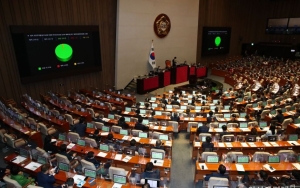
The U.S.'s move to strengthen countervailing duties is also linked to the recently passed 'Tax Incentive Limitation Act Amendment (K-Chips Act)' by the National Assembly's Planning and Finance Committee. The K-Chips Act raises the semiconductor companies' investment tax credit rates from 15% to 20% for large and mid-sized companies, and from 25% to 30% for SMEs. While this is a measure to enhance the competitiveness of the semiconductor industry, from the U.S. perspective, it could be interpreted as the Korean government providing subsidies to the semiconductor sector.
In fact, the U.S. government previously imposed countervailing duty rates of 44.29% on Hynix (now SK Hynix) and 0.04% on Samsung Electronics, citing government support during Korea's foreign exchange crisis for business normalization. Since 2017, amid trade disputes with China, the U.S. has intensified the application of countervailing duties.
Korea has no choice but to respond through litigation in this unfavorable trade environment. Given Korea's high export dependence on the U.S., retaliatory tariffs or other countermeasures could inflict greater damage on domestic companies.
Recently, Hyundai Steel and the Korean government filed a lawsuit with the U.S. Court of International Trade (CIT), arguing that the countervailing duties imposed by the U.S. Department of Commerce were unfair because they were based on the claim that Korea's low electricity rates effectively constitute subsidies. At that time, Korea argued that the U.S. Department of Commerce assessed imbalance solely based on absolute consumption figures, whereas the definition of imbalance requires consideration of relative figures and the overall context. The court accepted this argument and ordered the Department of Commerce to revise its judgment.
An industry insider said, "Since the countervailing duty issue is difficult to resolve in the short term, strategic adjustments to the scale, structure, and payment methods of subsidy policies are necessary. Additionally, active responses through litigation and thorough analysis of international trade norms are required."
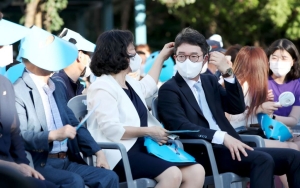
Meanwhile, the Ministry of Trade, Industry and Energy held the '2nd Industry-Specific U.S. Import Regulation System Briefing' at D-Tower in Seoul on the same day to prepare for the U.S.'s strengthened countervailing duty measures. The briefing was attended by SMEs, mid-sized companies, and related associations from various sectors including machinery, medical devices, and batteries, who received explanations about the U.S. countervailing duty system.
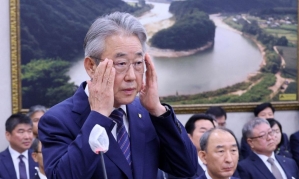
No Geon-gi, Director of Trade Negotiations at the Ministry of Trade, Industry and Energy, said, "We plan to continuously hold briefings on the complex and diverse U.S. import regulations to support companies in responding to the global trend of protectionism."
© The Asia Business Daily(www.asiae.co.kr). All rights reserved.



![$29 Monthly Subscription AI Plant Appliance... US Startup Challenges LG [CES 2026]](https://cwcontent.asiae.co.kr/asiaresize/319/2026010819285284553_1767868133.png)