Free and Combined Residual Chlorine Levels Exceed Standards at Three Pools
Korea Consumer Agency Urges Stronger Water Quality Management
The Korea Consumer Agency announced on February 13 that, following an inspection of water quality management at 20 public indoor swimming pools in the Seoul metropolitan area, some pools were found to have levels of free residual chlorine and combined residual chlorine exceeding legal standards.
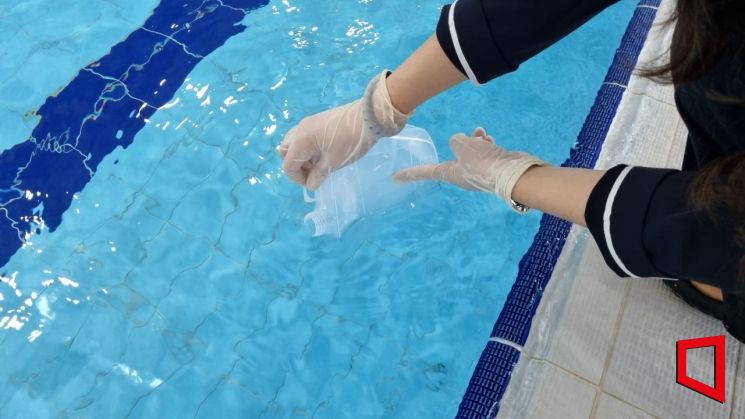
Free residual chlorine is the chlorine that remains in pool water after disinfection. If its concentration is too high, it can cause eye pain, conjunctivitis, throat irritation, vomiting, and skin disorders. Conversely, if the concentration is too low, it cannot effectively suppress the growth or spread of harmful bacteria, making it necessary to maintain an appropriate level.
Combined residual chlorine is a type of disinfection byproduct produced when residual chlorine in pool water reacts with organic matter such as sweat or contaminants after chlorination. If its concentration is high, it reduces the disinfecting effect of the pool water, causes unpleasant odors, and can lead to eye or skin irritation and vomiting.
According to the Korea Consumer Agency, among the 20 pools surveyed, one had a free residual chlorine level of 1.64 mg/L, exceeding the standard range of 0.4 to 1.0 mg/L. In addition, two pools had combined residual chlorine levels of 0.52 mg/L and 0.57 mg/L, respectively, both exceeding the standard of 0.5 mg/L.
All 20 pools met the standards for total coliform count (no more than 2 positive samples), permanganate consumption (12 mg/L), hydrogen ion concentration (pH 5.8-8.6), and turbidity (1.5 NTU).
The Korea Consumer Agency reported that the managers of the pools found to be non-compliant with legal water quality standards in this inspection responded that they would accept the recommended measures and strengthen water quality management.
© The Asia Business Daily(www.asiae.co.kr). All rights reserved.



![$29 Monthly Subscription AI Plant Appliance... US Startup Challenges LG [CES 2026]](https://cwcontent.asiae.co.kr/asiaresize/319/2026010819285284553_1767868133.png)