CSIS Report: US-China R&D Investment Comparison
US $806 Billion vs China $668 Billion
China's Investment Twice as Much 10 Years Ago, Gap Narrowing
"Economic and Military Risks Rising... Must Invest in National Future"
Although the United States is trying to curb China's pursuit in advanced technology fields such as semiconductors, artificial intelligence (AI), and quantum computing, a U.S. think tank has warned that the U.S. may lose its technological leadership due to lagging investment in research and development (R&D) compared to China. It pointed out that large-scale federal government R&D investment is necessary to gain an advantage in the U.S.-China technology competition and eliminate economic and military risks.
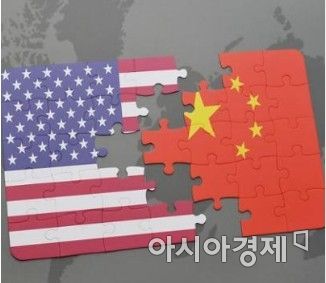
On the 19th (local time), the U.S. think tank Center for Strategic and International Studies (CSIS) released a report titled "Science and Technology Investment: The United States Needs to Strengthen Competitiveness," which contained these findings.
The report cited data from the U.S. National Science Foundation (NSF), stating that the United States spent the largest amount worldwide on R&D in 2021, totaling $806 billion. China ranked second with an investment of $668 billion. The report noted that in 2009, U.S. R&D investment was twice that of China, but the gap has significantly narrowed in just over a decade.
This trend is confirmed even when comparing the two countries' R&D budgets for this year. According to the U.S. Science and Technology Advisory Committee (STAC), the Chinese government plans to invest $52 billion in R&D in 2024, a 10% increase from the previous year. In contrast, the U.S. federal government reduced its total R&D investment by 2.7% in the 2024 fiscal year compared to the previous year, with non-defense R&D spending cut by as much as 11.3%.
The share of global R&D spending held by the U.S. also declined from 29% in 2010 to 27% in 2019. Meanwhile, China's share increased from 15% to 22% during the same period. In 1964, when the space race between the U.S. and Russia intensified, the U.S. federal government's R&D investment accounted for 1.9% of gross domestic product (GDP), but it has since shrunk to less than 0.7%.
CSIS diagnosed, "China is gradually surpassing the U.S. in resource input to dominate core technology-intensive sectors," and "the global leadership in science and technology held by the U.S. since World War II is facing greater challenges than ever."
China is also standing out in research papers and patent applications due to expanded government R&D investment. China ranks first globally in scientific and engineering research paper publications and international patent applications. The value added generated in knowledge- and technology-intensive manufacturing sectors reached $2.4 trillion as of 2021, significantly surpassing the U.S. at $1.4 trillion. In terms of doctoral degrees awarded in science and engineering fields, China surpassed the U.S. with 43,400 graduates compared to 41,700 in 2020.
The sense of crisis within the U.S. is also growing. A survey by STAC of personnel in five scientific and technological fields found that 75% of respondents believed the U.S. has lost or is losing global leadership in science and technology. Sixty percent of respondents predicted that China would become the leader within five years.
Accordingly, calls for a significant increase in U.S. investment in science and technology R&D are growing. While the Biden administration is narrowing the encirclement of China by implementing technology export controls on advanced semiconductors and AI for national security reasons and restoring domestic semiconductor supply chains through measures such as the CHIPS and Science Act (CSA), it is pointed out that large-scale government-level R&D investment like China's must be carried out simultaneously.
CSIS expressed concern, stating, "The U.S.-China technology competition holds strategic importance that will ultimately determine the outcome if a potential military conflict occurs," and "As U.S. technological leadership declines, economic and military risks will increase." It added, "If the U.S. loses its lead in core technologies such as AI, quantum, and convergence, the benefits will go to the frontrunner," emphasizing that "U.S. policymakers must recognize the risks and invest to secure the nation's future."
© The Asia Business Daily(www.asiae.co.kr). All rights reserved.