Interest Rates for Buteimmok and Didimdol Loans to Increase by 0.3%p from the 30th
Government's Low-Interest Loan Burden Grows Amid Rising Bond Yields
#In January this year, Kim Ji-eun, a worker in her 20s living in Yeongdeungpo-gu, Seoul, who received the Butimok Jeonse Loan, was startled when she received a notification text on the 29th that the loan interest rate would increase starting the very next day. Kim said, “I knew it was a variable interest rate, but since it was a policy loan product for ordinary citizens, I never expected it to rise so suddenly.” Due to this interest rate hike, the interest Kim has to repay monthly increased by more than 50,000 won. She added, “My housing costs have increased more than when I was renting monthly, so I think I will have to cut down on living expenses.”
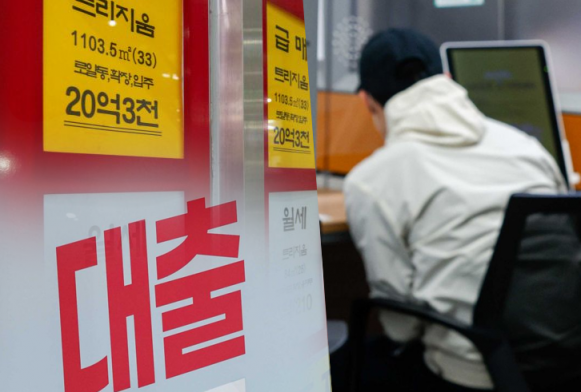
The worries of young people, newlyweds, and other low-income households without homes are deepening. This is because the interest rates on housing-related policy loan products, including the Special Bogeumjari Loan, Butimok Loan, and Didimdol Loan, are rising one after another.
According to the financial sector on the 30th, banks handling Butimok and Didimdol loans sent notification texts to borrowers the day before, informing them that loan interest rates would increase by 0.3 percentage points starting from the 30th. With this interest rate hike, the Didimdol Loan interest rates rose from 2.15?3.0% to 2.45?3.3%, and the Butimok Loan interest rates for new loans increased from 1.8?2.4% to 2.1?2.7%.
Butimok and Didimdol loans are low-interest housing loan products for low-income households without homes, executed through the Housing and Urban Fund. The Butimok Loan is a product that lends up to 200 million won in jeonse deposits to newlyweds, young people, and others with an annual income of 50 million won or less, applying a variable interest rate that fluctuates according to the Ministry of Land, Infrastructure and Transport’s notice. The Didimdol Loan lends up to 250 million won to non-homeowners with an annual income of 60 million won or less, applying either a fixed interest rate or a variable interest rate that changes every five years.
The reason for the increase in interest rates on these loan products is the rising bond yields. When banks issue loans to customers under the Butimok and Didimdol loan schemes, the Housing and Urban Fund purchases bonds, but as bond market interest rates, including financial bonds, have recently risen, the fund now has to buy these bonds at higher prices. A financial sector official explained, “The rise in financial bond yields put pressure on interest rate hikes, and the government has become reluctant to continue providing loans at low interest rates.”
The increase in interest rates on housing subscription savings accounts has also contributed to raising fund loan interest rates. Since housing subscription savings are used as resources for fund loans, when the interest rate on subscription savings rises, the fund loan interest rates inevitably follow. The Ministry of Land, Infrastructure and Transport raised the subscription savings interest rate by 0.3 percentage points in November last year as cancellations of subscription accounts increased, and plans to raise it by an additional 0.7 percentage points starting in the second half of this year. Under the current administration alone, the rate has increased by 1.0 percentage point from 1.8% to 2.8%. Additionally, benefits such as expanded preferential interest rates for housing purchase loans have been increased for those who have held subscription accounts for more than three years.
A financial sector official explained, “Since the housing subscription savings interest rate is lower than market interest rates, it is difficult to form the Housing and Urban Fund, but demand for low-interest fund loans is high, creating an imbalance. It seems that both subscription savings and loan interest rates were raised to address this.”
© The Asia Business Daily(www.asiae.co.kr). All rights reserved.