Mika Promotes Investor Protection and Industry Advancement... Implementation in the Second Half of Next Year
Basic Laws Progressing in the US and Korea... Hong Kong to Introduce Virtual Asset Exchange System in June
The European Union (EU) Parliament has passed the virtual asset regulatory package 'MiCA' bill, drawing attention from the cryptocurrency market. With the first virtual asset-related legislation established in Europe, it is expected that related legislation will gain momentum in countries including the United States and South Korea.
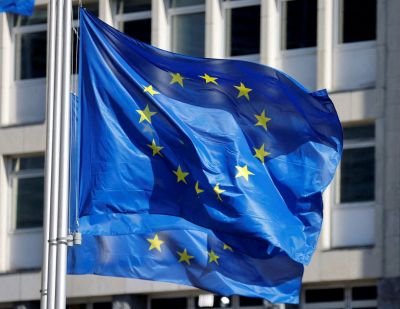
According to the related industry, the EU passed the MiCA bill on the 20th (local time) with 517 votes in favor and 38 against. Additionally, a separate bill mandating virtual asset companies to identify customers to prevent money laundering was also passed with 529 votes in favor and 29 against.
MiCA, the world's first virtual asset-related legislation, categorizes the scope and types of virtual assets into token securities, utility tokens, asset-referenced tokens, and electronic money tokens, applying regulations accordingly. It also includes investor protection measures. Virtual asset platforms must inform investors of risks related to platform operations. The sale of new coins is also subject to regulation. Platform operators must maintain sufficient reserves for stablecoins to prepare for large-scale withdrawals by investors. Daily transaction volume is limited to 200 million euros (approximately 291.5 billion KRW). The European Securities and Markets Authority (ESMA) can directly intervene if cryptocurrency exchanges fail to adequately protect investors or threaten financial stability. MiCA is scheduled to be implemented in the second half of next year after an 18-month grace period.
Seongjun Park, director of the Blockchain Research Center at Dongguk University, said, "MiCA is viewed positively as the first case of institutionalizing cryptocurrency," adding, "It is significant because it recognizes the cryptocurrency industry and allows business operations first, then intervenes if problems arise."
Countries around the world are preparing measures to regulate or activate the virtual asset market. Notably, in the United States, the 'Responsible Financial Innovation Act' was introduced in June last year. It defines virtual assets as securities and commodities, placing them under the jurisdiction of the U.S. Securities and Exchange Commission (SEC) and the Commodity Futures Trading Commission (CFTC), respectively. It also introduced the concept of ancillary assets, an intermediate area between securities and commodities, allowing them to be presumed as commodities if semiannual disclosure obligations are met. The bill includes requirements for stablecoins to maintain reserves exceeding 100% and mandates issuers to disclose reserve details. Additionally, in August of the same year, the 'Digital Commodity Consumer Protection Act' was introduced, defining Bitcoin, Ethereum, and others as digital commodities under CFTC jurisdiction. It defines intermediaries, custodians, and trading facilities of digital commodities as digital commodity platforms, requiring registration with the CFTC and compliance with regulations.
In China, virtual asset mining, issuance, and trading are banned, and virtual assets are not officially recognized; however, a 'pro-virtual asset' movement is gradually emerging centered around Hong Kong. Hong Kong plans to introduce a new virtual asset exchange system on June 1. Expectations are growing that individual investors will be allowed to trade. It is reported that Chinese state-owned banks have started providing banking services to virtual asset companies through their Hong Kong branches. However, the Hong Kong government has officially stated that it pursues policies separate from those of China.
South Korea is also working on establishing a virtual asset law. On the 28th of last month, the National Assembly's Political Affairs Committee reviewed 18 bills related to virtual assets. It was agreed to first enact the parts where consensus is possible into law and discuss the remaining parts later in a phased legislative approach. The proposed legislation includes definitions of virtual assets, user protection, prohibition of unfair trading practices, and granting supervisory and inspection authority to the Financial Services Commission. There are differing opinions regarding regulations on whether to apply the law if the Bank of Korea issues digital currency (CBDC). It is expected that after preparing the first phase of legislation focusing on user protection, subsequent phases will address virtual asset listing and issuance.
Experts predict that the passage of MiCA will accelerate the preparation of virtual asset-related legislation in various countries. Seokjin Hwang, professor at Dongguk University's Graduate School of International Information Security, said, "With the EU passing MiCA, it seems to have taken a step ahead in the leadership battle," adding, "Since the U.S. and South Korea also need to pursue global consistency, the speed of legislation is expected to increase." He further noted, "In South Korea, the focus is on investor protection, and after establishing a regulatory framework in the first phase, discussions on industry promotion are expected."
The industry also expressed optimism. An industry official said, "The passage of MiCA was actually anticipated earlier, and since it is an EU bill, it may not bring immediate significant changes to the domestic market," but added, "Ultimately, the domestic virtual asset law is important, and the passage of MiCA could positively accelerate the establishment of a basic law that includes not only regulation but also promotion."
© The Asia Business Daily(www.asiae.co.kr). All rights reserved.