Most Companies Including Samsung Electronics and Hyundai Motor
"Decide to Maintain Remote Work for Now"
Companies Strengthen Employee Security Training
Hanwha Solutions and Others Consider Easing Policies
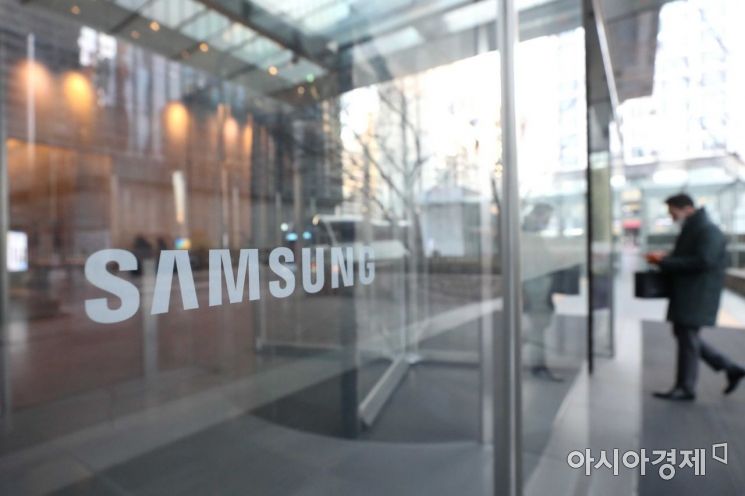 Employees arriving at Samsung Electronics Seocho Building on January 7. / Photo by Mun Ho-nam munonam@
[Asia Economy Reporters Oh Hyung-gil, Kim Jin-ho, Moon Chae-seok] As POSCO has proactively decided to lift remote work, major companies that have maintained a cautious stance have also begun reviewing whether to maintain their current work systems. Most companies state that they will decide based on the guidelines of health authorities and the speed of COVID-19 spread, but some companies are leaning toward easing restrictions and have started making changes.
Global major companies such as Google and Microsoft have already returned to normal office attendance. However, opinions differ due to concerns that a large-scale outbreak could disrupt business operations and issues related to security for advanced technologies, deepening companies' dilemmas.
According to the industry on the 31st, major conglomerates including Samsung Electronics and Hyundai Motor Group plan not to change their remote work systems for the time being. Currently, Samsung Electronics allows 50% of office workers to work remotely on a voluntary basis, and Hyundai Motor Group recommends a remote work ratio of 50-70% (based on headquarters office workers) depending on the situation of each department or workplace.
While most companies maintain the principle of '50% of all employees or 50% of office workers working remotely,' some industries such as steel and shipbuilding, where facility operation personnel are essential, operate partial on-site work systems for field workers.
However, recently, the atmosphere has been shifting toward easing remote work systems. Some companies, including Hanwha Solutions, are reviewing plans to somewhat relax existing policies. Both companies plan to issue internal notices next month regarding partial easing after organizing and obtaining approval from their in-house quarantine teams.
An industry insider said, "Companies do not abruptly change internal policies," adding, "It is likely that the remote work system will be adjusted slightly more leniently, but with continuous Omicron cases, the internal situation room is deeply concerned."
Another factor preventing a sudden lifting is that the government still recommends remote work. The Ministry of Employment and Labor has encouraged remote work by presenting data from 2019 to 2021, compiled with Statistics Korea, arguing that productivity does not decline even when working remotely. According to Statistics Korea and the Ministry of Employment and Labor, the number of remote workers last year was 1.14 million, a 12-fold increase compared to 95,000 in 2019 before COVID-19. There are also voices saying that even if health authorities ease social distancing guidelines and companies want to lift remote work, immediate implementation is difficult.
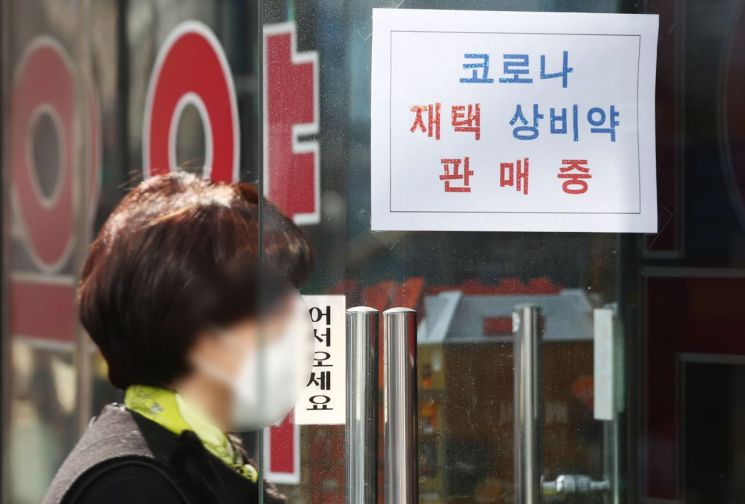
The burden and security measures for companies possessing key advanced core technologies are increasing as remote work prolongs. In fact, subtle changes have been detected at Samsung Electronics following a recent attempt by an employee to leak semiconductor core technology. In the semiconductor division, a rotating remote work system was introduced last month based on department heads' decisions, covering about 20% of personnel eligible for remote work.
However, since the detection of the employee's technology leakage attempt, the allowance for remote work has reportedly decreased significantly. Officially, there is no review yet to relax the remote work ratio, but except for confirmed COVID-19 cases or close contacts, remote work is practically difficult to permit. Additionally, management of remote workers who are confirmed cases or close contacts has been strengthened. It is known that differentiated access rights to confidential documents for external viewing have been applied.
Semiconductor company SK Hynix also remains tense whenever a technology leakage incident occurs in the same industry. Although internal security systems are well established, with remote workers due to COVID-19 spread, the company internally emphasizes the importance of technology security to employees and strengthens monitoring of security systems as a countermeasure.
LG Display, which last year caught an employee attempting to photograph confidential materials and pass them to a Chinese company while working remotely, is also reviewing measures to respond to increased security threats. Separately, it conducts security training for all employees and continuously promotes security awareness through internal posts, videos, and newsletters to raise vigilance against confidential information leaks.
Additionally, during remote work, security-related systems such as two-factor authentication (requiring additional verification beyond ID and password), security notice pop-ups, screen watermarks (displaying owner information), restrictions on downloading cloud PC files to personal PCs, and notifying team leaders of access history to confidential documents are activated and monitoring is intensified.
An industry insider said, "Due to the nature of the industry with many critical technologies that must not be leaked externally, an atmosphere is being created so that remote workers do not handle highly sensitive information requiring high-level security," adding, "Except for unavoidable cases such as virus infection, remote work is minimized while security management is strengthened."
© The Asia Business Daily(www.asiae.co.kr). All rights reserved.




![15-Year Veteran Field Mechanic Becomes AI Talent... Korean Air's Experiment [AI Era, Jobs Are Changing]](https://cwcontent.asiae.co.kr/asiaresize/319/2025121111232252273_1765419802.jpg)