Popular Product 'Cream Cracker' Manufactured in Heobsaeng
Detected with Potential Carcinogen Acrylamide
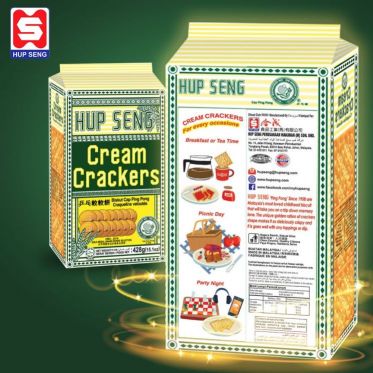 Cream crackers made by Hebseng, a leading food company in Malaysia / Photo by Hebseng Social Networking Service (SNS) capture
[Asia Economy Reporter Lim Juhyung] In Malaysia, the popular snack known as the national cookie, "Cream Cracker," has received a warning from Hong Kong food authorities for containing suspected carcinogenic substances. Following the news, the snack manufacturer's stock price recorded its largest drop in about 1 year and 7 months, fueling ongoing controversy.
On the 25th (local time), according to U.S. financial media "Bloomberg" and others, Malaysia's leading confectionery company Hup Seng experienced a 3.9% drop in its stock price in a single day after it was revealed that carcinogenic substances were detected in its popular product. This was the largest decline since March last year when COVID-19 swept the world, indicating that this news was as devastating to the company as the pandemic.
The controversy began in Hong Kong. The Hong Kong Consumer Council (HKCC), responsible for food regulation, recently announced that carcinogenic substances such as glycidol and acrylamide were detected in 60 types of biscuits and crackers sold in Hong Kong.
The problem is that Hup Seng's flagship product, the Cream Cracker, was included in this list. According to Bloomberg, acrylamide can be generated when grains, the raw material for crackers, are heated and cooked at high temperatures above 120 degrees Celsius.
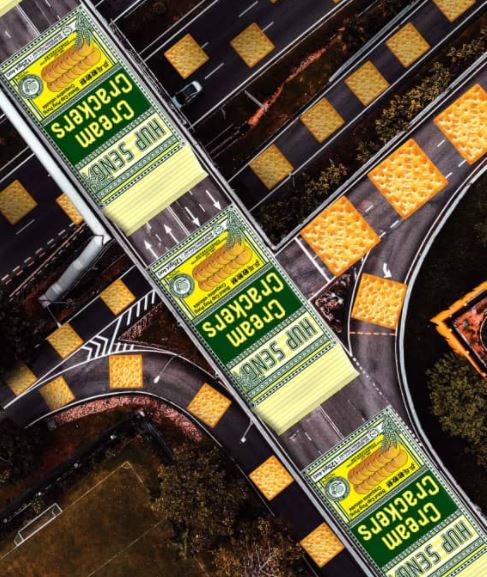 Fan art of Cream Cracker drawn by a local Malaysian citizen. Cream Cracker is known as a nationally beloved snack in the area. / Photo by Heopsaeng Facebook capture
Hup Seng immediately responded to the HKCC's investigation results. The company issued a press release stating, "The Cream Crackers produced and sold in Malaysia are suitable for human consumption and comply with local food safety standards." They also added that they would actively cooperate with Hong Kong authorities' investigations if necessary.
Hup Seng, a representative food company in Malaysia, was established in the mid-20th century. At that time, it produced snacks in a factory of about 139㎡, but it has steadily grown and achieved the milestone of being listed on the Malaysian stock exchange in 2000.
The Cream Cracker, which is now embroiled in controversy, has been known as a "cash cow product" manufactured by Hup Seng since 1994. This snack is a flat cracker coated with sweet butter for flavor, and local citizens enjoy it alongside hot tea or coffee, or with fruits or fish. Hup Seng also emphasizes on its official website that the Cream Cracker is a "traditional snack with a long and rich history."
As a result, concerns about the Cream Cracker are reportedly growing locally. Malaysian netizens expressed worried voices on social media, such as "Is it true that Cream Crackers contain carcinogenic substances?" and "Maybe I should stop eating them from now on." On the other hand, some responded nonchalantly, saying, "If you're scared, don't eat it. I can't start my day without this snack and coffee."
© The Asia Business Daily(www.asiae.co.kr). All rights reserved.