Survey of Medical School Professors by the Medical Policy Research Institute
Lack of Evaluation and Rewards for Educational Work
"Concerns Over Declining Quality of Medical Education"
A recent survey has found that medical school professors in South Korea work an average of more than 74 hours per week, with more than half experiencing burnout. In particular, concerns are rising over the declining quality of medical education, as a decrease in faculty members in basic medical sciences is making it increasingly difficult to conduct educational and research activities.
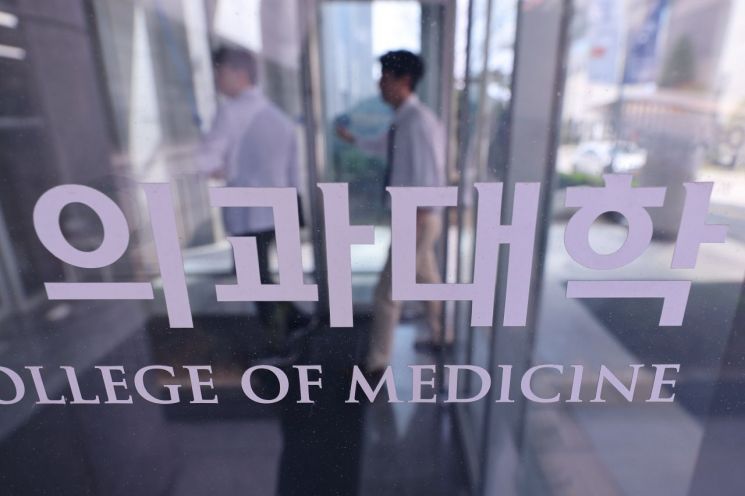
On August 21, the Medical Policy Research Institute under the Korean Medical Association announced the results of a survey and interviews conducted with professors, associate professors, and assistant professors at 40 medical schools nationwide. According to the findings, the professors spend an average of 74 hours per week on professional activities-about 16 hours more than the 58 hours they consider appropriate.
When breaking down how this time is spent, research accounted for the largest proportion at 23%, followed by clinical practice (22%), education (19%), internal administrative positions at their institutions (10%), educational administration (8%), research administration (7%), external positions such as academic society executives (6%), and self-development or training (5%). The institute analyzed that the high proportion of clinical and administrative work makes it difficult for professors to devote sufficient time to education and research.
In contrast, the ideal time allocation as perceived by the professors was research (29%), education (22%), clinical practice (14%), self-development or training (13%), external positions (8%), educational administration and internal administrative positions (5% each), and research administration (4%). This indicates that professors wish to spend more time not only on research but also on education and self-development.
Overall job satisfaction was reported as average (39%), satisfied (35%), and dissatisfied (26%). In a self-assessment using a burnout scale, 59% of all respondents said they were currently experiencing burnout.
Professors interviewed expressed frustration over the lack of formal evaluation for educational work and the insufficient practical compensation and support systems for educational activities.
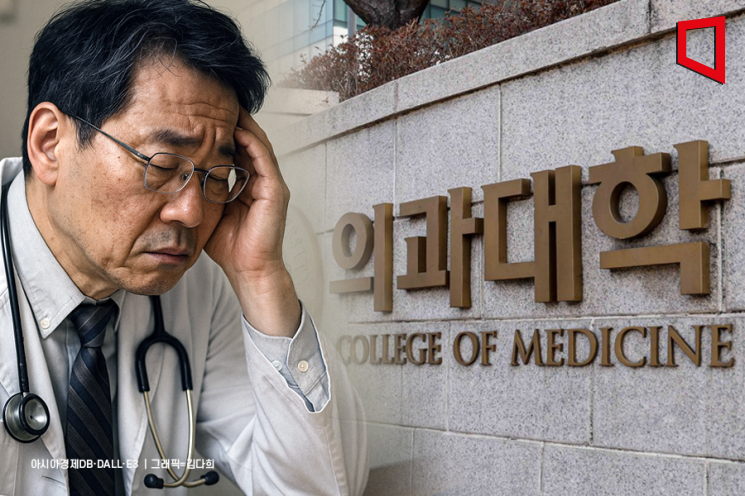
The institute stated, "The current performance evaluation system for medical school professors in Korea is excessively focused on research achievements, so the value of educational activities and clinical practice is not properly recognized." It added, "Such issues increase the risk of declining quality in medical education." The institute recommended establishing evaluation and compensation systems for educational activities, simplifying administrative and evaluation-related work, and providing organizational support to help restore work-life balance.
© The Asia Business Daily(www.asiae.co.kr). All rights reserved.