Interview with Nikkei before Taking Office as Director
Joint Efforts Needed for Talent Development and Technological Advancement in Shipbuilding
Yeo Han-koo, head of trade negotiations at the Ministry of Trade, Industry and Energy, emphasized the need for cooperation between South Korea and Japan in an interview with Japanese media prior to his appointment, noting that the two countries are facing similar circumstances.
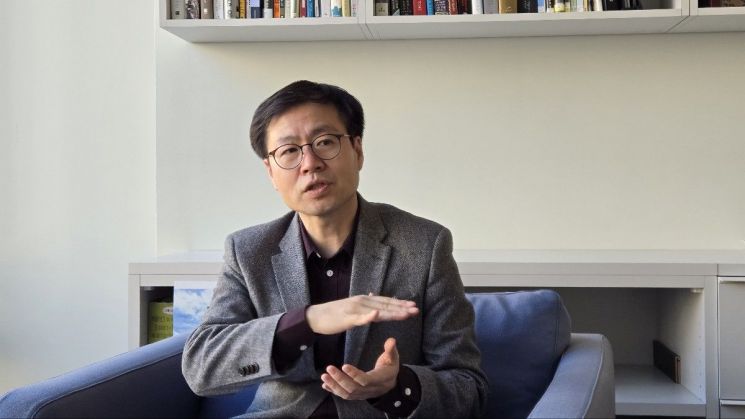
According to the Nihon Keizai Shimbun (Nikkei) on June 12, Yeo highlighted the importance of Korea-Japan cooperation in the context of tariff negotiations with the United States, mentioning automobiles, shipbuilding, and liquefied natural gas (LNG). This interview was conducted before Yeo officially assumed his position.
Yeo pointed out that for both South Korea and Japan, which each export more than one million automobiles to the United States annually, it is important to adjust automobile tariffs to a reasonable level. He stated, "Korea and Japan should join forces to urge the United States for the necessity of exceptional measures."
Regarding the shipbuilding sector, he remarked, "Even if we invest in American shipyards, it is not possible to secure talent within the United States," and suggested that "Korea and Japan should work together on talent development and technology advancement."
Concerning the Alaska LNG project mentioned by U.S. President Donald Trump, he said, "It is too risky for a single country or company to undertake alone," and added, "The United States, Korea, Japan, Taiwan, and others should form a consultative body to share the risks and carry out the project over the long term."
Reflecting on the 60th anniversary of the normalization of diplomatic relations between Korea and Japan, he emphasized that now is the time when the two countries' strategic interests are most aligned. He noted, "Due to China's steel oversupply problem, Korea and Japan, both steel-producing countries, are in similar situations," and saw common ground between the two countries not only in responding to U.S. tariffs but also in their relations with China.
He pointed out that, apart from the Regional Comprehensive Economic Partnership (RCEP), there are currently no other economic cooperation frameworks between Korea and Japan, and expressed hope that Japan would positively consider Korea's accession to the Comprehensive and Progressive Agreement for Trans-Pacific Partnership (CPTPP).
© The Asia Business Daily(www.asiae.co.kr). All rights reserved.