Expansion of the Korean VLBI Network (KVN)
Enhancing Korea's Astronomical Observation Capabilities
The Seoul National University Pyeongchang Radio Astronomy Observatory (KVN Pyeongchang), one of the facilities comprising the Korean VLBI Network (KVN), the nation's first very long baseline interferometry (VLBI) radio telescope network, has officially opened.
KVN is Korea's first VLBI system. Following installations in Seoul, Ulsan, and Jeju, a new 21-meter-class radio telescope has now been added in Pyeongchang, bringing the total to four telescopes connected in a single network. This configuration secures a maximum baseline of 600 kilometers from Jeju to Pyeongchang, effectively creating a virtual telescope the size of the Korean Peninsula (South Korea).
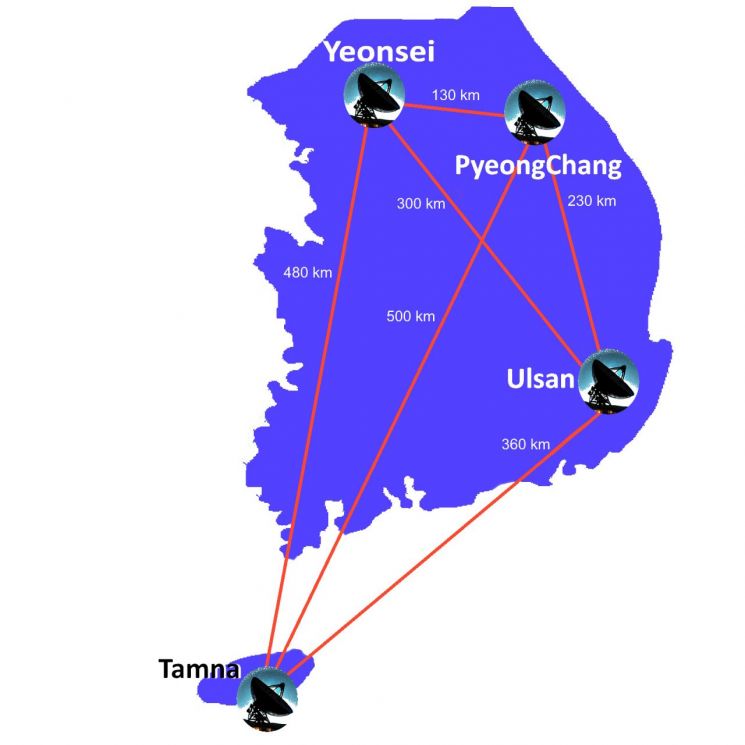
KVN boasts the world's first receiver capable of simultaneously observing multi-frequency cosmic signals, enabling highly efficient observation capabilities. The network aims for high resolution suitable for observing objects such as supermassive black holes.
The opening of KVN Pyeongchang is expected to make a significant contribution to strengthening Korea's astronomical observation capabilities. With the addition of KVN Pyeongchang as the fourth telescope to the existing three, both the resolving power (resolution) for detailed observation of celestial objects and the sensitivity for detecting faint signals have been further enhanced.
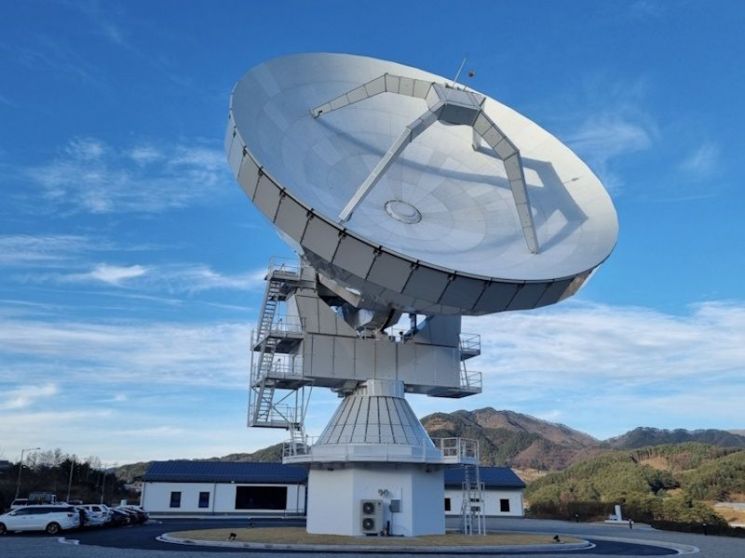
Since first detecting a 230-gigahertz (GHz) signal in December 2023, KVN Pyeongchang has installed a receiver capable of observing three channels simultaneously. In March of last year, for the first time, all four KVN telescopes were connected to detect observed signals together.
On June 12, Yoon Youngbin, head of the Korea Aerospace Administration, attended the opening ceremony of KVN Pyeongchang at the Seoul National University Pyeongchang Campus and offered congratulations and encouragement, stating, "We will spare no effort in supporting our young talents so that they can fully pursue their dreams and take on the great challenge of expanding the boundaries of human knowledge."
© The Asia Business Daily(www.asiae.co.kr). All rights reserved.






![15-Year Veteran Field Mechanic Becomes AI Talent... Korean Air's Experiment [AI Era, Jobs Are Changing]](https://cwcontent.asiae.co.kr/asiaresize/319/2025121111232252273_1765419802.jpg)