Improving Household Waste Recycling Rates through System Overhaul
Enhancing Efficiency with Customized Collection of Large Waste Appliances
Gwangmyeong City is launching a campaign against household waste, aiming to achieve a 100% recycling rate for discarded household waste and realize its vision of becoming a "circular economy city."
On June 12, Gwangmyeong City held a policy briefing in the main conference room at City Hall and announced its plan titled "Establishing a Circular Economy System in Gwangmyeong City through the Improvement of the Household Waste Disposal System," which outlines these goals.
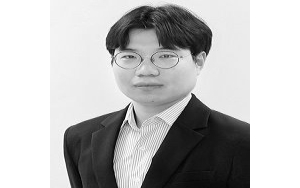
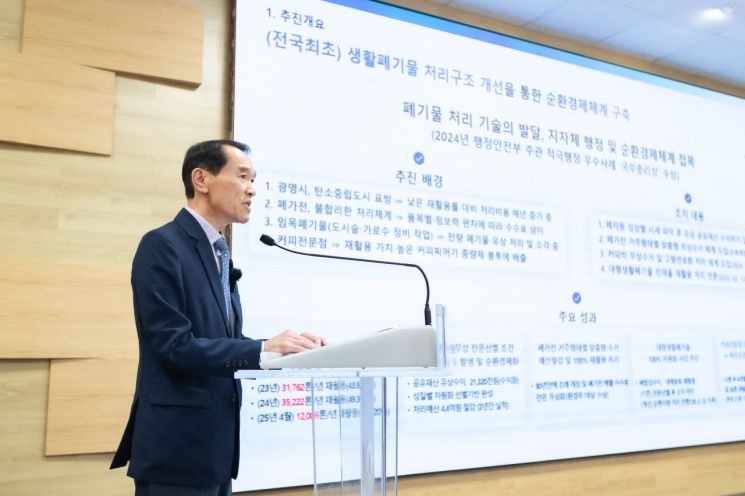 Gwangmyeong City is challenging 100% waste recycling through the innovation of the household waste disposal system. Park Gyegun, head of the Eco-friendly Business Division of Gwangmyeong City, is explaining the household waste disposal policy at a regular briefing. Provided by Gwangmyeong City
Park Gyegun, head of the Eco-friendly Business Division of Gwangmyeong City, stated, "We will innovate relevant systems to not only achieve a circular economy and carbon neutrality, but also effectively resolve the inconveniences experienced by citizens during the resource circulation process." He added, "We will actively pursue sustainable policies that create a virtuous cycle between the environment and the economy."
'Waste = Money' Large-sized Waste Recycling Rate Increased from 41% to 77% in One Year
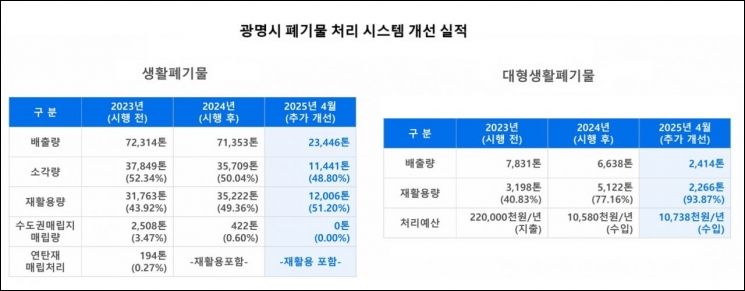
The most notable achievement in Gwangmyeong City's resource circulation policy is the significant improvement in the recycling rate of large-sized waste. Last year, the city became the first in the country to launch a specialized sorting project for large household waste, raising the recycling rate from 41.24% the previous year to 77.16%, an increase of about 36 percentage points.
This improvement addressed the previous issue where most large-sized waste was incinerated due to the low expertise of existing cleaning companies. By selecting specialized recycling companies and utilizing recyclable resources such as waste wood and scrap metal as eco-friendly fuel for power plants transitioning away from coal, the city nearly doubled its recycling rate.
Such results were made possible by thorough market research. While the processing cost for waste decreased, the price of secondary recycled products increased. Based on this, the city collected waste free of charge and sought specialized companies interested in recycling. Through an open competitive bidding process, with the condition of granting paid use rights for public property, the city selected specialized recycling companies. As a result, the city gained 22 million won annually in rental income as non-tax revenue and reduced processing costs by 220 million won.
Problematic Waste Appliances: Efficiency Improved through Customized Free Collection
The city also improved the free collection system for waste appliances, which had been difficult for citizens due to cumbersome procedures. Previously, disposal methods varied by size and quantity, leading to frequent cases where waste appliances were discarded as household waste instead of being recycled. In the case of large waste appliances, disposal had to be reported online, which posed difficulties for digitally marginalized groups such as the elderly.
To increase the recycling rate and address inequality, the city launched a free waste appliance collection program in March last year. Under the new system, Lee Sunhwan Governance collects and recycles waste appliances free of charge according to the type of residence, including apartments, single-family homes, and multiplex housing. For small waste appliances in apartments, residents can simply contact the management office and dispose of them without a separate application. For single-family or multiplex homes, residents can call the city hall website or the designated agency.
Through this customized free collection system, the city achieved 100% recycling of all 383 tons of waste appliances collected last year. In the previous year, only 23 tons, or 22.5% of the 102 tons collected, were recycled. This process also enabled the city to save about 78 million won in waste collection and transportation costs.
Challenge for 100% Waste Recycling: Even Coffee Grounds Are Recycled
The "Coffee Grounds Circular Economy Project," introduced for the first time among local governments in Gyeonggi Province in September last year, is also noteworthy. This project involves collecting coffee grounds (waste) from coffee shops free of charge and recycling them into biofuel.
Previously, most coffee grounds were disposed of as household waste, either being landfilled or incinerated in standard garbage bags. However, the city recognized that coffee grounds could be recycled as compost or biofuel and signed an agreement with a woodchip production company, establishing a "One-stop Mobile Coffee Grounds Processing System."
Under this system, companies wishing to have their coffee grounds collected can apply for free collection. The collected grounds are then processed into solid fuel and recycled as products such as coffee-mixed woodchips. As of the end of April, 237 coffee shops in the Gwangmyeong area are participating in the project, with 33 tons of coffee grounds collected.
From this year, the city is expanding the scope of recycling to include even the residues left after specialized sorting of large household waste, aiming to achieve 100% recycling of large household waste.
In particular, for waste synthetic resins, which are mostly discarded, the city is pursuing a plan to process them as fuel for cement kilns and then use the resulting residues as raw materials for cement. The city expects that recycling will not only reduce greenhouse gas emissions but also lower processing costs by 32.6%.
Park emphasized, "We will continue to actively develop 'Gwangmyeong-style circular economy' policies to enhance citizens' lives and the sustainability of the planet."
© The Asia Business Daily(www.asiae.co.kr). All rights reserved.