Deep Depression Facing Korean Society
The Rise of the Apocalypse Genre in Web Novels
Despair Experienced Within the Framework of Democracy
Overcoming Through the Imaginative Power of the Humanities
![[The World on the Page] Why Democracy Needs Literature Today](https://cphoto.asiae.co.kr/listimglink/1/2025041613242222145_1744777463.jpg)
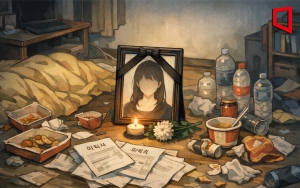
Freedom is the movement of the mind to realize what it has conceived in reality. When we can act as we intend and realize what we imagine, we feel freedom. The opposite of freedom is depression. When no matter how hard we try, nothing we desire comes true, and there is not even a sign of it happening, we become trapped in depression, sinking into frustration, helplessness, emptiness, loneliness, and fear.
Depression is not sadness. Sadness is a mood and usually momentary. It easily changes to calmness and joy with small changes in the surrounding environment. However, depression is a state of extreme unfreedom where one cannot find a reason for life, a reality where it is difficult to achieve the meaning of life on one’s own. Depression is a condition of life where one cannot dream of a different future, an existential situation where even the mind’s capacity is exhausted. Without changing a declining world where daily life worsens and an oppressive society where one cannot realize their will, it is difficult to escape from depression.
The number of depression patients in Korea is increasing every year. According to the National Health Insurance Service, the number of depression patients rose from about 870,000 in 2020 to about 1,090,000 in 2023, a 25% increase. Especially, the increase rate among young generations aged 10 to 30 has exceeded 50%. It is a world where children find it hard to live brightly and youth are pessimistic about the future. The mental state of today’s Korean youth is filled with darkness.
That darkness is revealed in the web novels that young people mainly enjoy. The apocalypse genre, which curses the future and foresees the end, has been popular for several years. Apocalypse novels depict a world of great disasters or catastrophes that bring about the extinction of humanity. In a place where hunger and poverty become everyday life, violence and slaughter run rampant, and disasters and wars abound, people desperately try to regain a peaceful daily life and restore lasting peace. Currently, searching for 'apocalypse' or 'end of the world' on web novel platforms yields more than 700 works depicting apocalyptic worlds.
What will bring about the end? Rising sea levels due to climate change, viral outbreaks, rebellions of artificial intelligence or robots, depletion of food and resources?these are threats already present within us, warned and feared by people. When incompetent and corrupt politics, an economy that works only to benefit a few, and judiciary and administration siding only with the powerful cause the majority to shout "Damn this world, let it perish," apocalypse becomes reality. The depression in the hearts of youth turns into the darkness of the world.
Earlier this year, the world-renowned philosopher Judith Butler published an essay for those who can only imagine the apocalypse. It was titled "Democracy Needs the Humanities to Dream of a World Beyond Now." To those who see no hope and no future ahead, Butler speaks in paradoxical language: "If we say there is no future, we are still imagining something. Even if it is a dark picture with no sign of hope."
Our belief that the future is dark means that the frameworks of thought and forms of interpretation that have sustained our lives so far have collapsed, making it impossible to envision the future. Yet the world we know has been within the framework of democracy. Democracy guarantees human equality, provides minimal justice so that the weak can anticipate a better future, and expands the realm of cooperation and fraternity by limiting outright violence.
According to Butler, "Imagining the end of the world is not only a sign of the survival or continuation of the world but also a threshold toward a new starting point." If you cannot see ahead, it means a new imagination is needed to trigger a long journey toward another world. It means overlaying dreams of the future where past experiences no longer apply and building a bridge of imagination over cliffs where the bridge of logic has broken.
If a future exists that is completely beyond rational understanding and even imagination, then the world truly meets its end. A future that cannot even be pictured shakes the soul with anxiety and suffocates existence with fear. However, no matter how much we think, there can be no world where the sea of imagination dries up and the well of stories is depleted. In any case, as many writers have shown, we can speak of the future even in the form of an apocalypse.
Today’s Trump world mocks, denies, and destroys democracy. It subjugates the world to the power of the United States, squeezes the majority to concentrate wealth in the hands of a few, and accelerates climate change causing environmental disasters. It creates a world where exploitation and destruction, confrontation and conflict, invasion and war become everyday realities. This is the apocalypse. A world of martial arts where gangsters run rampant, a fantasy world where warlords flourish, a post-apocalyptic reality where monsters appear everywhere and citizens struggle to survive.
Kafka once said about such a life situation, "We live on a blade’s edge." In a situation exposed to the possibility of life being torn apart or destroyed by the blade of power, where danger and threat are blatant and life cannot continue, democracy does not function. In a world where the powerful use the military and police to intimidate the people, and a few holding the law ignore common sense and decide the fate of the rest, democracy is destroyed.
What democracy needs most before collapse is the humanities. The humanities ask how to create visions of worlds we do not yet know and realize those possibilities in time and space. Especially for us, as Kafka showed, "Imagination that requires courage, imagination that may seem scary and absurd at first" is demanded. Without the power to imagine beyond the apocalypse in a world where everything has collapsed, without a new vision that tells us this world we live in is not all possible worlds, democracy cannot continue.
The ruthless 12?3 martial law ended with the president’s impeachment, and the world is abuzz with the presidential election. Over the past few months, we have experienced an apocalyptic lawless state where old laws collapsed and no longer functioned. Now, borrowing the power of imagination, we must envision bright days and a new community where democracy can be more fully realized. Butler says, "Transformation is impossible without collective imagination." Literature opens that path.
Jang Eun-su, Publishing Culture Critic
© The Asia Business Daily(www.asiae.co.kr). All rights reserved.