Basic 7.2 Billion KRW Allocation and Incentives Based on Performance
If Minimum Execution Rate Is Not Met, Reduction Will Apply
The operation system of the Local Extinction Response Fund will be reorganized into a 'performance-centered' approach as it enters its fourth year. Basically, 7.2 billion KRW will be allocated, with additional incentives provided to regions with higher project performance and plan completion rates.
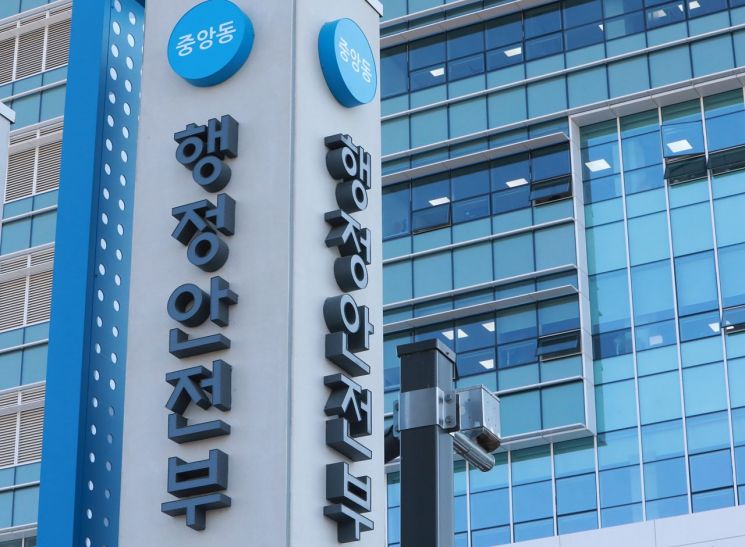
The Ministry of the Interior and Safety announced on the 19th that it has prepared this improvement plan to actively respond to the local extinction crisis. The Local Extinction Response Fund was introduced in 2022 to enable regions to overcome the local extinction crisis through local initiatives. It will be paid annually at a scale of 1 trillion KRW for 10 years until 2031 and managed by the 'Regional Win-Win Development Fund Association' consisting of 17 metropolitan cities and provinces.
The core is the establishment of a performance-centered allocation and evaluation system. From 2026, 7.2 billion KRW will be provided as a basic amount based on 89 population-decreasing areas, and regions with high project performance and investment plan completion will receive additional incentives up to 8.8 billion KRW. In 18 interest areas, the basic amount is 1.8 billion KRW, with incentives up to 2.2 billion KRW. However, if minimum standards such as execution rates are not met, part of the basic amount may be reduced. There have been criticisms that the execution rate of the Local Extinction Response Fund was low in some areas, and this is interpreted as a measure to raise it.
In the evaluation of investment plans, the proportion reflecting the fund execution performance and the achievements of projects promoted through the fund has been increased. A 'minimum execution rate' has been set as an essential condition for selecting excellent areas, and new evaluation indicators related to the status and performance of projects promoted through the fund have been created by including them in the investment plans.
Furthermore, support will be expanded to strengthen the policy planning capabilities of basic local governments, which are the main actors in responding to the local extinction crisis. Basic local governments will be allowed to use the fund for supporting their own research institutes, and in addition to the basic consulting provided annually, in-depth consulting will be offered to regions that request it.
Management of fund project execution and performance will be strengthened. A 'Fund Project Management System' capable of real-time monitoring of fund execution status and improper use will be established in the Fund Management Association by May. Projects that become difficult to execute due to unavoidable reasons can be changed to more effective projects through review, and related procedures have been improved to allow execution. The system will change from regular to on-demand application, and penalties for investment plan evaluation due to project changes will be temporarily waived.
The Ministry of the Interior and Safety will hold a workshop for personnel in charge of population decline response tasks in Buan-gun, Jeonbuk, from the 20th to 21st to guide these matters.
Kim Min-jae, Deputy Minister of the Ministry of the Interior and Safety, said, "As the Local Extinction Response Fund enters its fourth year, we will do our best to ensure that its performance-centered operation can practically help overcome the local extinction crisis and low birth rates in the regions."
© The Asia Business Daily(www.asiae.co.kr). All rights reserved.