Up 0.1 Percentage Points from Initial Advance Estimate
Driven by Strong Exports, Robust Consumer Spending and Investment
The U.S. economy recorded a growth rate of 4.4% in the third quarter of last year, driven by robust exports and a reduction in corporate inventories. This figure is an upward revision from the previously announced advance estimate, indicating stronger-than-expected growth.
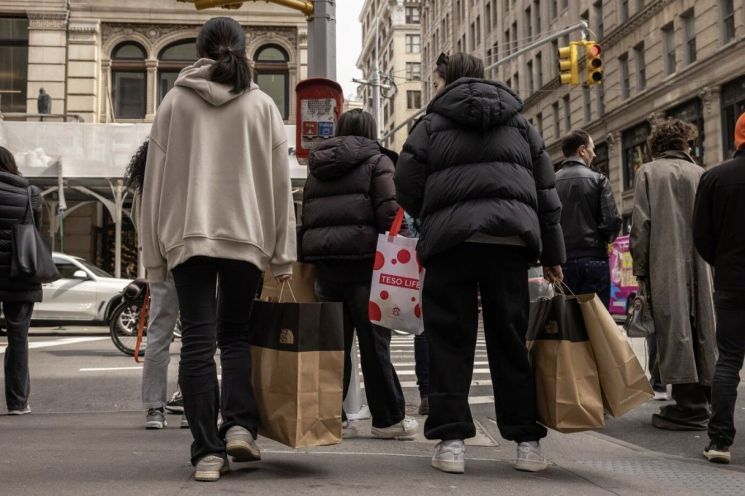
According to the U.S. Bureau of Economic Analysis (BEA) under the Department of Commerce on January 22 (local time), the preliminary estimate for real gross domestic product (GDP) in the third quarter of last year showed an annualized growth rate of 4.4% compared to the previous quarter. This is 0.1 percentage point higher than the advance estimate of 4.3% announced earlier. This growth rate is the highest in two years since the third quarter of 2023, when it reached 4.7%.
The United States releases GDP growth rates in three stages: advance, preliminary, and final estimates. The current figure corresponds to the second stage, the preliminary estimate. This upward revision is attributed to higher-than-initially-reported exports and private investment.
This strong growth in the U.S. economy was largely due to a slowdown in the pace of imports, as companies had previously increased imports in anticipation of tariff policies under President Donald Trump. In addition, despite increased policy uncertainty, both consumer spending and corporate investment remained generally robust, contributing to the high growth rate.
By category, consumer spending increased by 3.5%. In particular, service expenditures grew at the fastest pace in three years, and the growth rate of goods expenditures also accelerated compared to the previous quarter. Corporate investment rose by 3.2%, driven by increased spending on computer equipment, while investment in data centers related to artificial intelligence (AI) infrastructure reached an all-time high.
On the other hand, inflationary pressures expanded somewhat. The core personal consumption expenditures (PCE) price index, which is the Federal Reserve's preferred inflation gauge, rose by 2.9% in the third quarter, up from 2.6% in the second quarter. The core PCE price index excludes food and energy and is used to assess the underlying trend in prices.
The final sales to private domestic purchasers, an indicator showing the underlying trend in demand for the U.S. economy, recorded a 2.9% increase.
With the U.S. economy maintaining a solid growth rate and the labor market showing no signs of a sharp downturn despite recession concerns, the benchmark interest rate is expected to remain unchanged next week. According to the CME FedWatch Tool at the Chicago Mercantile Exchange, the interest rate futures market currently reflects a 95% probability that the Federal Reserve will keep the federal funds rate at the current range of 3.5% to 3.75% at the Federal Open Market Committee (FOMC) meeting scheduled for the 28th.
© The Asia Business Daily(www.asiae.co.kr). All rights reserved.











![The Special Connection Between the Statue of Martyr Lee Jun in Jangchungdan Park and Mayor Oh Sehoon ③ [Current Affairs Show]](https://cwcontent.asiae.co.kr/asiaresize/319/2026012110001599450_1768957215.jpg)