General-Purpose DRAM Prices Hit All-Time High
HBM4 Market Poised for Takeoff
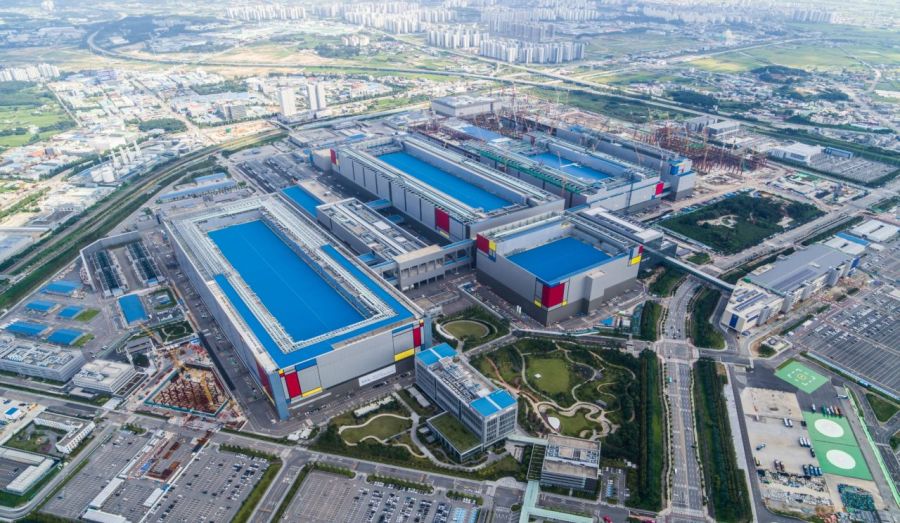
With the surge in demand for high-bandwidth memory (HBM) and the prices of general-purpose DRAM reaching all-time highs, attention is focused on whether Samsung Electronics will surpass 20 trillion won in quarterly operating profit for the first time. As memory prices continue to rise across both advanced and general-purpose segments, expectations are mounting that the semiconductor business will experience an unprecedented boom this year.
According to industry sources on January 4, Samsung Electronics will announce its preliminary results for the fourth quarter of last year on either January 7 or 8. Based on the consensus of ten securities firms that have released reports in the past month, Samsung Electronics is estimated to have posted an operating profit of 18.993 trillion won in the fourth quarter of last year. Of the total operating profit, more than 16 trillion won is expected to come from the Device Solutions (DS) division, which is responsible for the semiconductor business. This figure marks a significant increase compared to 7 trillion won in the previous quarter.
Some analysts predict that quarterly operating profit may surpass 20 trillion won for the first time. IBK Securities, which released the most recent report, forecast operating profit at 21.746 trillion won, reflecting the rising expectations.
This improvement in profitability is attributed to the sharp increase in prices of general-purpose memory products such as DRAM and NAND flash. According to market research firm DRAMeXchange, the average fixed transaction price of standard PC DRAM (DDR4 8Gb 1Gx8) soared from $1.35 at the end of 2024 to $9.3 at the end of last year, nearly a sevenfold jump. In the fourth quarter alone, prices rose by 32.9%.
This is the first time since June 2016, when tracking began, that DDR4 prices have exceeded $9. At that time, the price was $2.94. The price increase of a product that has been on the market for over a decade is due to supply shortages. As demand for high-performance DRAM such as HBM surged, memory suppliers reduced the production capacity for older DRAM models.
This year, Samsung Electronics has also demonstrated its technological prowess in the HBM4 product segment, which is expected to become the fiercest battleground in the memory market. The company reportedly received top scores in HBM4 system-in-package (SiP) tests from Nvidia and Broadcom. The HBM4 market is expected to fully take off in the second half of this year with the launch of Nvidia's next-generation AI accelerator, Rubin.
The recent resumption of Nvidia’s supply of older AI chips to the Chinese market is also considered a positive development. Samsung Electronics and SK hynix's HBM3E will be installed in the H200 chips that Nvidia plans to supply in large quantities to Chinese companies.
Within the industry, there is growing consensus that Samsung Electronics will significantly narrow the market share gap with SK hynix in the HBM market this year. Samsung Electronics held a 13% share in the global HBM market in the first quarter of last year, 15% in the second quarter, and 22% in the third quarter. This year, the company is expected to increase its share to over 30%. Securities firms predict that, buoyed by growth in the semiconductor business, Samsung Electronics' annual operating profit will surpass 100 trillion won this year.
Samsung’s management has also declared a revival of the semiconductor business, emphasizing a fundamental recovery of technological leadership. On January 2, Jun Younghyun, CEO and Head of the DS Division (Vice Chairman) at Samsung Electronics, stated in his New Year's address, "HBM4 has demonstrated differentiated performance competitiveness, earning Samsung the reputation of having 'returned' among customers." He added, "Last year, we achieved recovery in the HBM business, strengthened foundry (semiconductor contract manufacturing) order activities, and attracted global customers for image sensors, but these are only the foundation for restoring technological leadership." He emphasized the company's goal to lead the AI era as the world's only semiconductor company capable of providing a 'one-stop solution' from logic and memory to foundry and advanced packaging.
© The Asia Business Daily(www.asiae.co.kr). All rights reserved.




![15-Year Veteran Field Mechanic Becomes AI Talent... Korean Air's Experiment [AI Era, Jobs Are Changing]](https://cwcontent.asiae.co.kr/asiaresize/319/2025121111232252273_1765419802.jpg)