Experience and Technology Accumulated Through Ukraine War
Full-Scale Mass Production Begins Next Year; Orders Pouring in from Around the World
Sharp Decline in China’s Drone Market Share Signals Major Changes Ahead
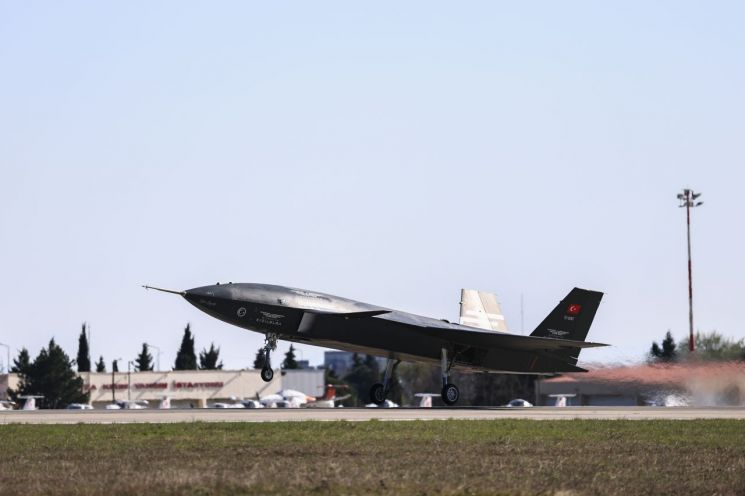 On the 30th of last month (local time), the Turkish drone 'Bayraktar Kizilelma,' which achieved the world's first successful aerial target shootdown, was seen. Baykarsha website
The successful aerial attack by a large unmanned aerial vehicle (drone) developed in Turkey has expanded the potential for drones, which had previously focused on ground assaults, to be used in aerial combat. As China's dominance in the global drone market has declined due to U.S. regulations, there is growing attention on whether Turkey's first successful aerial shootdown by a drone fighter could trigger a major shift in the military drone market.
'Bayraktar Kizilelma' Drone Achieves World’s First Aerial Shootdown
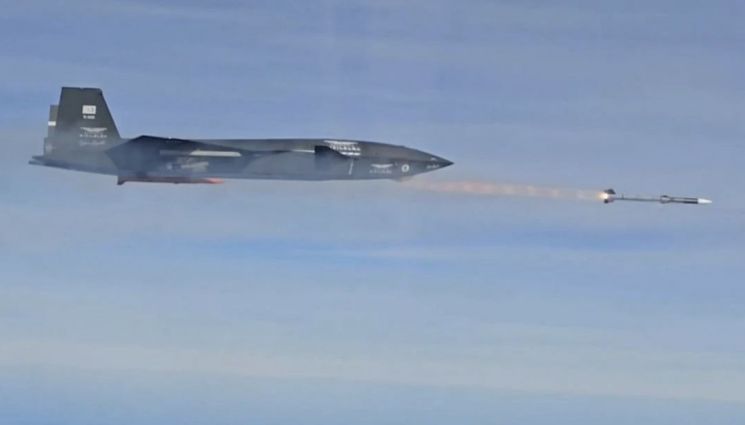 On the 30th of last month (local time), the Bayraktar Kizilelma unmanned aerial vehicle (drone) fired a missile towards an aerial target during an airstrike test flight. Baykar website
Baykar, a Turkish defense company, announced on the 30th of last month (local time) that its self-developed drone fighter, the Bayraktar Kizilelma (hereafter referred to as Kizilelma), successfully shot down an aerial target in flight using an air-to-air missile. Kizilelma has thus earned the distinction of being the world’s first drone to shoot down an aircraft in flight.
Until now, drones had emerged as advanced weaponry specialized in attacking ground targets such as tanks, combat vehicles, and soldiers, especially since the outbreak of the war in Ukraine. However, due to limitations in flight speed, altitude, and endurance, drones had not been able to directly engage fighter jets. While countries including the United States, China, and Russia are actively developing drone fighters capable of aerial combat, Turkey’s Kizilelma is the first to succeed in an aerial attack.
According to CNBC, the Kizilelma drone has been jointly developed by Baykar and the Turkish government since 2013. Measuring 14 meters in length, with a maximum takeoff weight of 6 tons and a wingspan exceeding 10 meters, it is a large drone comparable in size to an actual fighter jet. It is equipped with stealth capabilities and can take off with up to 1.5 tons of armaments, enabling it to engage enemy fighter jets as well as conduct ground bombing missions. Each sortie allows for an endurance of five to six hours, and it is capable of taking off and landing on aircraft carriers to perform a variety of operations.
Drone Industry Rapidly Grows with Erdogan Government Support... Experience Accumulated in Ukraine War
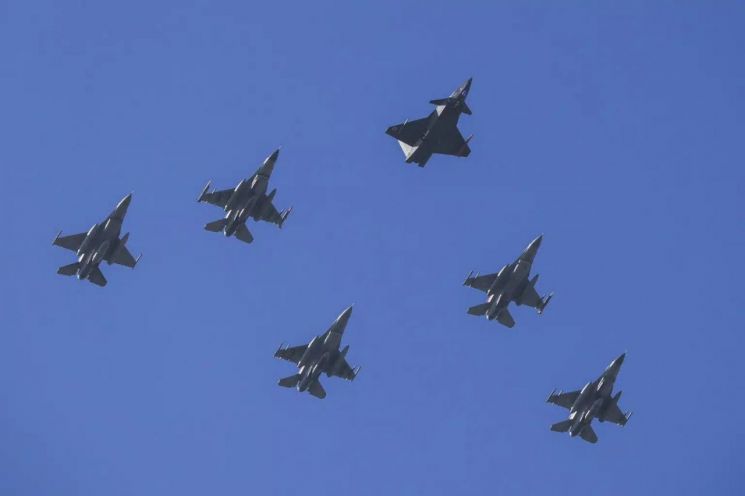 An image of the Bayraktar Kizilelma unmanned aerial vehicle (drone) flying in formation with a Turkish F-16 fighter jet. Baykar website
Baykar, the developer of the Kizilelma drone, was originally an industrial company specializing in computer numerical control (CNC) precision machining, unrelated to drone manufacturing. In 2007, Selcuk Bayraktar, who holds a Ph.D. in engineering from the Massachusetts Institute of Technology (MIT), became the company’s second chairman, shifting its main focus to drone and defense weapon manufacturing.
Bayraktar became the son-in-law of President Recep Tayyip Erdogan in 2016, gaining significant political influence, which enabled Baykar to receive full support from the Turkish government. He is currently considered one of the leading successors to the Erdogan administration, alongside Erdogan’s youngest son, Bilal Erdogan.
Additionally, the outbreak of the war in Ukraine in 2022 had a significant impact on the development of Turkey’s drone industry. Turkey collaborated with Ukraine, the United Kingdom, and others to develop new drone fighter engines and accumulated technical expertise and combat experience by supplying large quantities of drones to Ukraine. Based on this real-world data, Baykar developed the Bayraktar TB2 drone in 2014, which has since been exported to 34 countries, including Ukraine and NATO member states, establishing Baykar as a major player in the drone market.
China’s Dominance in the Drone Market Wavers... Market Share Drops Below 40%
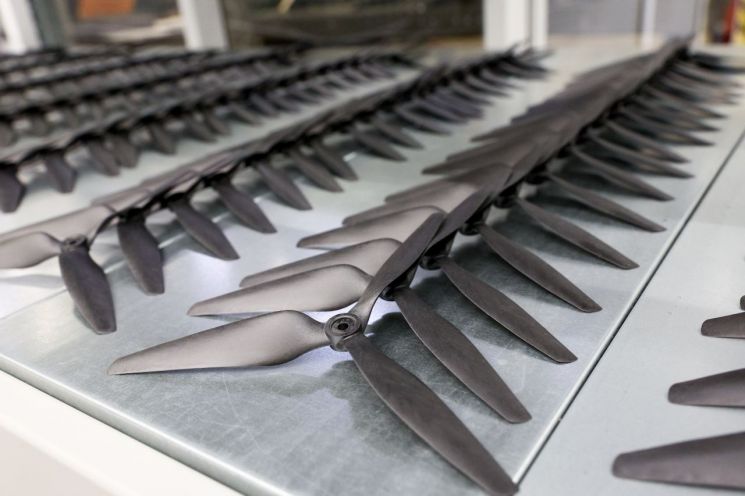 Drone wings produced at a drone manufacturing plant in the Samara region of Russia. Photo by TASS Yonhap News Agency
Baykar plans to begin mass production of the Kizilelma drone starting next year. After producing and deploying about ten Kizilelma drones this year, the company aims to manufacture more than 500 units by 2030. Orders have already been received not only from the Turkish Air Force but also from various countries worldwide, and joint production with the Italian defense company Leonardo is also planned.
Meanwhile, China’s previously dominant share of the drone market has dropped significantly, signaling major changes ahead. According to the Korea International Trade Association, China’s share of the global drone market fell sharply from 64.5% in 2022 to 37.8% last year. Outside of China, the leading market shares were held by Poland (9.6%), the Netherlands (6.0%), the United States (5.4%), and Israel (3.3%). The surge in demand for military drone production due to the war in Ukraine is believed to have driven Poland’s market share up from just 1.2% in 2022.
Furthermore, the U.S. government began imposing restrictions on Chinese-made drones earlier this year, and the Chinese government has also started to restrict exports of military drones and components, introducing numerous variables into the drone market. Market research firm MarketsandMarkets stated, “The global military drone market is expected to grow steadily from $15.8 billion (about 22 trillion won) to $22.2 billion by 2030,” adding, “Not only Ukraine and Russia, but also Turkey and Europe are increasing military drone production, with military drones now accounting for over 60% of the market and the industry undergoing a major realignment.”
© The Asia Business Daily(www.asiae.co.kr). All rights reserved.