AFPI, a Leading U.S. Think Tank That Produced Many Trump Administration Officials
Meeting with Robert Wilkie of AFPI and Adam Posen of Peterson Institute
Persuading the Need to Lower Reciprocal and Item-Specific Tariffs
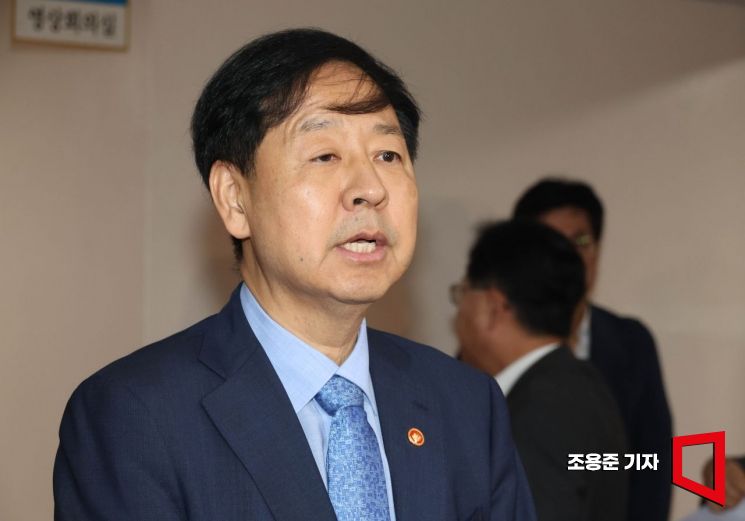 Deputy Prime Minister and Minister of Economy and Finance Koo Yoonchul is answering reporters' questions about negotiations with the United States after the Ministerial Meeting on External Economic Relations held at the Government Complex Seoul in Jongno, Seoul on July 22, 2025. Photo by Jo Yongjun
Deputy Prime Minister and Minister of Economy and Finance Koo Yoonchul will depart for the United States on the morning of July 24 for tariff negotiations with the U.S. Just four days after taking office, he is heading to the U.S. as the new economic chief of the administration to participate in 2+2 trade negotiations.
Koo is scheduled to leave Incheon International Airport at 10:25 a.m. on Korean Air flight KE093 and arrive in Washington, D.C., at 11:15 a.m. local time.
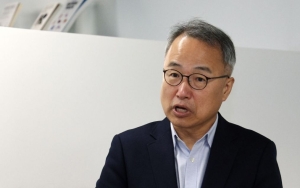
For his first official schedule in the U.S., Koo will meet with major American think tanks, including the America First Policy Institute (AFPI) and the Peterson Institute for International Economics, in Washington, D.C. It has been reported that Robert Wilkie, director of AFPI, and Adam Posen, president of the Peterson Institute, will attend the meetings.
AFPI is a pro-Trump organization established by former aides and supporters to support Donald Trump's re-election. Brooke Rollins, who was the former president of AFPI, went on to serve as the first Secretary of Agriculture in the Trump administration, and the institute has produced many key figures for Trump's second-term cabinet. The Peterson Institute is well known as a leading progressive private policy research institute in the U.S.
An official from the Ministry of Economy and Finance assessed, "AFPI is one of the most influential organizations capable of voicing opinions that can be reflected in U.S. national governance."
This meeting was arranged at the suggestion of the Korean side. It is interpreted as an effort to persuade key figures who influence U.S. policy of the need to lower reciprocal and item-specific tariffs ahead of the 2+2 trade negotiations.
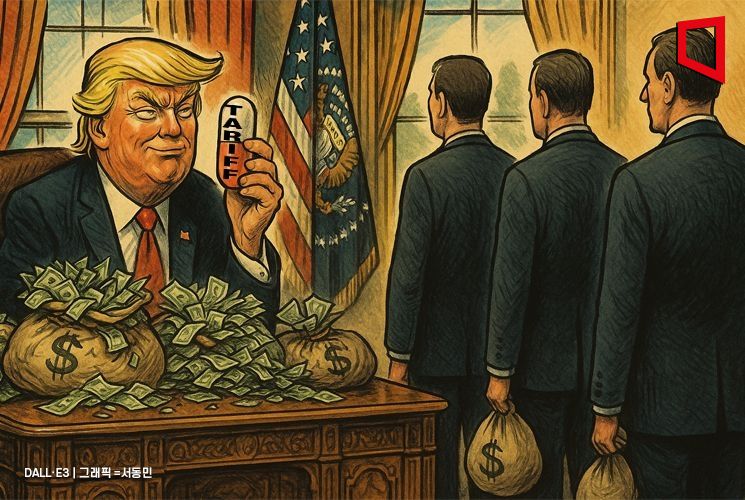
On July 25, the second day of the visit, 2+2 trade consultations will be held to discuss reducing the 25% reciprocal tariffs imposed by the U.S. and tariffs on items such as automobiles and steel.
Yeo Hankoo, Trade Minister at the Ministry of Trade, Industry and Energy, will join Koo as the Korean representative. On the U.S. side, Treasury Secretary Scott Besant and U.S. Trade Representative Jamison Greer will take part in the negotiations.
Kim Jungkwan, Minister of Industry, who also departed for the U.S. on this day, is expected to meet with Howard Lutnick, U.S. Secretary of Commerce, to discuss the reduction of item-specific tariffs on automobiles and steel. Doug Burgum, chairman of the National Energy Committee and Secretary of the Interior?known as the "energy czar" of the Trump administration?and Chris Wright, Secretary of Energy, are also scheduled for meetings.
With just nine days left until the August 1 deadline for the reciprocal tariffs announced by the U.S., the Korean government is making efforts to reduce tariff rates.
Japan, which had faced the same 25% tariff rate as Korea, reached a trade agreement with the U.S. on July 22 to cut the tariff rate by 10 percentage points in exchange for a $550 billion investment and opening its automobile and agricultural markets. As a result, it is expected that Korea's negotiation bottom line will also be set at a 15% tariff rate (12.5% for automobile tariffs).
Japan, which was expected to stall in negotiations with the U.S. due to domestic political issues such as its defeat in the House of Councillors election, has succeeded in concluding a trade deal with the U.S. As a result, pressure from the U.S. side on the Korean negotiation team is expected to intensify.
During the July 25 negotiations, the U.S. is expected to demand the import of beef from cattle over 30 months old, additional opening of some agricultural markets, deregulation of U.S. platform companies, investment in the Alaska liquefied natural gas (LNG) development project, and expanded energy imports.
However, since the new administration has just formed a new negotiation team, and because these U.S. demands are sensitive issues that require domestic stakeholder negotiations and National Assembly ratification, it is expected that it will take some time before a final agreement is reached.
© The Asia Business Daily(www.asiae.co.kr). All rights reserved.