The Seoul Transportation Corporation deleted penalty points previously imposed on service contractors for poor construction work but then re-imposed them, leading a first-instance court to rule that the re-imposition should be canceled as it violates the 'principle of protection of trust.'
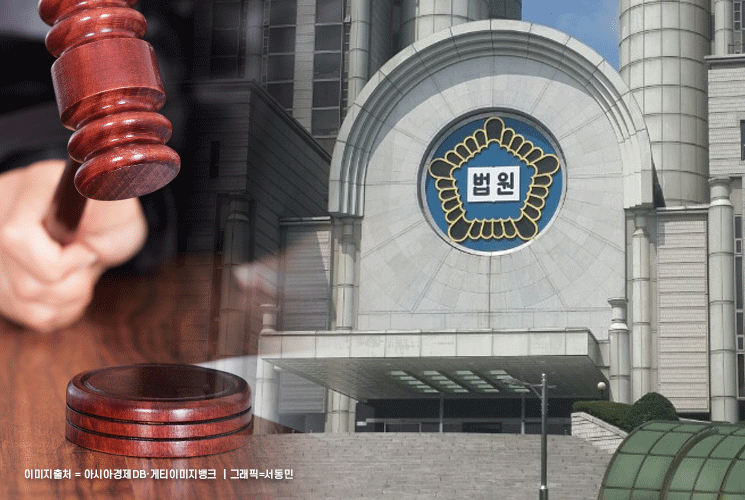
According to the legal community on the 31st, the Administrative Division 3 of the Seoul Administrative Court (Chief Judge Choi Su-jin) recently ruled in favor of plaintiffs, service contractors A and B, in a lawsuit seeking the cancellation of penalty point imposition against the Seoul Transportation Corporation (STC).
The two companies had signed a management service contract with STC in June 2016 to supervise seismic reinforcement work in the underground sections of the Seoul subway and carried out the supervision. The Seoul Metropolitan Government Audit Committee conducted a special audit on the progress of the subway seismic reinforcement work in February 2019, pointing out issues such as material foaming and requested STC to impose penalty points on the two companies.
In response, STC notified company A and others in advance that a total of 23 penalty points would be imposed. After the companies submitted statements and explanatory materials arguing that the penalty imposition was unfair, STC held a penalty review committee meeting and reduced some penalty points or changed the penalties to caution, warning, or no imposition, reducing the total penalty points to 3.
However, when the Seoul Audit Committee demanded re-imposition of penalty points, stating that "the audit disposition request was not fulfilled," STC re-imposed a total of 14 penalty points on the two companies.
On October 12, 2021, the companies filed a cancellation lawsuit against STC, arguing that "re-imposing penalty points for the same reasons on matters for which the penalty was decided not to be imposed after review violates the principle of ne bis in idem and the principle of protection of trust, and constitutes illegal abuse of discretion in violation of the principle of proportionality."
The court ruled in favor of the companies. It found that while STC's disposition did not violate the principle of ne bis in idem, it did violate the principle of protection of trust.
The court stated, "It is recognized that the defendant's prior action (decision not to impose penalty points) led the plaintiffs to justifiably believe in the official stance, seriously infringing on their trust interests and violating the principle of protection of trust."
Furthermore, "The plaintiffs performed tasks such as participating in public bids and hiring new personnel under the expectation that no penalty points would be imposed. Due to the penalty imposition, there is a high risk of tangible and intangible disadvantages in participating in bids ordered by public institutions, which violates the principle of protection of trust and is illegal," the court explained.
The principle of protection of trust is a general principle in administrative law that protects an individual's justified reliance on the legitimacy of administrative acts as long as that trust is worthy of protection.
© The Asia Business Daily(www.asiae.co.kr). All rights reserved.