Relocation from Futenma to Henoko under negotiation and construction
U.S.: "Henoko airfield runways are excessively short"
No return of the base if no replacement runway is secured
U.S. Department of Defense: "Talks are ongoing, but final responsibility lies with Japan"
As relocation work for the U.S. Marine Corps Futenma Air Base in Ginowan City, Okinawa Prefecture, is underway, the U.S. government has reportedly expressed the view that it cannot return the site unless a replacement runway as long as the existing one is secured. As a result, the base-return plan promised about 30 years ago has become even more remote.
On the 19th, the Asahi Shimbun reported that the U.S. Department of Defense has continued consultations with the Japanese government over the replacement runway issue, but has taken the position that final responsibility lies with the Japanese side. The Pentagon’s response follows a recommendation from the Government Accountability Office, which in 2017 demanded that a replacement runway be secured, stating that the runway of the airfield to be built in Henoko was "too short for certain aircraft."
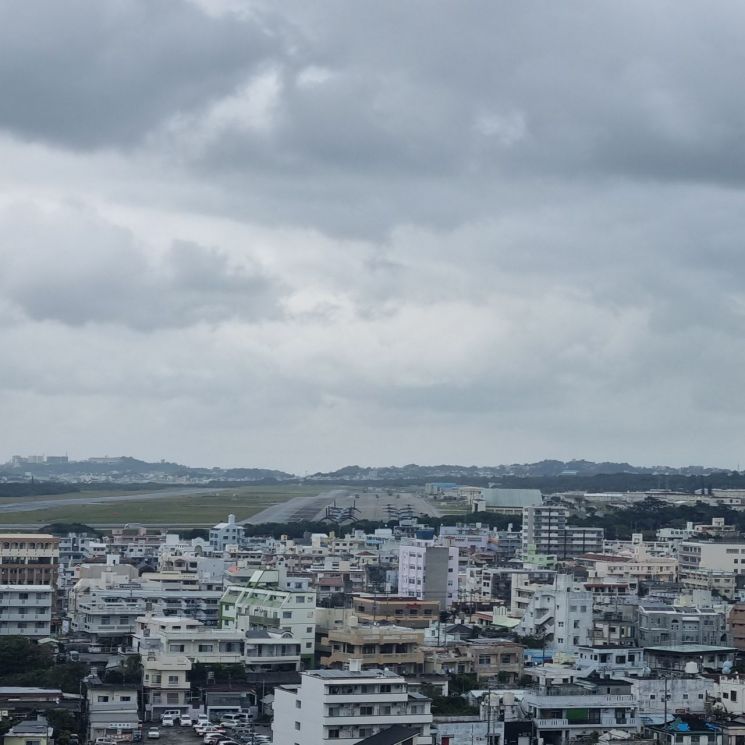
The issue of returning Futenma Air Base has gone through twists and turns for nearly 30 years. In April 1996, the United States and Japan agreed to fully return the base within five to seven years and relocate it to another area within Okinawa Prefecture. Accordingly, since 2006, land reclamation along the Henoko coast in Nago City has been underway to build a new runway. The construction is scheduled to be completed as early as the mid-2030s, but has been repeatedly delayed due to problems such as soft ground.
Unlike the existing 2,700-meter Futenma runway, the Henoko airfield is planned to have two 1,800-meter runways. While there is no problem operating vertical take-off and landing aircraft (Osprey) and helicopters, there have been persistent claims that the length is insufficient for takeoffs and landings of large transport aircraft.
Because of these limitations, the two countries agreed in 2013 that civilian facilities could be used if a longer runway is needed. On Okinawa’s main island, the only location with a long runway of around 3,000 meters is Naha Airport, a civilian airport. In the worst-case scenario, there are concerns that even after the Henoko airfield is completed, the existing Futenma Air Base will remain in operation and Naha Airport will also be used for military purposes.
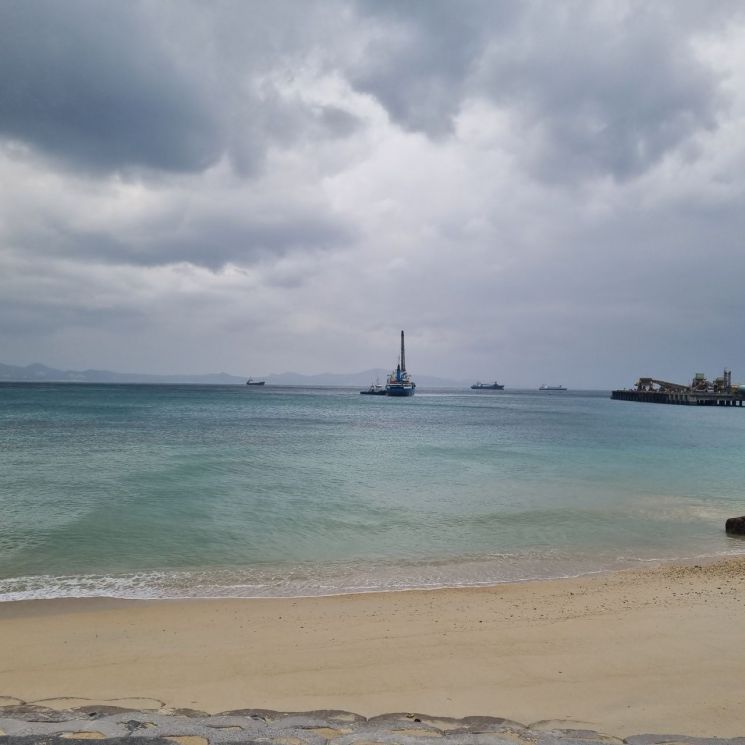 Nago Henoko base construction site. Soil and debris are being transported on a conveyor belt. Nago (Japan) - Photo by Jeon Jinyoung.
Chief Cabinet Secretary Minoru Kihara said at a press conference, "The Ministry of Defense is currently checking the materials from the U.S. Department of Defense," and stressed, "We are not assuming a situation in which Futenma Air Base is not returned even after the relocation to the Henoko airfield has been completed."
A Japanese Foreign Ministry official also told the Asahi Shimbun, "There is no way the U.S. side will break the agreement. If that happens, the plan will have to be reviewed." However, the Asahi Shimbun, citing a Defense Ministry official, reported, "Given the deterioration of the security environment surrounding Japan, we might be told that Japan cannot be defended if Futenma Air Base is returned. At that point, we may have to consider (the worst-case scenario)."
© The Asia Business Daily(www.asiae.co.kr). All rights reserved.


















