No Significant Inconvenience or Confusion Since Full Implementation in August
Alternative Payment Methods Offered: Account Transfer, Prepaid Cards, and QR Code Cards
The "cashless city bus" system, which Gwangju City fully implemented starting this month, is becoming established without significant inconvenience.
On August 19, Gwangju City announced that, after gradually removing cash boxes from 1,044 buses across 102 city bus routes over a four-month period beginning in April, the system was fully launched on August 1.
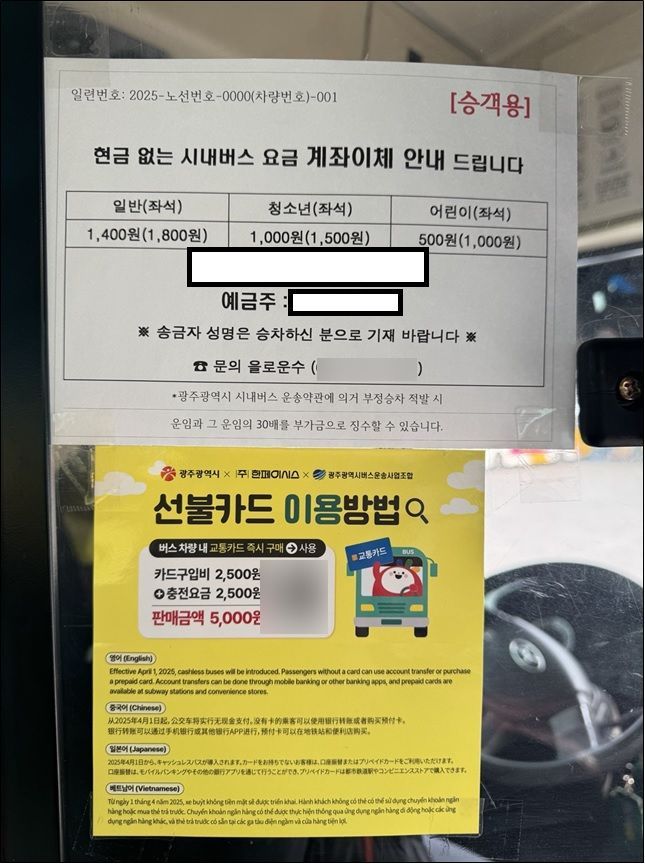 'Cashless City Bus Fare Account Transfer Guide' and 'Prepaid Transportation Card Usage Guide' posted inside Gwangju city buses. Provided by Gwangju City
As of last month, the average daily revenue from cash and account transfers accounted for just 0.3%, a significant decrease from 1.6% in March prior to implementation. Considering that some routes still operated cash boxes in July, the usage rate of account transfers is expected to decline even further from August onward.
In addition to transportation cards, citizens can pay fares via account transfer, prepaid transportation cards, or QR code-based mobile transportation cards. By removing cash boxes, Gwangju City expects to save 520 million KRW annually in maintenance costs, as well as improve bus safety, enhance the transparency of revenue management, and increase operational efficiency.
Since December last year, Gwangju City prepared the system through a four-month pilot operation, surveys, and expert consultations. For vulnerable groups such as seniors, individuals with low credit, and foreigners, the city diversified cash alternatives by offering account transfers, prepaid transportation cards, and mobile transportation cards. Over the past four months, there were 32,163 account transfer transactions and 405 prepaid transportation cards sold.
Additionally, in conjunction with the "Gwangju G-Pass" introduced earlier this year, promotional campaigns were conducted at traditional markets and senior facilities. As a result, the number of senior K-Pass registrations surged by 380%, from 1,689 in December last year to 8,111 in July.
To improve the efficiency of account transfer operations, Gwangju City plans to reflect on-site feedback, inspect the status of personal information collection and fare management, and review cases from other local governments, with the aim of streamlining operational procedures by the end of the year.
Bae Sangyoung, Director of Gwangju City's Public Transportation Division, stated, "This year marks a period for laying the foundation for public transportation innovation through the cashless bus system, Gwangju G-Pass, and route restructuring. We will continue to communicate with citizens and pursue policies that are truly impactful."
© The Asia Business Daily(www.asiae.co.kr). All rights reserved.