Teenagers Unsure of Their Desires
Immediate Stimulation Hinders Goal Pursuit
Reading Awakens the Power to Dream
![[Voices of the MZ Generation Column] The Age of AI Algorithms and Lethargy: The Power of Reading](https://cphoto.asiae.co.kr/listimglink/1/2025031414221868563_1741929738.jpg)
There is a common refrain among teachers these days regarding today's children: "Very few of them know what they want to do, and most of them are lethargic." When asked about their dreams, it is rare for students to articulate their own aspirations or to strive toward them. Many teenagers seem to attend school reluctantly, and teachers lament that it is disheartening to see so many students simply laying their heads down during class. One teacher put it this way: "It's such a waste of youth."
Several reasons come to mind for this phenomenon. One is that many children lead lives that have been shaped for them without ever knowing what they truly want. From a young age, they are shuttled from one private academy to another, often never given a real chance to pursue what they genuinely desire. Even if they had many interests, after hearing for more than a decade that these things are useless, worthless, or that they should just study, it is possible that they have ended up not even knowing what they should want anymore.
Recently, the number of young people who are not even seeking employment and are simply "resting" has surpassed 500,000, the highest ever recorded. While the lack of quality jobs and poor social conditions are certainly issues, it may also be because more young people are saying that they simply "do not know" what they want, what they want to do, or what they want to become.
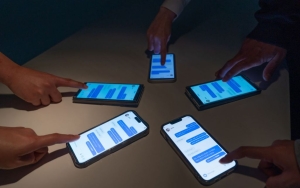
The current smartphone-based online environment cannot be ignored either. Jonathan Haidt, a renowned evolutionary psychologist, warns in The Anxious Generation that over-immersion in smartphones is turning children into herbivores: excessively wary of strangers, preferring to stay in their rooms rather than seek adventure, and plagued by chronic anxiety and worry. He provides various pieces of evidence that this environment breaks the will to "discover" the world and to boldly forge ahead in life.
In reality, to pursue any long-term dream or goal in life, one needs to become somewhat desensitized to immediate stimulation. To move toward a dream ten years in the future, it is necessary to build each day with determination. However, as soon as a smartphone is turned on, the endless stimuli of webtoons, reels, shorts, SNS, and AI algorithms "dissolve" any resolve for a long journey. Instead of dreaming distant dreams, today's sweet dopamine hits and pleasures pin both body and mind to the bed.
The most important thing children should learn when they are young is the ability to believe in the "invisible" more strongly than in the "visible." The future, dreams, and hope are not things that can be seen with the eyes. They exist only in the imagination, and it is the ability to believe that this imagination can become reality that propels life forward. More than immediate rewards and satisfaction, a kind of dreamer's ability to believe in what seems like nothing can provide the strength to overcome an empty present. However, in today's world, this ability to believe in such "fantasies" is gradually disappearing.
I believe that one of the most powerful ways to foster this ability to dream is through reading. The act of reading always involves imagining and guessing for oneself. The ability to believe in fantasies throughout one's life develops naturally in this way. Thus, the most powerful force to combat the lethargy of our era may be closer than we think. It might be right within us, as close as opening a book.
Jung Jiwoo, Attorney and Cultural Critic
© The Asia Business Daily(www.asiae.co.kr). All rights reserved.