On Thursday, the 7th, which marks the beginning of winter with the solar term Ip-dong (立冬), the first ice of the year was observed in Seoul. This is one day earlier than last year and four days later than the average year.
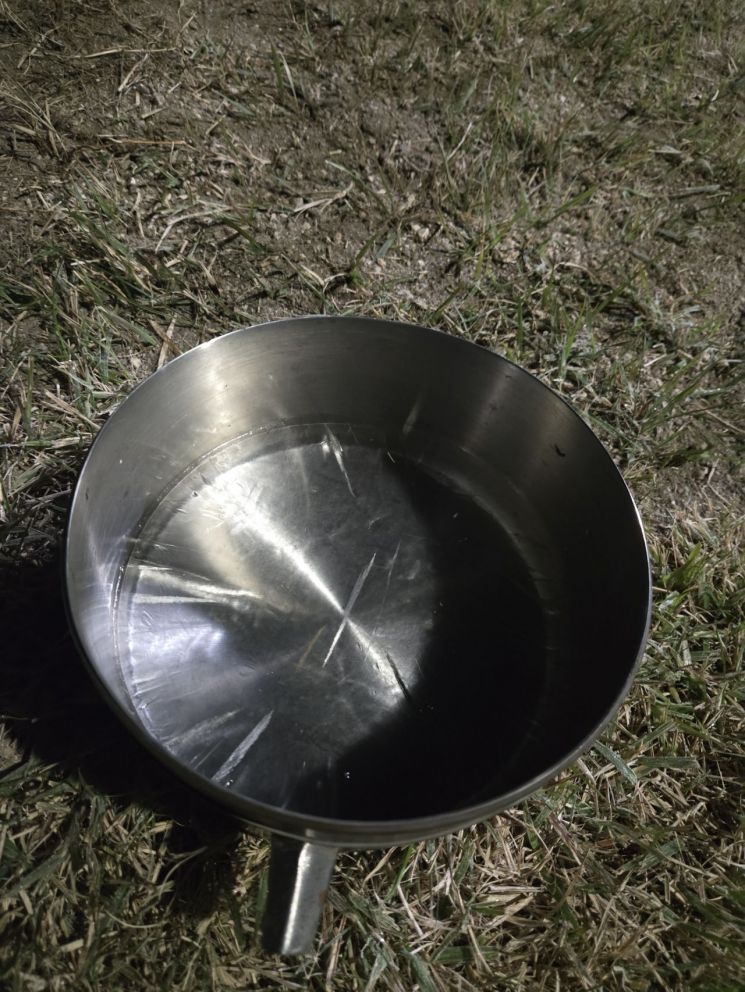 The first ice was observed at the Seoul Meteorological Observatory. Photo by Korea Meteorological Administration
The Korea Meteorological Administration explained, "Cold air is moving southward from the north, and with clear weather overnight causing temperatures to drop, most regions nationwide are experiencing temperatures around 5 degrees Celsius, with most inland areas showing subzero temperatures. First ice has been observed in places like Seoul, Daejeon, and Daegu, and first frost has been observed in places like Gwangju and Daegu."
Most of the country will be generally clear, but the eastern coast of Gangwon Yeongdong and the Gyeongsang region will be mostly cloudy. Jeju Island will see less than 5 mm of rain from night until early dawn the next day.
The morning low temperatures are forecasted to be between -3 and 9 degrees Celsius, and the daytime highs between 13 and 19 degrees Celsius. Most regions nationwide will experience morning temperatures around 5 degrees Celsius, feeling cold, and strong winds along the west and south coasts, some mountainous areas, and inland will make the wind chill temperature even lower.
Fog may form inland between dawn and morning, reducing visibility to less than 1 km, so caution is advised for traffic safety. Fine dust levels will be 'Good' to 'Moderate' across all regions due to smooth atmospheric dispersion.
Sea waves will be 0.5 to 2.0 meters in the East Sea and West Sea nearshore waters, and 0.5 to 1.5 meters in the South Sea nearshore waters. In the outer offshore waters (about 200 km from the coastline), wave heights are predicted to be 1.0 to 3.5 meters in the East Sea, and 0.5 to 3.0 meters in the West and South Seas.
© The Asia Business Daily(www.asiae.co.kr). All rights reserved.

















