Samsung Electronics recorded an 'earnings surprise' by posting an operating profit exceeding 10 trillion won in the second quarter of this year.
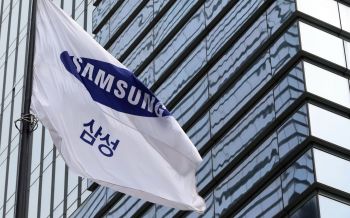 Samsung Electronics announced its preliminary results for the second quarter of this year, with sales of 74 trillion won and an operating profit of 10.4 trillion won. These earnings represent a surprise-level increase of 23.31% and 1452.24%, respectively, compared to the same period last year. On the 5th, at Samsung Electronics Seocho Tower in Seoul. Photo by Jo Yongjun jun21@
Samsung Electronics announced on the 5th that its consolidated operating profit for the second quarter of this year was preliminarily estimated at 10.4 trillion won, a 1452.24% increase compared to the same period last year. Sales reached 74 trillion won, up 23.31% from the same period last year.
This is the first time in seven quarters since the third quarter of 2022 (10.852 trillion won) that Samsung Electronics' quarterly operating profit has exceeded 10 trillion won. It also significantly surpassed last year's annual operating profit (6.57 trillion won). Sales remained in the 70 trillion won range for the second consecutive quarter. The results also greatly exceeded market expectations. According to the business and securities sectors, Samsung Electronics' second-quarter operating profit was expected to be about 8.2 trillion won, 12 times higher than the same period last year (668.5 billion won), and sales were expected to be around 73.8 trillion won, up about 23% from the same period last year.
The surprise second-quarter performance is attributed to a significant improvement in semiconductor division results due to the recovery in memory semiconductor demand and price increases driven by the expansion of the artificial intelligence (AI) market. In particular, the rise in average selling prices (ASP) of DRAM and NAND led to memory semiconductor results greatly exceeding market expectations.
Samsung Electronics did not disclose segment-specific results on this day. The preliminary results were estimated based on the Korean International Financial Reporting Standards (IFRS) and were provided to assist investors while the financial closing has not yet been completed. Samsung Electronics is expected to provide detailed information through a future earnings conference call.
Initially, the industry estimated that the Device Solutions (DS) division, responsible for Samsung Electronics' semiconductor business, posted an operating profit of 4 to 5 trillion won. However, with Samsung Electronics delivering results exceeding market expectations, the outlook for the DS division's performance is likely to be revised upward. In the first quarter, the DS division achieved an operating profit of 1.91 trillion won, marking a return to profitability after five quarters since the fourth quarter of 2022.
The recovery in the semiconductor market and the expansion of the AI market have increased sales of high-value-added memory products. This is the background for the industry's high expectations for the DS division's strong performance. Favorable exchange rates led to memory semiconductor price increases surpassing market expectations, offsetting the profitability decline in smartphones. According to Taiwanese market research firm TrendForce, prices of overall DRAM and NAND rose by 13-18% and 15-20%, respectively, in the second quarter of this year.
The Mobile Experience (MX) division, responsible for smartphones and laptops, is estimated to have posted an operating profit of around 2.1 to 2.3 trillion won. Since the second quarter is traditionally an off-season, and the rise in DRAM and NAND prices led to increased cost ratios, profitability is believed to have slightly declined.
The Display division is estimated to have earned an operating profit of around 700 billion won, supported by strong sales from major customers such as Apple. The Visual Display (VD) and Digital Appliances (DA) divisions are also expected to have generated operating profits in the range of 500 to 700 billion won, benefiting from the peak air conditioner season.
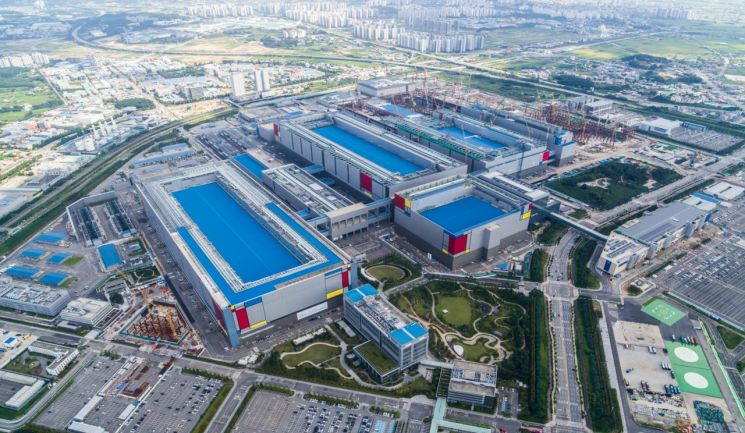
In the second half of this year, it is expected that the aggressive capacity expansion of high-bandwidth memory (HBM) by memory semiconductor companies will intensify the shortage of general-purpose DRAM supply, and the increase in demand for high-capacity eSSD will continue to improve memory profitability. The operating profit forecast for the third quarter is estimated at 12.0181 trillion won, a 393.86% increase compared to the same period last year, and sales are projected to rise 22.5% to 82.5722 trillion won.
TrendForce analyzed, "Although the overall consumer DRAM market continues to experience oversupply, the three major suppliers (Samsung Electronics, SK Hynix, and Micron) clearly intend to raise prices due to pressure on HBM production volumes." They also forecast that DRAM and NAND prices will increase by 8-13% and 5-10%, respectively, in the third quarter.
However, the foundry business is expected to face difficulties due to low utilization rates in advanced processes and aggressive price cuts by Chinese companies in mature processes. The System LSI division is also unlikely to see meaningful profitability improvements within the year due to price reduction pressures from smartphone customers.
The mass production visibility of the fifth-generation HBM, HBM3E, could be a turning point. Samsung Electronics is currently conducting quality tests to supply HBM3E 8-stack and 12-stack products to customers including Nvidia. Just a day before, about a month after the appointment of Jeon Young-hyun as head of the DS division (Vice Chairman), Samsung Electronics launched a major organizational restructuring centered on establishing an 'HBM Development Team,' signaling a full-scale effort to strengthen competitiveness.
© The Asia Business Daily(www.asiae.co.kr). All rights reserved.


















