Allegations of Violation of the Monopoly Regulation and Fair Trade Act
"Failure to Disclose Details Arising from Promotion"
"Polarization Centered on Blockbusters and Intensification of Screen Monopoly"
The Film Industry Solidarity, composed of the Korean Film Producers Guild (PGK), the Directors Guild of Korea (DGK), and the National Film Industry Labor Union, has reported the three major multiplex companies (CJ CGV, Lotte Cinema, Megabox) to the Fair Trade Commission. The reason cited is a violation of the Monopoly Regulation and Fair Trade Act.
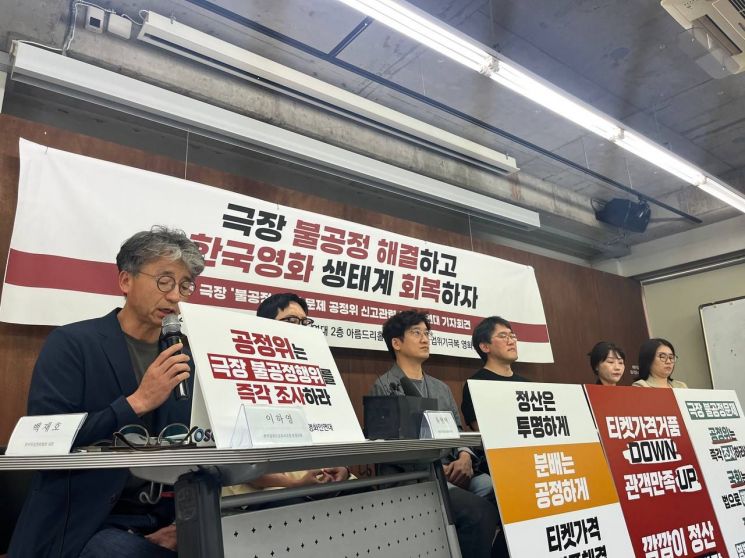
On the 4th, the Film Industry Solidarity held a press conference at the People's Solidarity for Participatory Democracy in Jongno, Seoul, stating, "The three multiplex companies repeatedly engage in unfair practices, such as not disclosing detailed statements arising from various promotions like discounts and free tickets to distributors and producers." They emphasized, "The Fair Trade Commission's judgment will be a starting point for restoring the film industry ecosystem," and added, "We will actively respond to the polarization promoted by the three multiplex companies, screen monopolization, and the collapse of holdbacks in the future."
Multiplexes distribute revenue generated from ticket sales to investors and distributors (including producers and creators) at a certain ratio. However, they have rarely transparently disclosed the actual prices sold through various discounts. This means investors and distributors have no way to know if proper settlements have been made.
The Film Industry Solidarity explained, "All three multiplex companies refuse to disclose detailed settlement statements regarding discounts with telecommunications companies such as SK Telecom, KT, and LG Uplus by citing confidentiality agreements," adding, "This violates the Monopoly Regulation and Fair Trade Act." They criticized, "Although ticket prices were raised three times during the pandemic, the 'black box' settlements have actually lowered the average ticket price (the average price of movie tickets issued)," and stated, "This absurd phenomenon repeats, reducing the shares that should go to the many members of the film ecosystem."
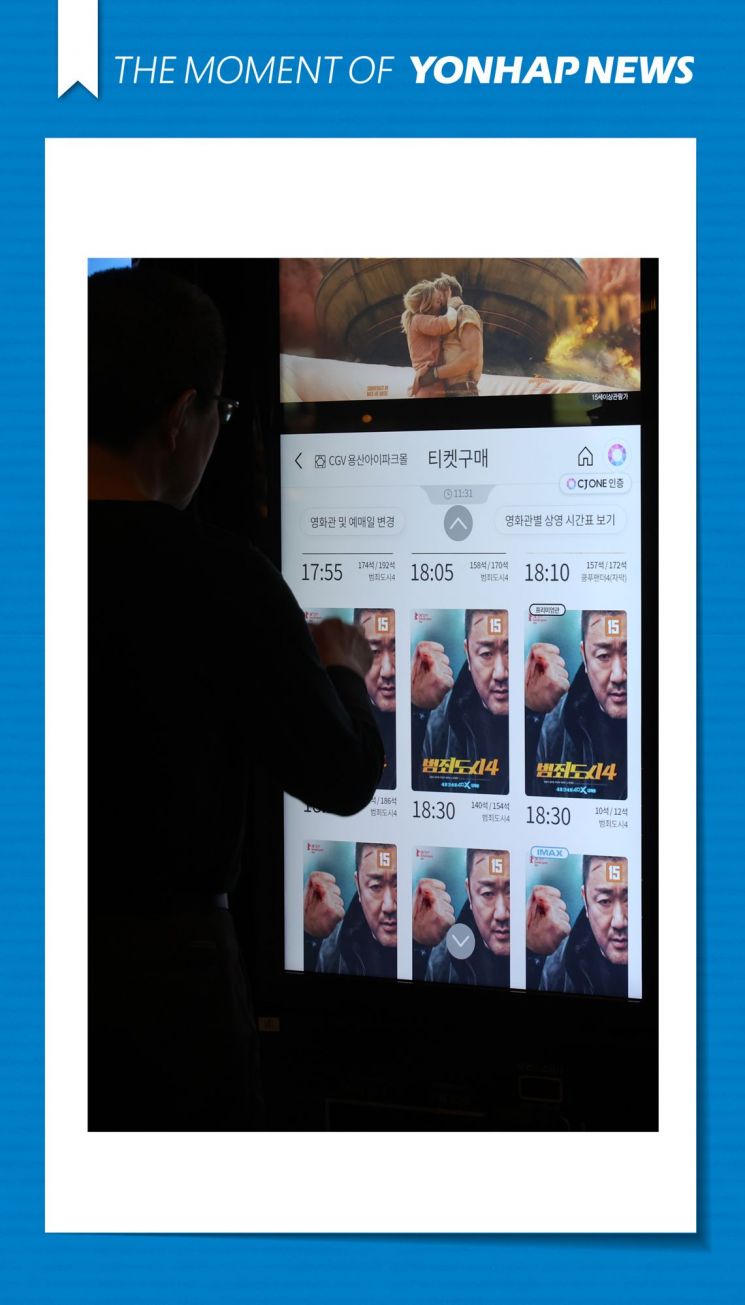
They also argued that the three multiplex companies are responsible for the recent stagnation of the film industry. "During the pandemic, ticket prices were sharply increased citing revenue deterioration due to social distancing," they said, "which increased consumer burden, narrowed the range of movie choices, decreased audiences, and caused adverse effects such as polarization centered on blockbuster films and screen monopolization."
To prevent revenue decline, multiplexes introduced various discount systems. However, audiences with lower accessibility could not benefit, breaking price fairness and increasing audience distrust. The Film Industry Solidarity pointed out, "This is the reason for the vicious cycle leading to further audience decline." They stressed, "The current pricing policy and discount sales methods disregard the audience," and concluded, "As a result, they seriously shrink the film ecosystem."
The Film Industry Solidarity plans to urge the National Assembly to address these issues and push for legislative efforts. A representative stated, "We will seek solutions to unfair practices in theaters through legal amendments via National Assembly forums and consultations with policy authorities."
© The Asia Business Daily(www.asiae.co.kr). All rights reserved.


















