Japan's major automobile manufacturers Toyota, Subaru, and Mazda are jointly developing a new engine suitable for the carbon-neutral era.
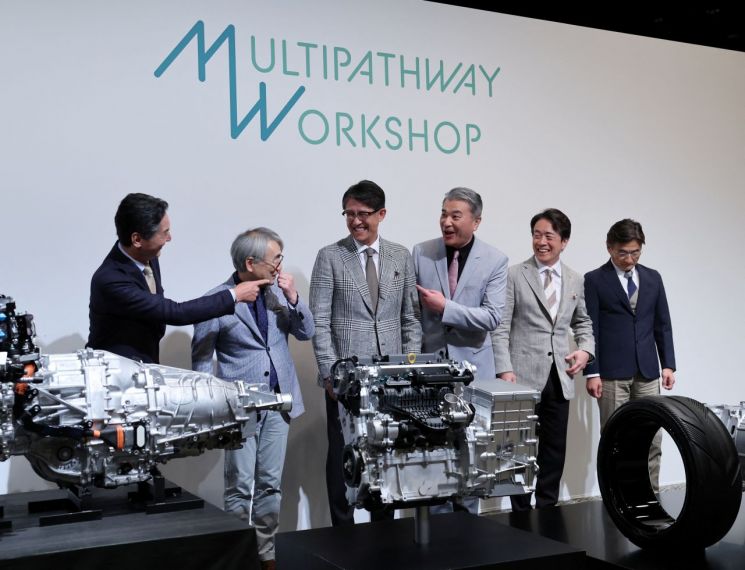
According to the Nihon Keizai Shimbun and CNET Japan on the 28th, the executives of the three companies held a briefing on environmental vehicle strategies in Tokyo and announced the plan for joint engine development. The newly developed engine aims to optimize integration with motors, batteries, and other electric drive devices. The briefing attracted attention as the CEOs and CTOs of all three companies attended.
Accordingly, the three companies plan to respond to trends such as engine downsizing, automotive package innovation, and carbon neutrality by jointly developing a new engine focused on downsizing, high efficiency, and high output. They aim to improve fuel efficiency by 12% and proactively address increasingly stringent regulations on exhaust emissions. The new engine is also expected to support alternative fuels such as e-fuels and biofuels, contributing to the decarbonization of internal combustion engines.
Toyota's CEO Tsuneharu Sato emphasized, "This is the evolution of engines to provide customers with options for carbon neutrality." Subaru's CEO Atsushi Osaki stated, "Achieving carbon neutrality is a challenge for the Japanese industry and society as a whole," and stressed the necessity of developing new engines by saying, "Neither internal combustion engines nor carbon fuels are solutions at present."
Meanwhile, Toyota owns about 20% of Subaru's shares and about 5% of Mazda's shares.
© The Asia Business Daily(www.asiae.co.kr). All rights reserved.

















