"Drivers Not Entering Intersection Have No Choice"
1st and 2nd Trial Acquittals Overturned, Conviction Remanded
The Supreme Court has ruled that if the traffic light turns yellow just before entering an intersection, drivers must stop unconditionally, even if braking might cause the vehicle to stop in the middle of the intersection.
According to related regulations, only when a vehicle has partially entered the intersection is it required to quickly proceed out of the intersection during a yellow light. Therefore, if a driver who has not yet entered the intersection decides to continue driving during a yellow light, judging the risk of an accident on their own, it is considered a violation of the signal.
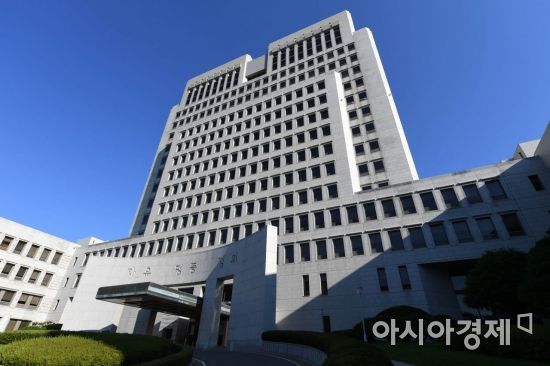
On the 13th, according to the legal community, the Supreme Court's 3rd Division (Presiding Justice Oh Seok-jun) overturned the lower court's acquittal of defendant A, who was charged with violating the Special Act on the Treatment of Traffic Accidents (injury), and remanded the case to the Incheon District Court with a verdict of guilt.
The court cited Supreme Court precedents, stating, "Article 6, Paragraph 2, Appendix 2 of the Enforcement Rules of the Road Traffic Act stipulates the concept of 'yellow light' and states that 'vehicles must stop before the stop line or pedestrian crossing, or immediately before the intersection, and if a vehicle has already partially entered the intersection, it must quickly proceed out of the intersection.' According to this regulation, if the light changes to yellow before the vehicle enters the intersection, the vehicle must stop before the stop line or immediately before the intersection. The driver cannot choose whether to stop or proceed, and such an interpretation does not cause unconstitutional traffic congestion at intersections."
It continued, "Even if the stopping distance of the vehicle is expected to be longer than the distance to the stop line when the signal changes to yellow before entering the intersection, if the defendant did not stop immediately before the intersection, it is reasonable to consider it a violation of the signal," adding, "The lower court erred in its judgment by misunderstanding the legal principles regarding 'yellow light' in Article 6, Paragraph 2, Appendix 2 of the Enforcement Rules of the Road Traffic Act, which affected the verdict," explaining the reason for overturning and remanding.
In July 2021, while driving in Bucheon, A did not stop when the traffic light turned yellow just before entering an intersection. A exceeded the speed limit by 20 km/h and made a left turn, colliding with a motorcycle that had started moving prematurely from the left side of the direction of travel, causing injury to the motorcycle rider.
The trial focused on whether A's driving constituted a violation of the signal.
The first trial court acquitted A, finding no breach of duty of care.
The court reasoned that even if A had braked suddenly upon seeing the yellow light, the vehicle likely would have stopped beyond the intersection, so it could not be considered a signal violation.
At the moment the yellow light turned on, the distance between A's vehicle and the stop line was about 8.3 meters, while the estimated stopping distance after sudden braking was longer, between 30.72 meters and 35.85 meters.
Additionally, the court found it difficult to establish a causal relationship between A's speeding and the accident.
It argued that even if A had obeyed the speed limit, considering the stopping distance, the collision would have been inevitable, and it was difficult for A to anticipate that the victim would violate the red light and start moving prematurely.
The second trial court reached the same conclusion.
The court stated, "If a yellow light changes before the stop line and the distance to the stop line is shorter than the stopping distance, requiring immediate braking unconditionally would inevitably increase the risk of stopping inside the intersection and causing an accident. Drivers cannot be required to comply with the signal in a way that risks their lives," it pointed out.
However, the Supreme Court's judgment differed.
The court stated, "The lower court held that if the light changes to yellow before the stop line and the distance to the stop line is shorter than the vehicle's stopping distance, requiring immediate braking and stopping is not required because it could cause accidents inside the intersection, and thus interpreted the meaning of 'yellow light' in Article 6, Paragraph 2, Appendix 2 of the Enforcement Rules of the Road Traffic Act not to require unconditional braking before the stop line in such cases, maintaining the first trial's acquittal. This judgment misinterpreted the legal principles regarding 'yellow light' in Article 6, Paragraph 2, Appendix 2 of the Enforcement Rules of the Road Traffic Act, affecting the verdict," it said.
According to the literal interpretation of the related regulations, the Supreme Court's view is that a driver who has not yet even partially entered the intersection cannot choose whether to continue driving considering the risk, and must stop unconditionally.
© The Asia Business Daily(www.asiae.co.kr). All rights reserved.