Choi Sang-mok, Deputy Prime Minister for Economy and Minister of Strategy and Finance, evaluated that "the first quarter domestic gross domestic product (GDP) grew by 1.3% compared to the previous quarter, signaling a clear green light on the growth path."
At the Foreign Economic Ministers' Meeting held at the Government Seoul Office on the 25th, Deputy Prime Minister Choi said, "Although temporary factors also played a role in the first quarter growth rate, the private sector fully contributed to the overall growth rate, and domestic demand rebounded, showing a balanced recovery between exports and domestic demand," calling it a "return to a textbook growth path."
Deputy Prime Minister Choi emphasized, "This growth rate is the highest in 2 years and 3 months since the fourth quarter of 2021, and the highest in 4 years and 6 months excluding the COVID-19 pandemic period (2020-2021)."
On the same day, the Bank of Korea announced that the GDP for the first quarter of this year increased by 1.3% (preliminary figure) compared to the previous quarter. This is the highest growth rate in 2 years and 3 months since the fourth quarter of 2021 (1.4%).
The Ministry of Strategy and Finance evaluated in a related back briefing that growth was led by the private sector without relying on fiscal spending. Yoon In-dae, Director General of Economic Policy at the Ministry of Strategy and Finance, stated at the back briefing, "Under a policy stance that maintains fiscal soundness, a significant portion of growth came from private contributions," adding, "Domestic demand rebounded, showing a balanced recovery between exports and domestic demand."
Looking at the contribution to the rebound in the first quarter growth rate, the previously sluggish domestic demand indicators rebounded by 0.7% due to a negative base effect from the previous quarter, and the contribution of net exports, supported by a decrease in imports, played a major role with 0.6%.
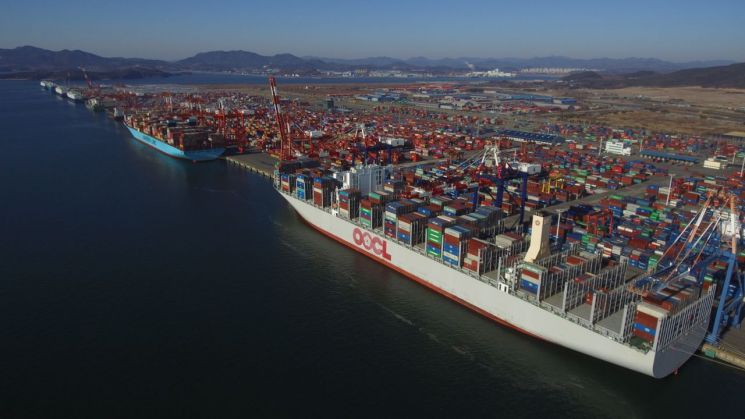
The contribution of net exports recorded positive figures for four consecutive quarters, maintaining a solid trend. This is the third time since the 2000s that net exports have recorded positive contributions for four consecutive quarters.
By sector, construction investment rose by 2.7% as both buildings and civil engineering recovered. Exports also grew by 0.9%, centered on IT items such as smartphones. Private consumption grew by 0.8%, with increases in goods like clothing and services such as food and accommodation.
Director General Yoon evaluated, "Even considering one-off factors such as the base effect in the construction investment sector and the smartphone launch effect, a growth rate of over 1% is a meaningful figure," adding, "Private consumption is also moving past the bottom and heading toward a recovery trend."
Regarding the upward revision of the annual growth forecast following the surprise growth in the first quarter, he said, "Domestic and international forecasting institutions are also revising upward their forecasts for our country, and the annual growth rate may exceed the government’s forecast (2.2%)."
In particular, the Ministry of Strategy and Finance paid attention to the fact that the real gross domestic income (GDI) growth rate in the first quarter was 2.5%, significantly surpassing the GDP growth rate (1.3%). Real GDI is a figure that reflects real GDP plus real trade gains and losses due to changes in terms of trade, closely related to the purchasing power of the people.
Director General Yoon said, "The real GDI growth rate recorded the highest figure in 8 years and 3 months on a quarterly basis," adding, "This means that in trade with other countries, while energy prices fell, semiconductor prices rose, resulting in overall gains," and he viewed this as "positively affecting domestic demand improvement in the future."
© The Asia Business Daily(www.asiae.co.kr). All rights reserved.

















