Lee Seung-woo, Busan City Councilor, Urges "Implementation of Differential Fare System by Region"
Passionate Speech at the 318th Temporary Session 1st Plenary Meeting '5-Minute Free Speech'
Busan City Should Propose a Business Model for the
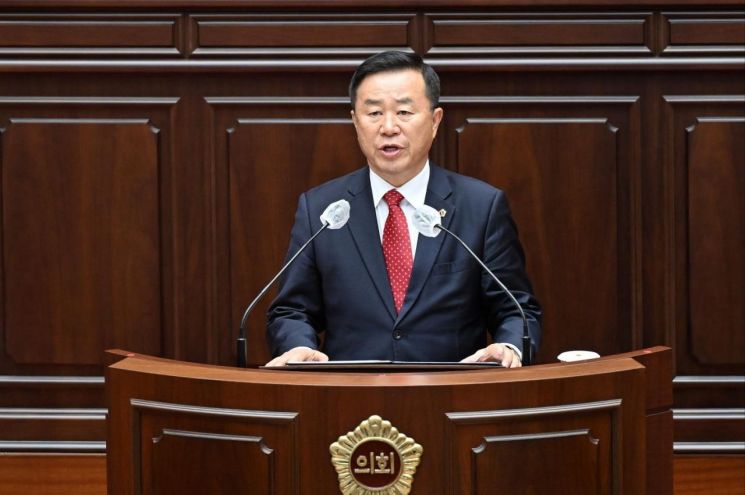
Busan City Council member Lee Seung-woo (People Power Party, Gijang-gun 2) urged the prompt implementation of a differentiated electricity tariff system, arguing that regions with high electricity self-sufficiency rates are being unfairly discriminated against.
On the 24th, during the 1st plenary session of the 318th extraordinary meeting, Lee demanded the government implement a regional differentiated electricity tariff system in accordance with the "Special Act on the Activation of Distributed Energy" through a five-minute free speech.
With the passage of the Special Act on the Activation of Distributed Energy in May, the law is scheduled to take effect in June, and Article 45 of the law explicitly states that electricity tariffs can be set differently by region.
However, the currently announced enforcement decree and enforcement rules do not include any provisions regarding the regional differentiated electricity tariff system stipulated in Article 45 of the law.
The Ministry of Trade, Industry and Energy, aware of criticism from regions with high electricity self-sufficiency rates, announced on the 16th that it had commissioned related research on the differentiated tariff system.
Although the details and duration of the research were not disclosed specifically, it is known to include topics such as electricity market price determination methods, refined differentiated tariff system design plans, and criteria for applying differentiated electricity tariffs.
Lee Seung-woo stated, “Seoul, which has the highest domestic electricity consumption, has an electricity self-sufficiency rate of 8.9%, which does not reach 10%, whereas Busan’s rate is 216.7%, the highest among the 17 metropolitan cities and provinces.”
He added, “Busan is a metropolitan local government densely packed with nuclear power plants, producing surplus electricity that is supplied to the metropolitan area,” pointing out, “Busan citizens worry about nuclear accidents during earthquakes and various disasters, so the differentiated tariff system is not a compensation but a necessity.”
Lee argued that the differentiated tariff system could attract industries requiring large-scale electricity, leading to corporate attraction and the creation of quality jobs, thereby driving population inflow into Busan.
He also emphasized that before finalizing the enforcement decree and rules, the government should explain the regions where electricity rates will increase, and that Busan City should review proposals for differentiated tariff system business models and actively participate in the government’s research process.
At the end of his speech, Lee said, “Among the contents of the special law, the differentiated tariff system is what benefits regions with high electricity self-sufficiency rates,” and “I once again urge the government to definitely introduce the differentiated tariff system.”
© The Asia Business Daily(www.asiae.co.kr). All rights reserved.

















