South Korea's bid to host the 2030 World Expo in Busan ultimately failed. Riyadh, Saudi Arabia, boasting powerful oil money, was selected as the final host city. However, despite the unsuccessful bid, evaluations suggest that over the past 500 days of Busan's Expo challenge, South Korea not only built diplomatic assets but also achieved outcomes such as discovering global markets and expanding business opportunities.
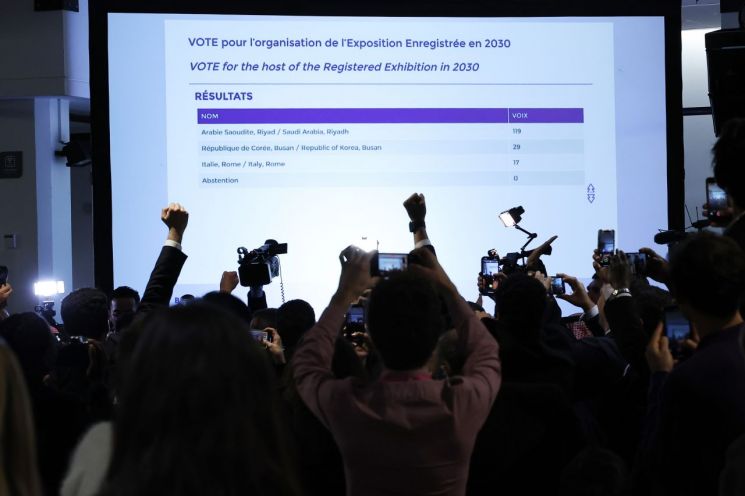
Saudi Arabia Selected as Expo Host with 119 Votes... Busan Receives Only 29 Votes
On the 28th (local time), at the 173rd General Assembly of the International Bureau of Expositions (BIE) held in Paris, France, the vote to select the host city resulted in Busan receiving 29 votes out of 165 participating countries, falling far behind Riyadh, Saudi Arabia. Saudi Arabia secured 119 votes, surpassing the two-thirds majority of participating countries (110 votes), and was selected as the host city for the 2030 Expo without a second round of voting. Italy's Rome came in third with 17 votes.
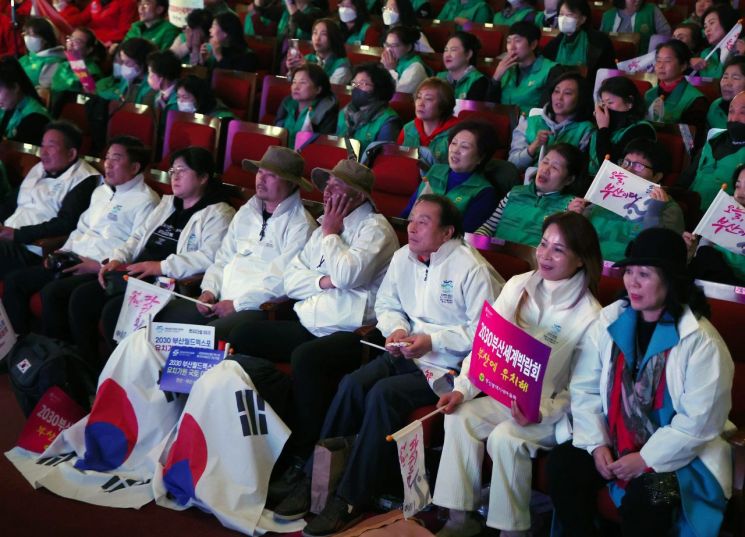
Until now, South Korea had pursued a strategy to surpass Italy and reach the second runoff round to stage a dramatic comeback against Saudi Arabia, but it was overwhelmingly defeated in the first round of voting and ultimately had to accept defeat.
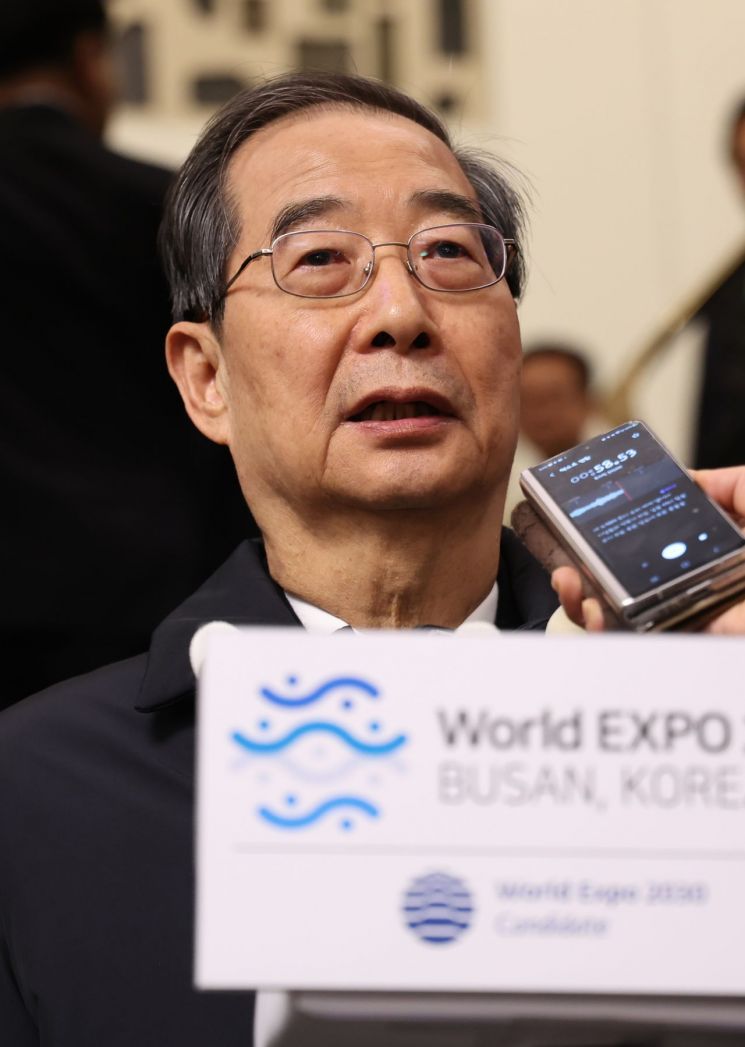
Prime Minister Han Duck-soo, speaking to reporters immediately after the vote, said, "I am sorry for not meeting the overwhelming expectations of the people," and added, "I feel a heavy sense of responsibility." After expressing gratitude once again to the business community, political circles, and citizens who actively supported the Busan Expo bid, he added, "We will humbly accept this result and continue to develop the diplomatic assets accumulated while visiting 182 countries during the Expo bid process."
South Korea, which entered the Expo bidding race late, was initially considered to be at a disadvantage. However, over the past 500 days, the government and private sectors traveled a distance equivalent to 495 times around the Earth, contacting and persuading member countries one by one, and concluded that a dramatic turnaround was possible. The strategy was to absorb Italy's support votes in the second runoff and also pull some votes that had supported Saudi Arabia in the first round.
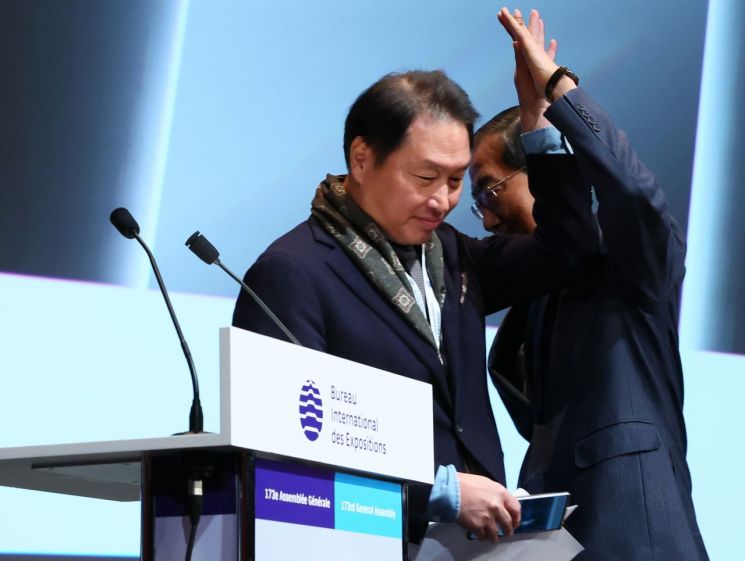
In the final presentation (PT) on the day, South Korea appealed for support until the very end by presenting the discourse of 'human solidarity.' Speakers included Prime Minister Han Duck-soo, Choi Tae-won, Chairman of the Korea Chamber of Commerce and Industry and SK Group, who also chaired the private committee supporting the Busan Expo bid, Busan Mayor Park Hyung-joon, former UN Secretary-General Ban Ki-moon, and Ambassador Na Seung-yeon. They highlighted South Korea as a cooperative partner for solving common human problems by mentioning challenges faced by developing countries such as climate change, digital divide, and food crises, and promised concrete collaboration.
In particular, their speeches focused on conveying the message that South Korea was able to grow with the help of the international community and now wishes to give back that support. A Korean War veteran made a surprise appearance in a support video, emphasizing Korea's unique global network and story of solidarity. Chairman Choi emphasized, "The Busan Expo will be an 'Expo for You,' a platform to discuss issues such as climate change, digital divide, food crises, and diseases." Former Secretary-General Ban said, "The mission of the Expo, which seeks a new spirit of the era, is to fundamentally transform our way of life," adding, "South Korea will bridge the gap between developed and developing countries and present hope and vision for future generations."
However, with Saudi Arabia's hosting confirmed in the first round of voting by a larger-than-expected margin, South Korea received a disappointing result. Until just before the vote, there was hope on the Korean side that "there is a chance of winning if it goes to a runoff in a chaotic situation," but the actual situation proved otherwise. It was evaluated that South Korea had limitations in overturning Saudi Arabia's early moves, which were based on religious and regional foundations and backed by oil money. Professor Kim Itaek of Busan National University, who served as an advisor to the bid committee, explained, "Saudi Arabia promoted large-scale events like the Expo as a way to strengthen royal authority and secure loyalty and support from its citizens," adding, "In the turbulent international situation with the Ukraine war and US-China conflicts, economically struggling underdeveloped countries gave their votes en masse to Saudi Arabia."
Achievements Also Remain... Expanded Networks Through the Expo Bid
Although the Expo bid failed, certain achievements remain. First and foremost is the expanded network developed through the Expo bid. Despite South Korea's rise to become the world's 10th largest economy, it had been evaluated as having limited exchanges with developing countries except neighboring nations. However, in the process of conducting an all-out Expo bid targeting 182 BIE member countries, South Korea was able to communicate with many countries with which it had limited exchanges, including those in Africa, Central Asia, South America, the Caribbean, and Pacific island nations.
Against Saudi Arabia's oil money, South Korea appealed to the votes of developing countries such as those in Africa with a 'customized economic cooperation package' presented by a large-scale public-private economic delegation. Through projects like the 'K-Rice Belt,' which spreads Korean rice varieties and agricultural technology to increase rice production in Africa, South Korea aimed to contribute to strengthening food security. Additionally, for Pacific island nations such as Tonga and Fiji, South Korea proposed the 'Korea-Ocean Economy Initiative,' focusing on the development of marine fisheries and responses to marine environmental issues.
Although the Expo bid failed, all of this is analyzed to become South Korea's cooperative network and assets. The government expects that the Expo bid will serve as an opportunity to accelerate cooperation with more diverse countries in areas such as overseas infrastructure market entry for domestic companies, cooperation in critical mineral supply chains, and expansion of human exchanges. To ensure that the network built this time does not remain a one-time event, the government plans to expand about ten diplomatic missions in developing countries including Africa next year.
South Korean companies' perspectives are also evaluated to have broadened through this Expo bid. Key business leaders, including Chairman Choi, directly visited and exchanged with various countries, creating opportunities to explore market entry and business cooperation. According to the business community, the top 12 major domestic groups met with more than 3,000 high-level officials such as heads of state and ministers from 175 countries over 18 months since the launch of the private bid committee in June last year. The total number of meetings held to meet these officials reached 1,645, with half of them attended directly by major business leaders or CEOs.
In a statement on the day, the Korea Chamber of Commerce and Industry said, "The united efforts of the people to bid not only raised South Korea's national competitiveness to a higher level but also expanded the global horizon of Korean industry," adding, "Each country hoped for partnerships with South Korea, which has a diverse portfolio ranging from consumer goods to advanced technology and future energy solutions. In the process, companies achieved meaningful results such as strengthening global recognition, pioneering new markets, diversifying supply chains, and creating new business opportunities."
The Korea Employers Federation also stated, "This bid activity not only served as an opportunity to introduce the economically and culturally developed South Korea to the world but also enhanced the nation's status by building a broad network through meetings with many heads of state worldwide."
© The Asia Business Daily(www.asiae.co.kr). All rights reserved.



















