Climate Action Practices Embracing Discomfort in Daily Life
"We hope it becomes a place where children can enjoyably develop the power of independence and coexistence, even if it is a bit inconvenient and cumbersome."
On the 12th, the Gyeongnam Office of Education announced a comprehensive plan for restructuring student training institutions, expressing this sentiment.
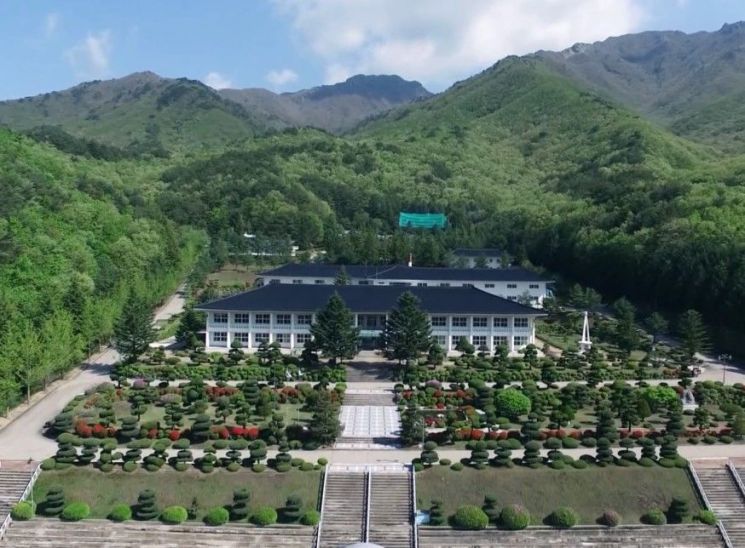 Gyeongnam Office of Education Deokyu Student Education Center. [Photo by Gyeongnam Office of Education]
The provincial Office of Education plans to operate four training institutions within the province, including the Student Education Center and Deokyu Student Education Center, with ecological transition education starting next year.
Named "Sandeulsandeul Ieum," the Gyeongnam-style training and experiential education aims to cultivate independent and cooperative global ecological citizens who practice sustainability.
The Office of Education intends to shift from the existing mind and body training-centered programs to a system where schools select ecological transition education programs developed by the training institutions.
▲ Practicing a lifestyle of everyone enduring inconvenience ▲ Operating the Sandeulsandeul Ieum curriculum before and after experiential training ▲ Developing elective module ecological transition education programs and expanding school choice, all linked with the school curriculum.
To strengthen the connection between training institutions and schools, they will ▲ establish an integrated platform ▲ operate the Sandeulsandeul Ieum education support group ▲ designate Deokyu Student Education Center as a hub education center ▲ build a network of training institutions within the province to expand the learning ecosystem ▲ create an eco-friendly training institution environment.
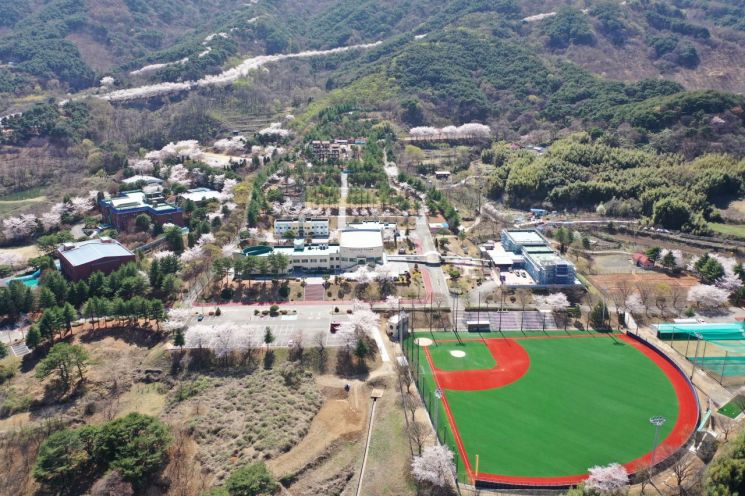
The Office of Education will promote climate action lifestyle practices that accept inconvenience throughout the entire training period at all training institutions.
This includes providing local food and vegetarian meals to reduce food waste, challenging zero personal waste by avoiding disposable products, leaving things as found during experiential activities, respecting wildlife, and engaging in natural environment protection activities.
Elective module ecological transition education programs will also be applied.
Common programs will be operated using climate action lifestyle education and training institution facilities, while schools will evenly select from institution-developed courses, seasonal programs reflecting each institution's natural environment and infrastructure, and regional linkage programs.
Training activities will be diversified into visit-type programs where training institutions visit schools, customized programs reflecting school opinions, and varied training durations such as one-day, one night two days, and two nights three days, also linking with public institutions.
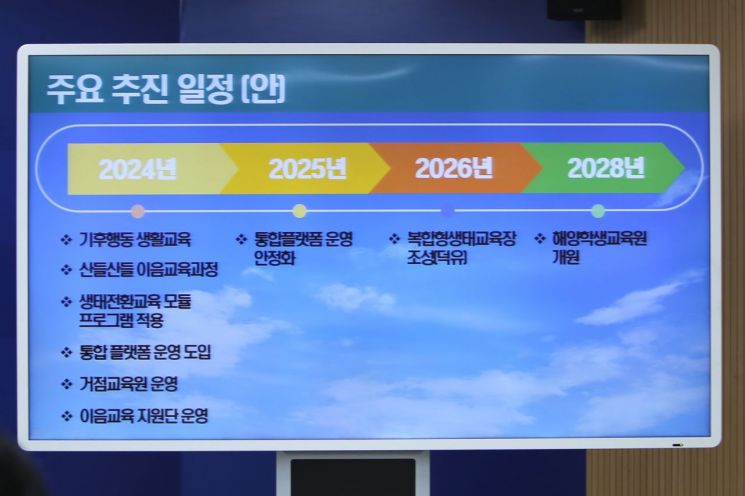 Major Schedule for Restructuring Student Training Institutions by Gyeongnam Office of Education (Draft).
 [Photo by Lee Seryeong]
The Office of Education expects the number of students using training institutions to increase from about 15,000 in 2023 to approximately 37,000 in 2027 due to the restructuring.
They plan to develop various programs so that the ecological experiences students gain from training activities can spread into daily life, school life, and home.
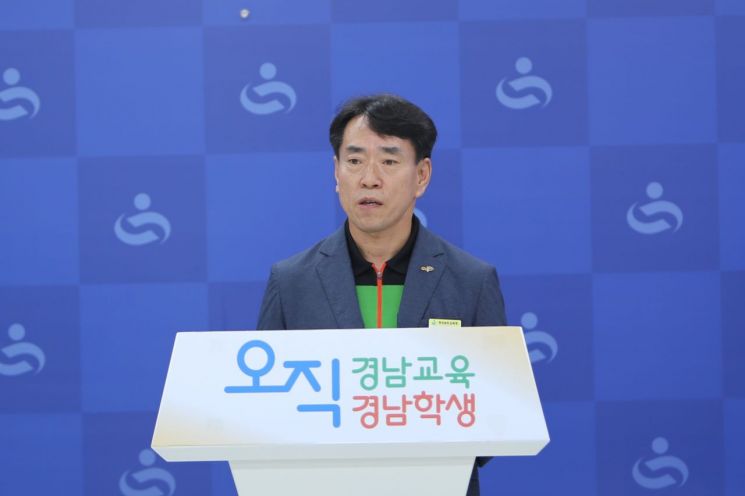 Baek Gwanghwan, Director of Democratic Citizenship Education at the Gyeongnam Office of Education, is announcing the comprehensive plan for restructuring student training institutions.
 Photo by Lee Seryeong
Background Hwan, Director of Democratic Citizenship Education, said, "The goal of restructuring student training institutions is to provide an important opportunity for students to recognize the climate crisis and move forward as ecological citizens," adding, "Furthermore, we hope that teachers and parents will also spread ecological-centered daily life together."
© The Asia Business Daily(www.asiae.co.kr). All rights reserved.



















