US economic figures harshly criticized Fitch's downgrade of the US credit rating as a judgment disconnected from the current economic situation, which shows strong signs of recovery. There is also analysis suggesting that the global financial market impact from the downgrade will be limited.
Paul Krugman, Nobel laureate in Economics and New York Times (NYT) columnist, mocked on the 1st (local time), saying, "Fitch's downgrade of the US credit rating is a broadly and precisely laughable decision." He added, "(Fitch's judgment) does not make sense even by its own stated criteria," and fiercely criticized, "There must be an underlying reason for the downgrade, and whatever it is, it is not about the US's ability to pay but about Fitch itself."
Jason Furman, professor at Harvard University’s Economics Department and former chairman of the White House Council of Economic Advisers (CEA) during the Barack Obama administration, also directly attacked Fitch's downgrade decision as "completely absurd." On Twitter, Furman pointed out that "the US macroeconomy has improved significantly compared to last year, there has been no sharp increase in debt ratios, and the governance sector has not changed much," indicating that the current economic situation is far from the downgrade conditions.
There was also an interpretation that this downgrade would not affect investors' stance on US Treasury creditworthiness. Former US Treasury Secretary Larry Summers argued in a phone interview with Bloomberg News, "The long-term trajectory of the US fiscal deficit is concerning, but there is no doubt about the US's debt repayment ability."
He harshly criticized, saying, "Talking about the default risk of US Treasury bonds is absurd, and I do not think Fitch has any new or useful insights based on recent US economic conditions." He pointed out that recent economic indicators such as consumption, inflation, and employment over the past few months have shown that the US economy is stronger than expected, which is a positive factor for US Treasury creditworthiness.
Mohamed El-Erian, Dean of Queens' College at the University of Cambridge in the UK, also sharply criticized, calling the downgrade "a strange move that does not seem likely to affect the market."
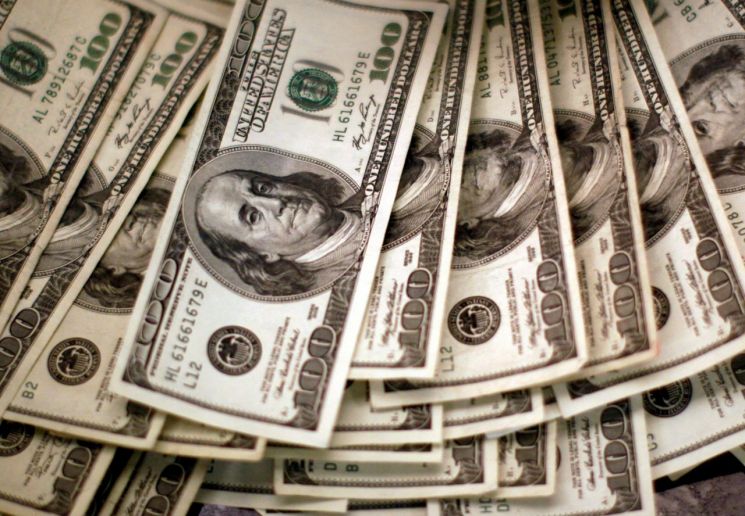
There is also a prevailing opinion that the global financial market, which operates on the premise that "US Treasuries are risk-free assets" and "the dollar is the key currency," is unlikely to fall into confusion.
The Wall Street Journal (WSJ) reported, "In the global financial market, US Treasuries have a solid status as 'risk-free assets' that guarantee stable returns," and "there will be no investors who think Fitch's downgrade will cause any problems for the status of US Treasuries."
Luke Tilley, chief economist at Wilmington Trust, told WSJ, "There will be no damage to the US's status as the key currency country or risk transmission to the financial system due to the actions of a single credit rating agency."
This is because even during the 2011 downgrade of the US credit rating by S&P, US Treasury yields actually fell due to a preference for safe assets, and the essential impact of the downgrade on bond issuance and circulation did not cause shockwaves.
On this day, Fitch downgraded the US sovereign credit rating one notch from 'AAA' to 'AA+' and changed the rating outlook from 'negative watch' to 'stable.' Fitch cited reasons for the downgrade including worsening US fiscal conditions over the next three years, an increase in federal government debt, and deterioration in governance. As a result, among the three major global credit rating agencies, only Moody's (Aaa) continues to maintain the highest rating for the US credit rating.
© The Asia Business Daily(www.asiae.co.kr). All rights reserved.

















