Establishing the Foundation for Korea's No.1 AI-Based Mobility City
Gwangju City, which secured the ‘1 million-pyeong Future Car National Industrial Complex,’ has been finally selected in the contest for the ‘Future Car Materials, Parts, and Equipment Specialized Complex.’ This enables Gwangju to firmly establish the foundation as the ‘No. 1 AI-based mobility city in Korea.’
Gwangju Metropolitan City (Mayor Kang Gi-jung) announced on the 20th that it was finally selected as the ‘Materials, Parts, and Equipment Specialized Complex’ in the future car sector in the contest project for the ‘Materials, Parts, and Equipment Industry Specialized Complex’ hosted by the Ministry of Trade, Industry and Energy.
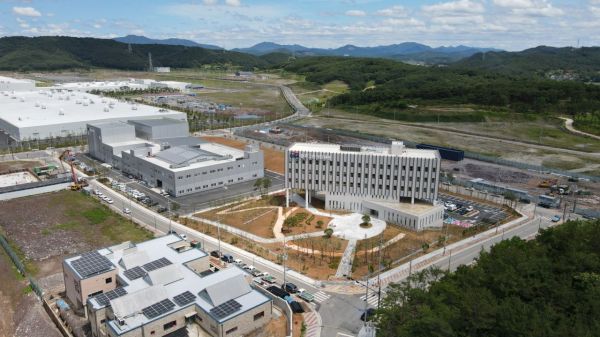
The ‘Gwangju Future Car Materials, Parts, and Equipment Specialized Complex’ will invest a total of 600 billion KRW by 2028 to link the existing Bitgreen National Industrial Complex, Jingok Industrial Complex, and the newly designated Future Car National Industrial Complex to establish a future car triangular belt of approximately 2.2 million pyeong.
In this contest, 13 local governments nationwide, including Gwangju City, applied and competed fiercely. Gwangju City applied in the automobile sector and was recognized for its excellence in the document and presentation evaluations, securing the final confirmation.
The government aims to strengthen the competitiveness of the materials, parts, and equipment industry and improve supply stability nationally by intensively fostering 150 core technologies. In the automobile sector, 15 technologies are designated to support research and technology development, workforce training, and infrastructure.
In particular, this project focuses on creating a virtuous cycle structure in the parts industry and improving the localization rate by building a value chain between anchor companies and partner firms.
Since the automobile industry accounts for 43.1% of the regional manufacturing industry in Gwangju, the city actively responded to the transition to future cars such as autonomous vehicles and participated in the ‘Materials, Parts, and Equipment Specialized Complex’ contest project to discover next-generation growth engines and revitalize the local economy.
Also, following the earlier selection of the ‘1 million-pyeong Future Car National Industrial Complex’ in March, Gwangju plans to accelerate its development and actively attract competitive anchor companies and key partner firms.
In fact, according to Gwangju’s investment intention survey, 70 companies expressed an investment intention of about 1.9 trillion KRW, and about 100 local parts companies hoped to transition to future cars. Additionally, 147 companies expressed their intention to move into the newly designated Future Car National Industrial Complex.
Notably, finished car manufacturer Gwangju Global Motors (GGM), anchor company LG Innotek, and Korea Alps submitted letters of intent to participate. Kia and Hyundai Mobis also expressed their willingness to actively cooperate.
Gwangju plans to specialize in core future car technologies for autonomous driving parts development, focusing on ▲ perception sensors ▲ control parts ▲ communication systems.
‘Sensors’ are technologies that convert vehicles, objects, and environments into information using infrared, radio waves, lasers, etc. ‘Control’ refers to power transmission technologies for controlling, managing, and operating vehicle parts, as well as technologies for power conversion, voltage transformation, and power stabilization. ‘Communication’ is the technology that performs communication between vehicles and surrounding environments or devices.
With the selection of the ‘Materials, Parts, and Equipment Specialized Complex,’ Gwangju expects to secure key projects to be included in the Future Car National Industrial Complex, enabling early activation and raising the localization rate of autonomous vehicle parts, a specialized field, from below 50% to over 80%.
Furthermore, it is anticipated that the transition of 568 local parts companies, which have been centered on internal combustion engines, to future cars, as well as technology development and new product launches resulting from the completion of the value chain between anchor companies and parts companies, will gain momentum. Additionally, economic ripple effects such as 16,000 jobs created, 30 trillion KRW in production inducement, and 10 trillion KRW in added value are expected.
Mayor Kang Gi-jung of Gwangju said, “Following the new designation of the Future Car National Industrial Complex in March, the attraction of the Future Car Materials, Parts, and Equipment Specialized Complex marks an important turning point for Gwangju to advance as a leading future car city. We will form a dedicated team to ensure the early establishment of the Future Car National Industrial Complex and the Materials, Parts, and Equipment Specialized Complex projects and carry them out thoroughly.”
© The Asia Business Daily(www.asiae.co.kr). All rights reserved.

















