115% Hyperinflation Real Wage Decline Trend
Argentina's economy has entered a stagnant phase with hyperinflation exceeding 115%, showing no signs of growth. The severe drought has dealt a direct blow to grain exports, a key driver of the economy, while even the previously high real wages have started to decline, making the future of Argentina's economy increasingly bleak.
On the 18th (local time), the Argentine government announced that the Economic Activity index for May contracted by 5.5% compared to the same period last year. This decline is larger than the previous month's (-4.2%) and represents the worst indicator since the COVID-19 pandemic in 2020. The Economic Activity index, released monthly by Argentina, is considered a leading indicator for measuring Gross Domestic Product (GDP).
Experts have assessed that Argentina, which has experienced five recessions in the past decade, is now facing its sixth recession crisis. According to a survey conducted by the Central Bank of Argentina, economists forecast that Argentina's GDP will shrink by 3% annually this year and continue to experience negative growth next year.
The recent sharp faltering of Argentina's economy is attributed to the worst drought damage. As one of the world's top five producers of corn and soybeans, Argentina has suffered losses exceeding $20 billion (approximately 25.3 trillion KRW) due to a drastic drop in grain exports caused by the severe drought that began earlier this year. According to the Argentine National Institute of Statistics and Censuses, cumulative merchandise export value as of May this year fell by 22% compared to the same period last year. Bloomberg diagnosed, "The severe drought has dealt a direct blow to the export-dependent economy, causing Argentina's economy to contract at the fastest pace since the 2020 pandemic."
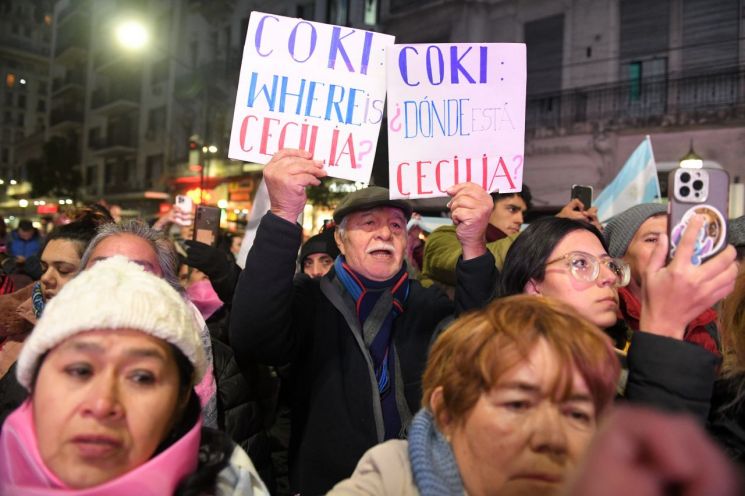
Inflation, a result of the populism under President Alberto Fern?ndez, who took office in 2019, has already surpassed controllable levels. Argentina's inflation rate has remained above 100% since February (102.5%). As of May, it has exceeded 115%. In this hyperinflation situation (triple-digit inflation rate) occurring for the first time since 1991, wage increases are failing to keep pace with rising prices.
Meanwhile, real wages have recently turned downward. Bloomberg stated, "Despite a long-term recession since 2012, real wages, which were among the highest in South America, have started to decline, causing consumers to tighten their wallets even more," adding, "With the August midterm elections and October general elections approaching, economic prospects are becoming more uncertain, causing economic activity to come to a halt." Having raised the benchmark interest rate to an extreme level to curb hyperinflation, the current government has no cards left to play. The Central Bank of Argentina has raised the benchmark interest rate to 97% to suppress inflation.
© The Asia Business Daily(www.asiae.co.kr). All rights reserved.

















