Ryu Gyeong-gi, Mayor of Jungnang-gu, Visits All Senior Centers in the Area to Check on the Elderly
Jungnang-gu (Mayor Ryu Gyeong-gi) conducted a 10-month tour from July 2022, inspecting 131 senior centers to check on the well-being of local elderly residents.
Mayor Ryu Gyeong-gi visited senior centers weekly to inspect the safety of the facilities. He also spent time conversing with the elderly, listening to their difficulties in using the centers, and exchanging various opinions.
The district stated that it plans to actively review the seniors' opinions and reflect them in district administration.
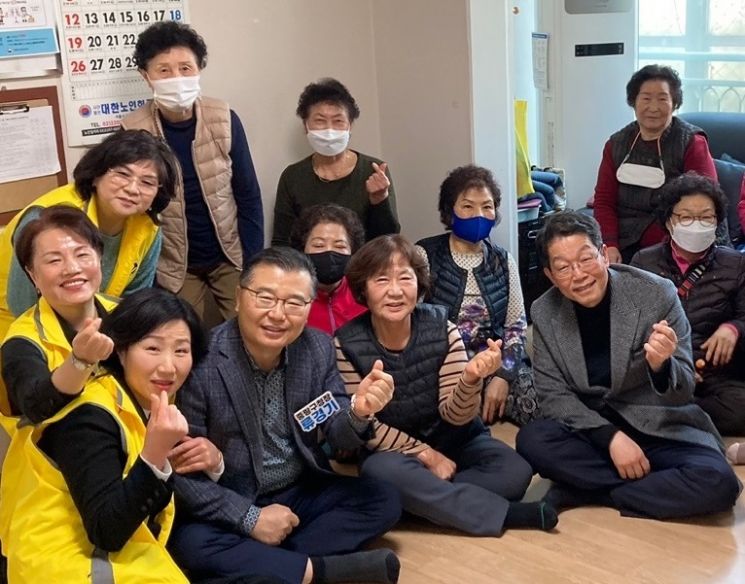 Ryu Kyung-gi, Mayor of Jungnang-gu (second from the left in the first row), visited a senior center to check on the well-being of the elderly.
Mayor Ryu Gyeong-gi said, “Visiting the senior centers with the heart of visiting my parents, I felt proud seeing the elderly warmly welcome and appreciate my visits each time.” He added, “I will continue to visit senior centers to check on the elderly and do my best to make these centers enjoyable and comfortable resting places for them.”
Jungnang-gu has entered the era of a 1 trillion KRW budget in 2023, allocating 211.2 billion KRW for elderly welfare, a 12.9% increase from the previous year. Additionally, the monthly operating expenses per senior center were raised by 50,000 KRW compared to the previous year, supporting the replacement of aging facilities.
Lee Pil-hyung, Mayor of Dongdaemun-gu, Meets with Minister of Land, Infrastructure and Transport Won Hee-ryong
On the 19th, held a meeting at Jeongdong Land Development Exhibition Hall to discuss smart city creation and local issues
Lee Pil-hyung, Mayor of Dongdaemun-gu, met with Minister of Land, Infrastructure and Transport Won Hee-ryong on the 19th at Jeongdong Land Development Exhibition Hall, requesting continuous interest and active government support to resolve local issues such as smart city development.
Dongdaemun-gu was the first district in Seoul to declare a carbon-neutral city and is preparing to leap forward as an eco-friendly future city through initiatives like promoting the city of flowers. It also plans to promote smart city development projects to support these efforts.
During the meeting, Mayor Lee highlighted the financial independence disparities among Seoul’s autonomous districts and the resulting gaps in smart city services. He emphasized the need to provide Seoul’s districts with opportunities to participate in the Ministry of Land, Infrastructure and Transport’s small-scale smart city contest and the necessity of consulting on projects suitable for Dongdaemun-gu.
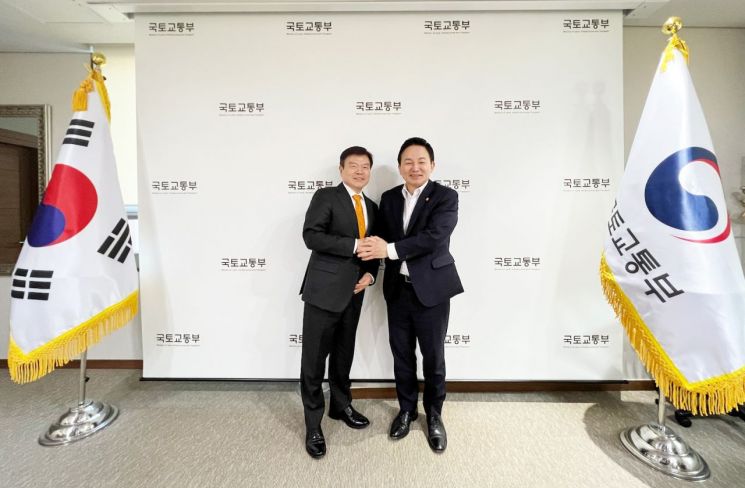
Mayor Lee also requested government support for the creation of the Cheongnyangni Station Metropolitan Transfer Center, relocation of the Cheongnyangni Station maintenance depot, and the development of the above-ground railway covering project to foster Cheongnyangni as a metropolitan transportation, commercial, and business hub driving balanced development and growth in the northeastern region. He urged the swift promotion of the Myeonmok Line urban railway and the new single-track Bundang Line project.
Furthermore, he requested that the Ministry of Land, Infrastructure and Transport and the Ministry of Environment cooperate to reconsider the location of vertical shafts and air supply facilities installed only in Dongdaemun-gu due to the undergrounding of the Dongbu Expressway, as these are nuisance facilities disliked by local residents.
Minister Won Hee-ryong acknowledged the urgent issues and explanations presented by Mayor Lee, including smart city-related proposals, stating, “I understand the position of Dongdaemun-gu and its residents and will actively review these matters.”
Mayor Lee Pil-hyung said, “Dongdaemun-gu is a city full of potential and a foundation for a promising future. We will work with the government and related agencies with a mid- to long-term vision to make it a place where residents can live with pride.”
Guro-gu Officially Begins Operation of Dementia Safety Center Branch
Following the main center in Guro 3-dong, a screening room, program room, and caf? established on the 5th floor of Haneulshim Building in Oryu 1-dong
Improving accessibility to dementia management services in the area... Elderly also directly participate in caf? operations
Guro-gu (Mayor Moon Heon-il) has strengthened its elderly health management network.
Guro-gu announced on the 19th, “Ahead of entering a super-aged society, we have added a dementia safety center branch to create a community where dementia patients, their families, and residents live together. We have prepared a space for the branch in Oryu 1-dong, completed construction, and began full operation earlier this month.”
When the Guro-gu Dementia Safety Center moved from Gocheok 1-dong to Guro 3-dong in 2019, some areas experienced reduced accessibility to dementia management services. As part of the 8th mayoral administration’s pledges, the district decided to establish a branch and selected Oryu 1-dong (20ga-gil, Gyeongin-ro 5) as the site at the end of last year.
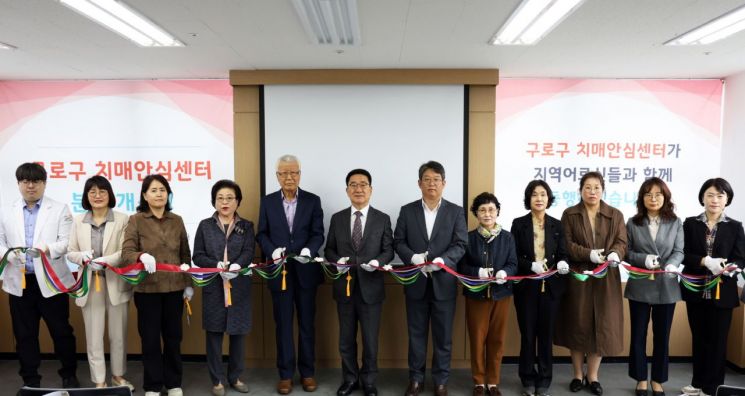
The branch, built on the 5th floor of Haneulshim Building, covers 150㎡ and includes a screening room, program room, and family caf? ‘Memory Caf?.’ It handles some of the main center’s duties, such as early and detailed dementia screening, counseling, dementia prevention and cognitive enhancement programs, and support for families of dementia patients. To boost the elderly’s pride as members of society, two elderly with mild dementia take turns serving drinks at the family caf?, providing opportunities to participate in caf? operations.
To celebrate the branch’s full operation, an opening ceremony was held on the 18th. The event included Mayor Moon Heon-il, related agency officials, and local residents, featuring congratulatory performances by the elderly, progress reports, congratulatory speeches, ribbon-cutting, and facility tours.
The main dementia safety center, opened in 2009, continues to operate in a larger and more comfortable space after relocation, and a free shuttle bus runs six times daily to accommodate residents with accessibility difficulties.
A Guro-gu official said, “The branch operation will overcome geographical limitations and eliminate blind spots in elderly care. We will continue to do our best to create a safe and healthy community for the elderly.”
Gwanak-gu Distributes ‘Companion Plants’ to Residents in Vulnerable Living Environments
Distributes companion plants to elderly and single-person households and provides follow-up care through horticultural therapists
Offers horticultural therapy programs to support cognitive health, emotional well-being, and social adaptation
Gwanak-gu (Mayor Park Jun-hee) is distributing companion plants to elderly and single-person households in vulnerable living environments to provide emotional stability and vitality.
The district selected companion plants such as ‘Baekryanggeum, Happy Tree, and Jagumu,’ which are highly adaptable to the environment, easy to manage, and produce beautiful flowers. Distribution to 559 recipients is planned to be completed by May.
After distribution, follow-up care is provided to ensure ease of management. For one year, horticultural therapists will visit and provide telephone consultations to offer plant care tips, supporting healthy and proper companion plant management.
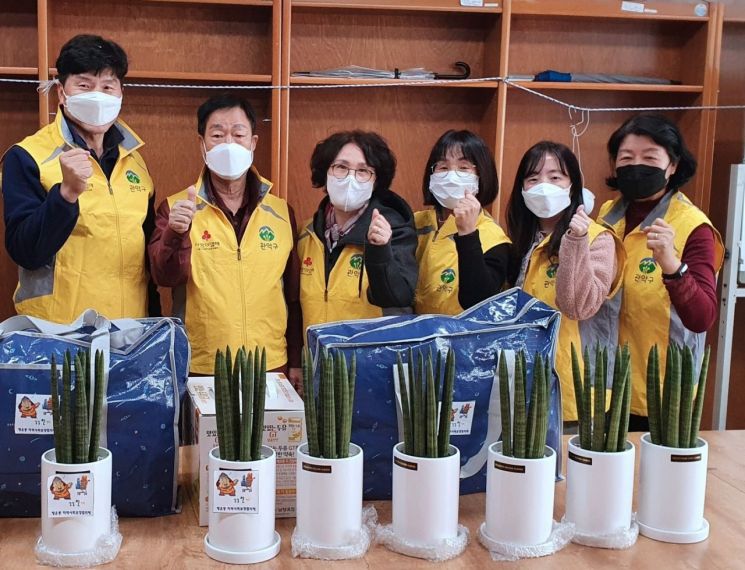
Additionally, a horticultural therapy program is offered to those interested. The program consists of six sessions (1?2 hours each) with a horticultural therapist, aiming to support participants’ cognitive health, emotional well-being, physical health, and social adaptation.
In November, a ‘Companion Plant Art Festival’ will be held. Works related to companion plants, such as photos, paintings, and essays, will be exhibited in the Gwanak-gu Office lobby. Awards will be given to outstanding contributors to foster pride among participants.
The district expects that through companion plant cultivation, recipients will have positive experiences and improve their sense of responsibility and self-esteem.
An official stated, “Companion plants help alleviate loneliness among socially isolated residents such as vulnerable elderly and single-person households. We hope residents gain vitality in daily life through their ‘small companion plant gardens’ at home.”
Seongbuk-gu Public Health Center Provides Age-Specific Drug Misuse Prevention Education
Conducts 40 sessions of outreach education at kindergartens, elementary, middle, and high schools, and welfare facilities by the end of this year
Strengthens education on narcotic-containing drugs like concentration enhancers and appetite suppressants, which have recently caused significant harm to youth
Seongbuk-gu (Mayor Lee Seung-ro) is conducting ‘Drug Misuse Prevention Education’ for residents to raise awareness of the harms of drug misuse and the dangers of harmful drugs.
The Seongbuk-gu Public Health Center will hold 40 educational sessions by the end of this year at kindergartens, elementary, middle, and high schools, and welfare facilities in the area. Instructors from the Seongbuk-gu Pharmaceutical Association and the Korea Drug Prevention Movement Headquarters will provide age-specific education for preschool children, youth, adults, and the elderly.
An official said, “We aim to correct common misconceptions about medicines often encountered online and prevent drug misuse damage. Especially, we recognized the need to strengthen education on narcotic components in concentration enhancers and appetite suppressants that have recently permeated youth daily life.”
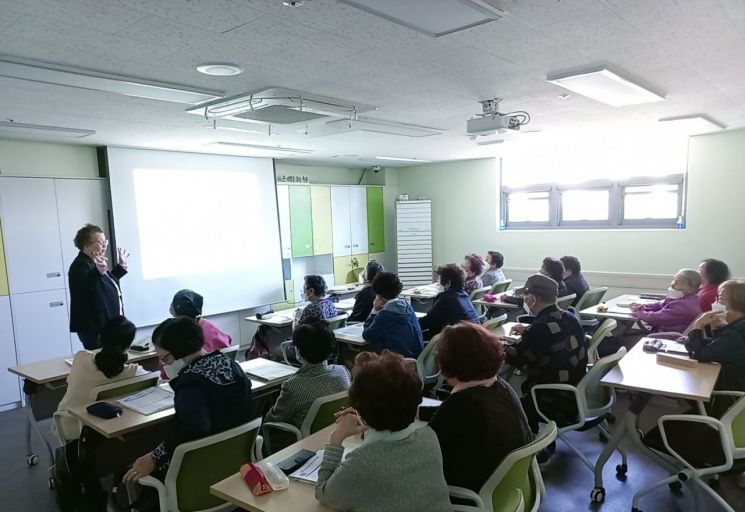
On the 7th, pharmacist Kim Byung-joo from Cham Pharmacy in Jongam-dong, who served as an instructor at Korea University Daesung High School, said, “The education content was designed to help youth understand common and basic components of medicines they easily encounter in daily life and prevent misuse damage.”
For the elderly, who often take more than 10 types of medications, the education focuses on overlapping prescriptions and misuse.
For inquiries about the education content, contact the Pharmaceutical Division of Seongbuk-gu Public Health Center.
Mayor Lee Seung-ro stated, “We will strengthen cooperation with related organizations such as the local pharmaceutical association to ensure residents internalize correct medicine usage knowledge and create a safe environment for medicine use.”
Eunpyeong-gu “Finds Welfare Crisis Households via Registered Mail”
Collaboration between the district and Eunpyeong Post Office for ‘Welfare Registered Mail Service’ to discover welfare blind spots
Delivers welfare information while checking housing conditions... Plans to send to 1,000 households by year-end
Eunpyeong-gu (Mayor Kim Mi-kyung) is launching the ‘Eunpyeong Tomorrow Welfare Registered Mail’ project in cooperation with Eunpyeong Post Office to discover welfare blind spots.
Postal delivery workers deliver welfare registered mail to households suspected of being in crisis, observe housing conditions and living situations, and report back to the district to support welfare blind spot discovery.
From this month until year-end, welfare registered mail will be sent to about 1,000 people to identify welfare blind spots. The registered mail includes information on welfare crisis households, emergency welfare, and welfare hotlines.
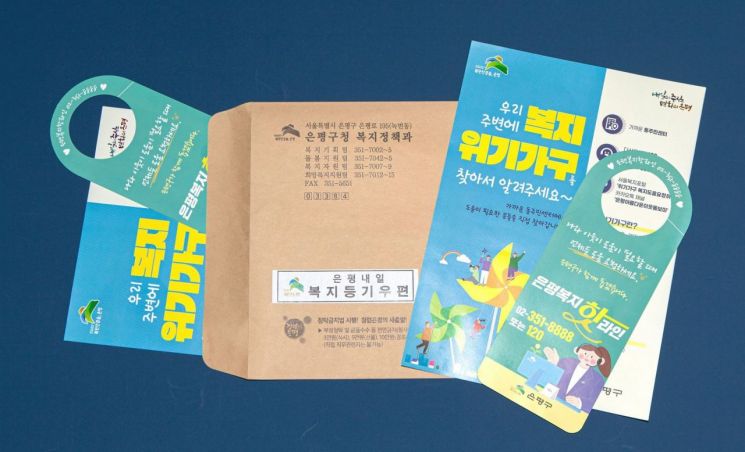
First, the district selects households with high priority for discovery from those flagged by the welfare blind spot detection system for crisis information such as power or water disconnection and utility bill arrears. Postal delivery workers observe whether there are overdue notices or seizure documents in mailboxes and check for long-term absence or actual residence while delivering the mail. If a target is found, they conduct a brief interview about living conditions and report the results to the district.
The local community service center reviews the returned data from the post office and conducts secondary investigations such as visits and phone counseling for crisis households. Subsequently, welfare services such as public benefits and private service linkage are provided. Investigation results are registered in the Social Security Information System for follow-up management.
Additionally, the district operates the one-stop welfare counseling call center ‘Eunpyeong Welfare Hotline’ for thorough crisis household discovery. Recently, ‘Welfare Counseling Center Information’ boards were distributed to 350 local medical institutions including clinics, pharmacies, and dental clinics to encourage reporting of hidden crisis households. Door-hanger leaflets totaling 20,000 copies were also produced and distributed for resident-focused promotion.
Mayor Kim Mi-kyung said, “Resolving welfare blind spots requires residents’ attention to neighbors more than anything else. If you find neighbors in need, please do not hesitate to contact the Eunpyeong Welfare Hotline. We will lead efforts to create a safe city where anyone in crisis can always rely on with more meticulous care.”
© The Asia Business Daily(www.asiae.co.kr). All rights reserved.



















