Exports from 1st to 10th This Month
Overall Employment Increased but Manufacturing Decreased
Production Also Declined Only in Manufacturing
Since October last year, the manufacturing industry has been hit hard by sluggish exports. As production declines, related employment is also decreasing. The government assessed that "the trend of economic slowdown centered on manufacturing continues."
On the 14th, the Ministry of Economy and Finance diagnosed through the "Recent Economic Trends (Green Book) for April 2023" that "Recently, our economy is seeing a slowdown in inflation while domestic demand is gradually recovering mainly through face-to-face activities, but the trend of economic slowdown centered on manufacturing, such as sluggish exports and facility investment, continues."
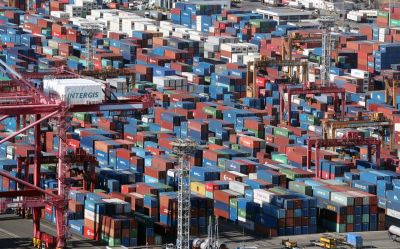
Exports remain sluggish in reality. Exports in March amounted to $55.12 billion, down 13.6% compared to the same month last year. From the 1st to the 10th of this month, exports also decreased by $1.3 billion compared to the same period last year, making it highly likely that the decline will continue for seven consecutive months.
Due to the decrease in exports of semiconductors and others, manufacturing production is also declining. According to the February Industrial Activity Trends, manufacturing production increased in primary metals (5.1%) and chemical products (3.3%), but decreased in semiconductors (-17.1%) and automobiles (-4.8%), resulting in a 3.1% decrease compared to the previous month. The decline has continued for five consecutive months, the longest period on record. In particular, the semiconductor production decline rate is the highest since December 2008 (-18.1%).
Employment in manufacturing has also not escaped the downward trend. In March this year, the number of employed persons aged 15 and over was 28.223 million, an increase of 469,000 (1.7%) compared to the same month last year, but manufacturing employment decreased for three consecutive months. Employment in manufacturing fell by 49,000 from 4.512 million in March last year to 4.463 million.
However, domestic demand is showing signs of recovery. The Consumer Confidence Index (CCSI), a general sentiment index on the economic situation, rose to 92.0 in March, marking the highest level since June last year (96.7). This is interpreted as reflecting expectations for a return to normal life due to reduced inflation and the full lifting of mask mandates. The All-Industry Business Survey Index (BSI), a corporate sentiment indicator, also rose by 3 points to 72 in March compared to the previous month.
Consumption and investment are also increasing. As of February, retail sales rose by 5.3% compared to the previous month, facility investment by 0.2%, and construction investment by 6.0%.
A Ministry of Economy and Finance official said, "Since March, domestic demand itself has continued a gradual improvement trend, but currently, semiconductors remain the most important core factor for economic recovery," adding, "We will focus our efforts on enhancing overall economic vitality and structurally improving the economic system based on firm price and livelihood stability and thorough management of domestic and external risks, including exports, investment, and domestic demand."
© The Asia Business Daily(www.asiae.co.kr). All rights reserved.

















