The U.S. Congress has introduced a bill to block the operations of foreign information and communication technology companies deemed to threaten national security, such as the Chinese video-sharing platform TikTok, sparking growing controversy both inside and outside the United States. Zhou Shouzi, TikTok's Chief Executive Officer (CEO), is scheduled to appear before the U.S. Congress on the 23rd, and diplomatic tensions between the U.S. and China are expected to intensify further.
On the 7th (local time), a bill was introduced in the U.S. Congress granting the executive branch the authority to block foreign information and communication technologies that pose national security threats, including TikTok, from operating in the United States. The bill was jointly introduced by members of both the Democratic and Republican parties, and President Joe Biden also expressed his support, calling it "the most widely supported bill."
◆ "Granting the Department of Commerce Authority to Restrict Security-Threatening Platforms"
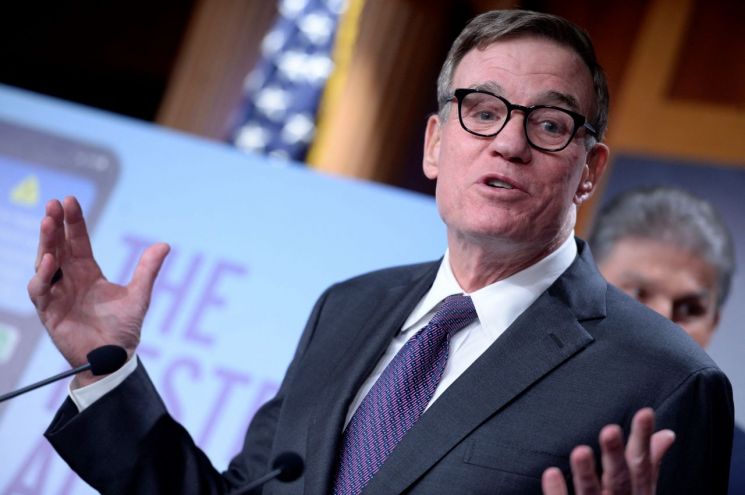
According to Bloomberg and other sources on the 7th (local time), Mark Warner (Democrat), chairman of the Senate Intelligence Committee, and John Thune (Republican) of the Senate Commerce, Science, and Transportation Committee, along with 10 other senators, introduced a bill titled "Limiting the Emergence of Security Threats Posed by Risky Information and Communication Technologies."
The core of the bill is to empower the U.S. Department of Commerce to review transactions involving information and communication technologies that threaten national security and to mitigate risks or block such transactions. If there are concerns about security threats, the bill allows blocking the operations of foreign-owned technologies, software, and even e-commerce platforms.
The primary target is TikTok. However, the bill does not specifically mention TikTok by name. Earlier this month, U.S. Secretary of Commerce Gina Raimondo said in an interview with Bloomberg, "Creating and passing a law that bans a specific company is not the appropriate way to address this issue," adding, "No matter how much we dislike TikTok, this is the United States."
Senator Warner stated, "Today, everyone says TikTok could be used by the Chinese Communist Party for surveillance or to negatively influence U.S. elections, but before TikTok, there were Huawei and ZTE, which threatened U.S. communications networks, and before that, Russia's Kaspersky Lab, which threatened the security of government and corporate equipment."
He further explained, "Instead of a reactive, whack-a-mole approach after risky technologies have already become widespread, we need a proactive, integrated, and risk-based approach to address technologies before they establish a foothold in the U.S."
The Biden administration welcomed the bill and urged its swift passage. Jake Sullivan, National Security Council (NSC) advisor, stated in a press release, "This bill will grant the U.S. government the authority to prevent certain foreign governments from exploiting technology services operating in the U.S. to jeopardize sensitive information of Americans and national security."
He added, "The bill provides a systematic framework necessary to protect the security and safety of Americans from technology-based threats. It will help us respond to the threats we face today and prevent such threats from emerging in the future."
◆ Multiple Bills Introduced, but... "This One Has the Most Support"
Bloomberg assessed, "There have been months of debate over how to restrict TikTok in the U.S., and among bills related to completely banning the Chinese-owned application, this one appears to have the most support."
Several bills to ban TikTok have already been introduced in Congress. On the 1st, the House Foreign Affairs Committee passed a bill granting the Biden administration authority to ban access to the platform nationwide if risks related to U.S. user data are identified. The bill passed with 24 votes in favor and 16 against, facing opposition from all Democrats. The bill included sanctions against foreign companies influenced by the Chinese government, drawing criticism for being excessive.
Republican Senator Mark Rubio also introduced a bill to halt transactions of social media companies with substantial influence from countries considered foreign adversaries of the U.S.
CNN reported, "The bill introduced by Senators Warner and Thune grants broad discretion to the Department of Commerce to recognize and mitigate risks arising from technologies provided by companies associated with foreign adversaries, including China, Russia, Iran, North Korea, Cuba, and Venezuela," and described it as "less prescriptive compared to other bills."
Bloomberg also noted that co-sponsor Senator Thune is considered the second-ranking Republican in the Senate. Considering that the Biden administration initially tried to resolve the issue through a national security agreement limiting TikTok and U.S. user data access but faced Republican opposition, this bill is seen as a measure likely to gain Republican support.
However, The Washington Post (WP) reported concerns that banning an app used by over 100 million Americans to express themselves or consume news could violate the First Amendment, which emphasizes freedom of expression.
◆ Why Is the U.S. Trying So Hard to Block TikTok?
The number of TikTok users in the U.S. is estimated to be around 100 million. The U.S. Congress believes that TikTok accumulates enormous amounts of data due to its large user base. The concern is growing that TikTok could transfer the collected data of Americans to the Chinese government. Additionally, Congress and the government worry that the Chinese Communist Party's ideology could be spread within the U.S. through TikTok.
There has been no concrete evidence that TikTok has handed over user information to the Chinese government. However, last December, controversy arose when employees of TikTok's parent company, ByteDance, were fired after it was revealed they accessed information from foreign journalists, including those from Forbes, during an investigation into a company data leak. Among the four employees dismissed, two worked in China and two in the U.S.
Before drafting the bill, the U.S. government began removing TikTok from government agencies. At the end of last month, the White House ordered all government agencies to delete TikTok from their devices and systems within 30 days. This was to keep U.S. data secure, emphasizing that there are no exceptions to the TikTok ban. This followed a bill passed by Congress last December prohibiting federal employees from using TikTok on government-owned devices.
In addition to the federal government, more than 20 state governments in the U.S. have banned TikTok on government devices, and many U.S. universities have blocked TikTok usage on their Wi-Fi networks.
◆ TikTok CEO to Appear Before U.S. Congress on the 23rd

TikTok is actively defending itself to alleviate U.S. concerns. It claims that its U.S. operations are conducted outside of China's influence and that U.S. user data is managed through cooperation with its U.S. technology partner, Oracle. TikTok has also hired lobbyists to communicate its position to Congress. TikTok reportedly spent $2.1 million (approximately 2.76 billion KRW) on lobbying in the second quarter of last year alone.
TikTok employs thousands of American workers and argues that it is being unfairly subjected to stricter standards compared to other U.S. social media companies.
Zhou Shouzi, TikTok's CEO, is scheduled to appear before the U.S. Congress on the 23rd. At the hearing, he is expected to explain security issues and propose measures regarding oversight. Earlier, in an interview with WP last month, he said, "It would be unfortunate if users worldwide could not hear the voices of American TikTok users."
© The Asia Business Daily(www.asiae.co.kr). All rights reserved.



















