Seoul City and Seoul Metro Announce Estimated Results from the Past Two Years
[Asia Economy Reporter Kiho Sung] Seoul Metropolitan Government and Seoul Metro announced on the 19th that the estimated scale of social damage caused by the subway operation disruption protests by the National Solidarity Against Disability Discrimination over the past two years is approximately 445 billion KRW.
The subway protests by Jeonjangyeon have been prolonged for about two years, causing enormous inconvenience to citizens. The protests, held 82 times from January 22, 2021, to January 3, 2023, have not only disrupted the punctual operation of trains but also seriously threatened safe operation, causing inconvenience to citizens who rely on essential transportation such as commuting and hospital visits.
Due to the 82 subway operation disruption protests, subway operations were suspended for a total of 84 hours. On average, each protest delayed subway operations by 63 minutes, with a maximum delay of 154 minutes. As a result of the protests, 674 trains that should have operated normally did not run, reducing the subway operation rate by 31.4%.
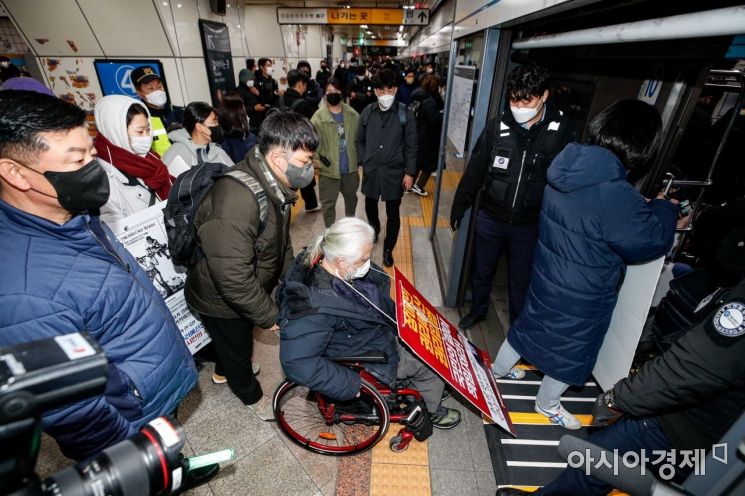 Members of the National Solidarity Against Disability Discrimination continued their subway boarding protest on the 5th of last month at Samgakji Station on Seoul Subway Line 4 in Yongsan-gu, Seoul, urging the expansion of the budget for disability rights. Photo by Kang Jin-hyung aymsdream@
The total social loss cost was calculated to be 445 billion KRW. The damage suffered by train passengers due to the train operation disruption protests was estimated at about 440 billion KRW, and the damage caused by citizens who could not use the trains due to the subway protests was estimated at about 5 billion KRW.
The damage to train passengers was calculated based on the value of hourly labor productivity for passengers commuting during peak hours affected by train operation disruptions, excluding additional citizen damages such as increased transfer times. The damage to citizens who previously used trains but could not use them due to subway operation disruptions was calculated using the average time value for those who gave up using the trains.
Delays and reductions in subway operations led to inconvenience for citizens. Approximately 10.6 million subway passengers were unable to arrive at their destinations on time due to the subway operation disruption protests by the National Solidarity Against Disability Discrimination, and about 1.5 million citizens who normally used the subway before the protests experienced inconvenience by not being able to use the subway, resulting in a total of 12.1 million citizens being affected.
However, the inconvenience felt by citizens is even more severe and difficult to estimate. So far, 9,337 complaints have been filed, and analysis of these complaints revealed that many citizens (including regular office workers, parents raising children, and young adults) experienced hardships such as threats to their livelihoods, disciplinary actions due to frequent tardiness, sudden hearing loss caused by stress, difficulties in sending children to school, and increased economic burdens due to taxi fares. Considering the impact on the lives and industries of metropolitan citizens, the additional social damage is expected to be immeasurably severe.
Meanwhile, the city and Seoul Metro are promoting fare refunds and route guidance for citizens inconvenienced by the subway protests, and are doing their best to respond on-site, such as opening gates to allow boarding of trains on the opposite side when passengers miss their destinations due to non-stop operations.
A Seoul city official stated, “Citizens have endured tremendous suffering due to the subway protests by disability groups over the past two years, and the social damage has grown to an unbearable level. We ask for cooperation in the normal operation of the subway so that no more harm comes to innocent citizens.”
© The Asia Business Daily(www.asiae.co.kr). All rights reserved.

















