Bank of Korea "President Xi Jinping's Third Term, Prolonged Rule Expected to Intensify US-China Conflict"
US Checks on China to Continue After Midterm Elections
Domestic Impact Inevitable in Semiconductor Sector Emerging as Core of Bilateral Conflict
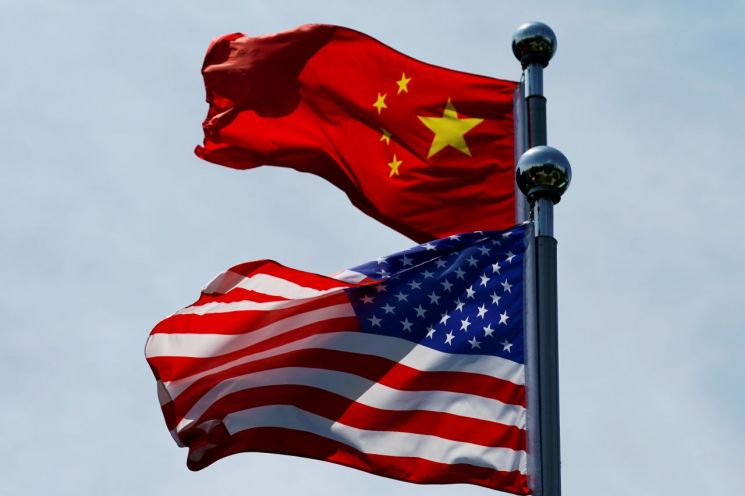
[Asia Economy Reporter Kim Pyeonghwa] As the United States and China continue their hegemony competition in the semiconductor industry, attention is focused on the potential impact on the domestic semiconductor industry as both countries proceed with major political events such as the U.S. midterm elections and the Chinese Party Congress. With the intensification of U.S.-China conflicts, there are forecasts that the U.S. will maintain its regulatory stance against China.
On the 15th, China is preparing for the 20th National Congress of the Communist Party of China, which will be held in Beijing from the 16th to the 22nd (local time). The Party Congress is the largest political event in China, held every five years, where about 2,300 Communist Party representatives gather to elect the next leadership. At this Congress, the third term (2022?2026) of Xi Jinping, the General Secretary of the Party and President of China, is expected to be formalized. This will be the first time since Mao Zedong, regarded as the founding father of modern China, that a Chinese leader has served three consecutive terms.
Earlier, on the 12th, China’s Xinhua News Agency released a communiqu? reporting the results of the 7th Plenary Session of the 19th Central Committee of the Communist Party of China, held in Beijing with 199 Central Committee members and 159 alternate members in attendance. The issues discussed at this 7th Plenary Session will be included as official agenda items at the Party Congress. The session highlighted Xi Jinping’s achievements over the past five years, effectively confirming his third term.
Inside and outside China, there are predictions that Xi Jinping’s one-man rule will be prolonged through this Party Congress. In this case, the U.S.-China conflict is expected to intensify. With the Party leadership composed of conservative figures close to Xi, a tough stance toward the U.S. is likely. Since the U.S.-China hegemony competition is primarily taking place in the semiconductor industry, the market is paying close attention to how changes in China’s political situation will affect the semiconductor sector.
In this regard, the Bank of Korea released a report on the 7th titled "Prospects for the National Congress of the Communist Party of China and Economic Impact," stating, "China is currently responding to U.S. sanctions with localized measures, but there is a possibility that the strengthened conservative leadership will respond with comprehensive multi-faceted sanctions, escalating the conflict." The report also mentioned that "the intensification of confrontation in the semiconductor sector due to China’s strengthened hardline stance could act as a downside risk." It emphasized the need for domestic semiconductor companies to prepare strategies to respond to such impacts.
The U.S. also has a major event approaching. The midterm elections are scheduled for November 8 (local time). These elections select members of the U.S. Congress and public officials and are held midway through the presidential term, so voter sentiment tends to reflect evaluations of the current administration. Amid ongoing challenges such as inflation and economic recession, President Joe Biden has recently been actively pursuing national interests in the battery and semiconductor sectors to boost his approval ratings. In fact, Biden’s approval ratings rose after the administration achieved legislative successes by passing the Chips and Science Act (CSA) and the Inflation Reduction Act (IRA).
Within the semiconductor industry, there is interest in whether the pressure of U.S. semiconductor regulations against China, which has increased around the midterm elections, will be adjusted in scope or speed after the elections. Experts foresee that this expectation may be partially realized but believe the fundamental stance of checking China will continue. There is also a possibility of additional regulations in the second half of next year ahead of the 2024 U.S. presidential election.
Professor Jeong In-gyo of Inha University’s Department of International Trade stated, "The Biden administration’s continuation and strengthening of Trump-era China policies are based on the current international situation and American public perception of China. While policy stances may be slightly adjusted depending on election outcomes, the likelihood of significant impact is low."
Meanwhile, on the 7th, the U.S. Department of Commerce announced controls on exports to China of equipment related to DRAM under 18 nanometers (nm), NAND flash with 128 layers or more, and logic semiconductors under 14 nm. However, these controls will be exempted for one year for Samsung Electronics and SK Hynix, which have semiconductor factories in China.
© The Asia Business Daily(www.asiae.co.kr). All rights reserved.

















