Defense Science Research Institute (ADD) Aviation Test Site Created Through Offset Trade
Shooting Bullets at Air Force Fighter Jet Wings to Determine Crash Risk from Design to Application
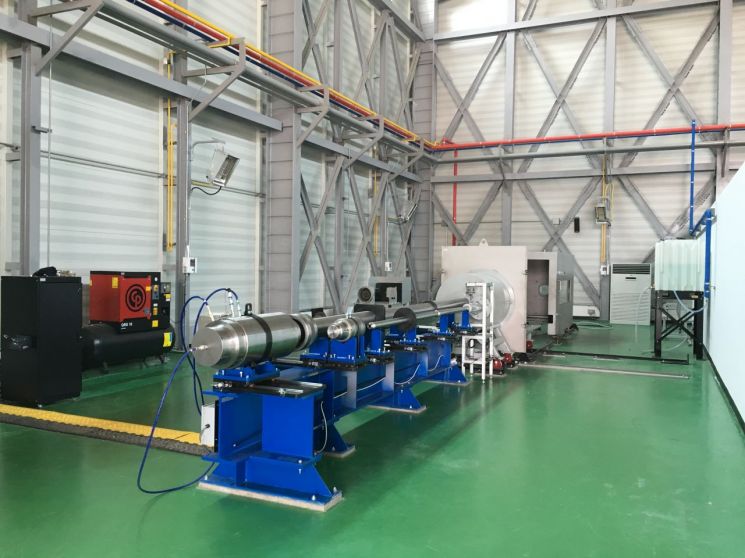 Hydraulic ram gun test equipment for measuring the pressure pushed out from the opposite side of the wing when Tani hits the wing. (Photo by Agency for Defense Development)
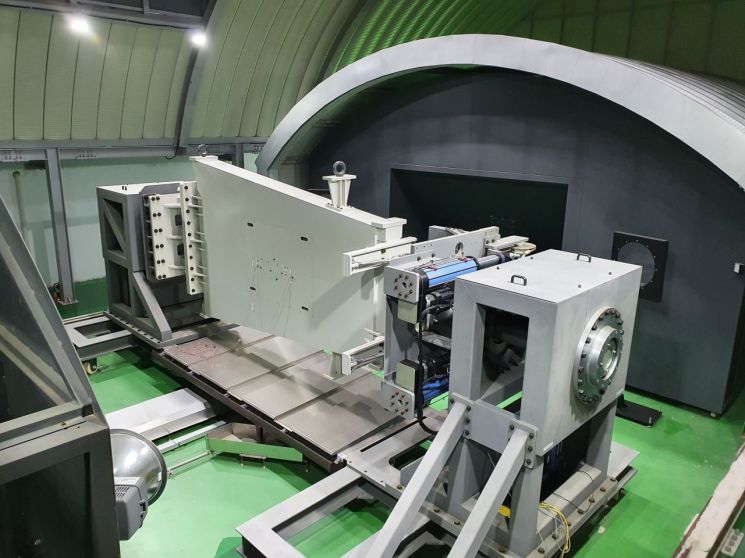 Projectile penetration equipment that fires projectiles producing the same effect as anti-aircraft guns or surface-to-air missiles to determine the extent of damage to fighter aircraft wings. (Photo by Agency for Defense Development)
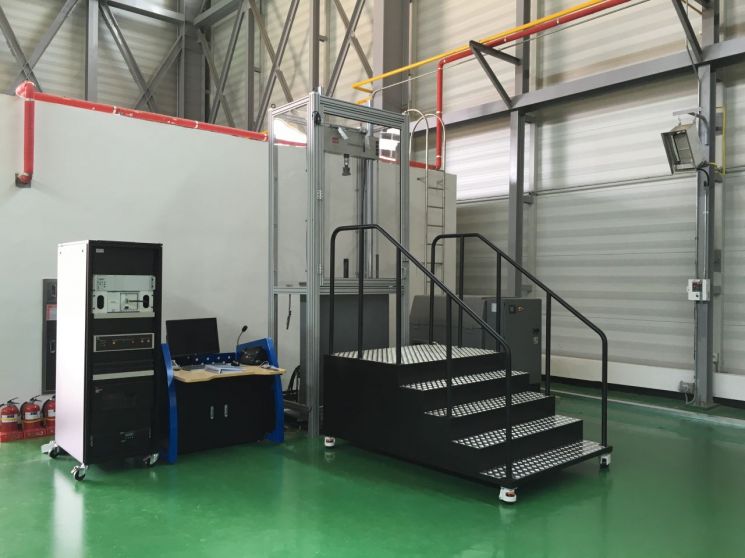 High-strain equipment that tests the degree of deformation by pulling the component material up and down. (Photo by Defense Science Research Institute)
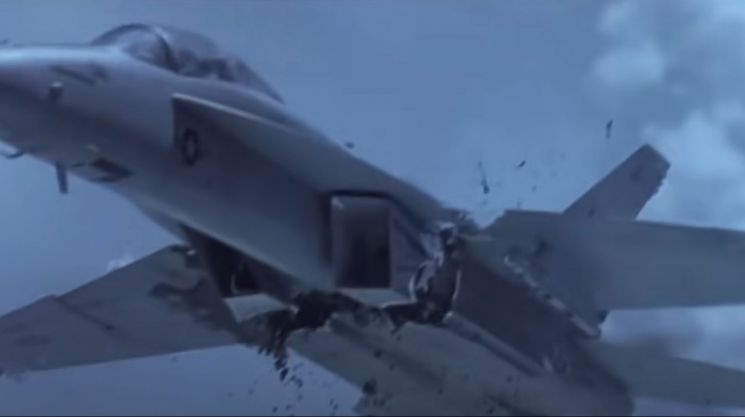 In the movie "Behind Enemy Lines," which depicts the Bosnian War, there is a scene where a US F-16 fighter jet on a reconnaissance mission is shot down by an anti-aircraft missile fired by Serbian militias.
[Asia Economy Yang Nak-gyu, Military Specialist Reporter] The U.S. Department of Defense recently decided to collaborate with big tech companies like Microsoft (MS) and Google to develop command and control systems. This decision is based on the belief that using simulation and AI in the defense sector can streamline combat operations and reduce training costs. The National Security Commission on Artificial Intelligence (NSCAI), an advisory body to the U.S. president, warned in a report last year that "without cooperation with Silicon Valley, we will inevitably fall behind China." This reflects the voice of Eric Schmidt, former Google CEO and chairman of NSCAI. Since then, the U.S. Department of Defense has commissioned Microsoft to supply 120,000 augmented reality headsets and is promoting the Joint Warfighting Cloud Capability (JWCC), which integrates military agency information with AI on the cloud. In South Korea, activities involving virtual reality and simulation are also active. To observe the field, we visited the Defense Acquisition Program Administration (ADD) Aviation Test Center located in Haemi-myeon, Seosan-si, Chungnam Province, and the defense small and medium enterprise Naviworks.
In the movie "Behind Enemy Lines," which depicts the Bosnian War, there is a scene where a U.S. F-16 fighter jet on reconnaissance is shot down by an anti-aircraft missile fired by Serbian militias. The F-16 is hit on its wing by the missile but ultimately crashes due to fire. In advanced countries, when designing fighter jets, experimental results assuming missile hits by the enemy are incorporated into the design. This is to minimize damage to the hit fighter jet so it can complete its mission.
The Survivability Test Building at the ADD Aviation Test Center in Haemi-myeon, Seosan-si, Chungnam, opened in 2016. Our military began developing fighter jets independently but relied heavily on advanced countries like the U.S. for design. The core of the design, aviation testing technology, was the biggest challenge. In 2005, during the Boeing F-15K acquisition project, offset trade was conducted, and our side requested equipment and technology for aviation testing from the U.S. Offset trade refers to a form of trade where, when purchasing weapons or equipment from overseas, domestic parts are exported or related technology is transferred as compensation. The current test building was established based on offset trade technology.
The test building covers 2,079㎡ (629 pyeong) with a ceiling height of 18 meters. Inside, the main test equipment, a projectile penetration test device, caught the eye. It was a dome-shaped structure where the Air Force stores fighter jets. Going down to the basement level 1 inside the test equipment, a fighter jet wing provided by the Air Force was fixed in place. This test site fires projectiles that have the same effect as anti-aircraft guns or missiles to assess the damage to the fighter jet wing. Looking at the front of the wing hit by the projectile, a round penetration mark was clearly visible. On the back side, about 30 cm wide and 20 cm long had broken off. Fighter jets inject fuel inside their wings. If a projectile pierces the wing filled with fuel and enters inside, the internal pressure rises sharply, causing greater damage.
Various Projectiles Fired Depending on Aircraft Type Such as Fighter Jets and Helicopters
Testing Aircraft Materials by Tearing and Strength to Apply from Design Stage
Top Fighter Jets like F-22 Also Designed Based on Test and Simulation Results
Senior Researcher Kim Jong-heon said, "When a projectile penetrates or hits the wing, sparks occur, and if the timing overlaps with the fuel being expelled, the possibility of fire is high. Through these tests and simulations, the results can be applied from the design stage to the wing’s materials and thickness."
Inside the test site, three barrels of calibers 12.7mm, 20mm, and 30mm were prepared. Helicopters use different projectiles than fighter jets. Since helicopters fly at lower altitudes than fighter jets, smaller projectiles are fired for testing. The U.S. Air Force conducts various tests at its own aviation live-fire test site. Applying test and simulation results, they developed the F-22 Raptor and F-35 stealth fighters, known as the "strongest existing fighter jets."
Tests on fighter jet materials were also conducted. Using a high-strain-rate testing device, component materials were pulled up and down to test the degree of deformation. When this test data is applied to simulations, the extent of damage to the fighter jet can be estimated without actual testing. The hydro-pneumatic ram gun test device is a scaled model used to measure the pressure exerted on the opposite side of the wing when a projectile hits the wing. To observe the pressure intensity, a T-shaped aluminum piece was attached to the opposite side of the wing, which bent into a Y shape. This indicates that the pressure is so great that the fighter jet wing inevitably sustains damage.
For the latest U.S. fighter jets, when a 30mm projectile penetrates the wing, no more than five bays (individual cells that make up the wing) can be damaged. Based on such test results, a combat damage manual for fighter jets is created. Fighter jet operating units refer to the Aircraft Battle Damage Repair Technical Order (ABDR T/O) to assess damage and decide whether to continue the mission.
Outside the test building, there was a large circular frame inside a wheeled container box. The frame’s thickness appeared to exceed 20 cm. Clear bomb fragment marks were visible inside this circular frame. Various tests were being conducted by detonating 100g of TNT inside this frame.
On the way out after touring the test site, a KF-16 fighter jet, the main fighter of our Air Force, took off powerfully from Seosan Air Base. It was clear why our military needs to conduct aviation tests to ensure the KF-16 can complete its missions.
© The Asia Business Daily(www.asiae.co.kr). All rights reserved.



















