Increase in Number of Animals May Lead to 'Abandonment'
"Pet Numbers Should Be Limited by Law and Neutering Surgery Education Provided"
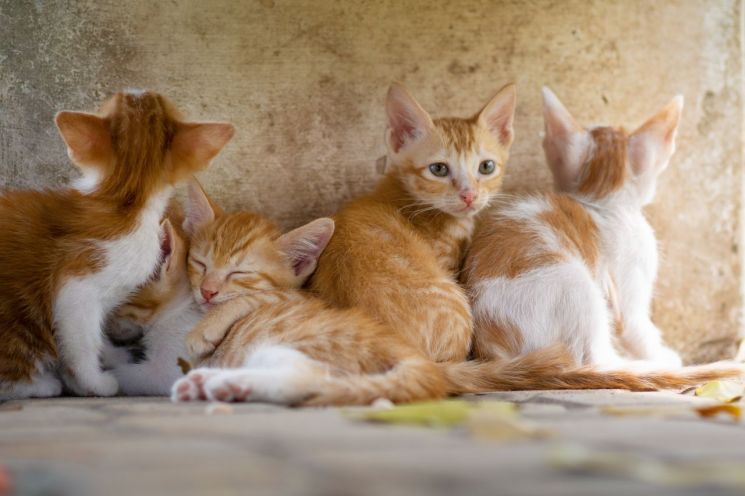 Cases of animals being rescued from poor animal hoarding situations have been increasing, leading to public calls for stricter punishment of animal hoarders. The photo is not related to the specific content of the article. [Image source=Pixabay]
[Asia Economy Reporter Park Hyun-joo] There is a growing call for stronger punishment of animal hoarders?people who compulsively collect animals. These individuals bring in more animals than they can properly care for and then neglect them, leaving the animals in a state of abandonment. Animal protection organizations advise that the issue of animal hoarding is linked to neutering and animal abandonment, and therefore requires a multifaceted approach to find solutions.
Whether someone is an animal hoarder cannot be determined simply by the number of animals they keep. If an individual takes in and cares for animals within their capacity, such as by running a shelter for abandoned animals, having many animals does not constitute animal hoarding. Animal Freedom Coalition cited the U.S. Hoarding of Animals Research Consortium (HARC) to present four criteria for diagnosing animal hoarding: ▲ failure to provide minimal hygiene space, environment, nutrition, and veterinary care ▲ lack of awareness of problems caused by poor management ▲ obsession with increasing the number of animals despite worsening conditions ▲ denial that the living environment for humans and animals is problematic.
Cases of animal hoarding are frequently discovered. According to the Jeju Animal Protection Center and Jeju City on the 29th, 22 Siamese cats were rescued over several days from a house in Jeju city and nearby streets. After a landlord reported that "the tenant disappeared leaving only the cats behind," 14 cats were rescued from inside the house on the 11th, followed by 8 cats rescued from a nearby street. Since all the cats found were Siamese and appeared to be the same breed, they are presumed to have lived together in the same house. Among them, 7 cats died from an infectious disease called parvovirus, and the remaining 15 were handed over to the animal protection center.
Also, in June, 13 cats were found neglected with disease and starvation in Gwangju. According to With, the Gwangju Animal Protection Association, the inside of an approximately 10-pyeong (about 33 square meters) apartment was unsanitary, mixed with filth and mold, and there was no sign of feeding or caring for the cats. Earlier, in January, 32 cats were rescued from a 5-pyeong (about 16.5 square meters) studio apartment in Dongdaemun-gu, Seoul. The cats were hiding in narrow closets and drawers, and the house was filled with trash and cat excrement, creating a harsh environment.
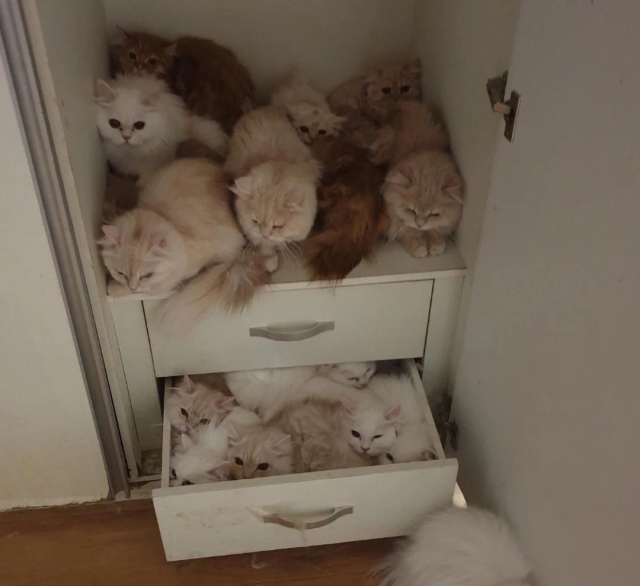 On January 5th, 32 cats were rescued from an officetel in Dongdaemun-gu, Seoul. Photo by the cat protection organization 'Nabiya Saranghae' Instagram capture
Animal hoarding is a complex issue intertwined with neutering education and animal abandonment. Often, a guardian initially rescues one or two abandoned animals, but the number of animals increases uncontrollably due to breeding among unneutered animals. This insufficient education on neutering leads to animal hoarding, and when the number of animals exceeds manageable levels, it can result in abandonment. More than 100,000 abandoned animals occur annually.
Animal protection organizations emphasize that animal hoarding is a clear act of animal abuse. Violating the animal care management obligations set by the Ministry of Agriculture, Food and Rural Affairs?such as failing to provide minimal living space?causing injury or disease to animals can result in imprisonment of up to two years or a fine of up to 20 million won. However, punishment is difficult because a clear causal relationship between abuse, disease, injury, and animal hoarding must be established. It is also challenging to rescue animals if the guardian claims ownership.
Animal Freedom Coalition pointed out, "Animal hoarding is compassion distorted into a harmful obsession that causes suffering for all." In a post titled "Abuse that Started from Compassion, Animal Hoarding" on the 5th, the organization expressed regret that "the rescue, which began with the desire to provide a warm refuge for animals in unfortunate circumstances, ultimately led them to greater suffering," but also stressed that "even if started with good intentions, leaving animals in an environment where even minimal care is impossible is clear abuse."
They further emphasized, "Strict supervision of animal production and sales businesses and strengthening regulations on companion animals are necessary." They also proposed legislation to limit the number of animals kept, as well as education and support for neutering surgeries.
© The Asia Business Daily(www.asiae.co.kr). All rights reserved.


















