Yeongju Buseoksa Anyangru and Beomjonggak Also Announced for Treasure Designation
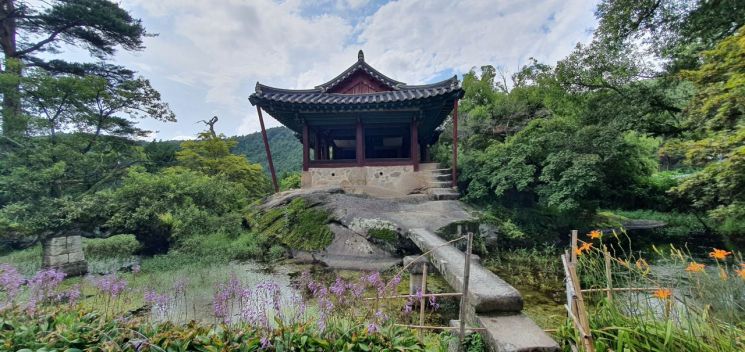
Along with Seokcheonjeong (石泉亭) in Seokcheon Valley, Cheongamjeong (奉化 靑巖亭) in Bonghwa and Anyangru (安養樓) and Beomjonggak (梵鐘閣) of Buseoksa Temple in Yeongju, which are designated scenic spots, will be designated as national treasures. The final decision on the designation will be made after collecting opinions from various sectors for a month and undergoing a review by the Cultural Heritage Committee.
Cheongamjeong is a pavilion located within the ancestral home grounds of the Andong Kwon clan in Bonghwa-gun, Gyeongsangbuk-do. It was built by Kwon Beol (1478?1548), a Joseon Dynasty civil official, who was dismissed during the Gimyo Sahwa purge in 1519 and retired there. The construction period is recorded as 1526 in the "Cheongamjeonggi (1682)" and "Seonsaeng Suseomokpyeonsik (1724)." Cheongamjeong is considered a representative example of the residential culture of the yangban (aristocratic) class. In the 16th century, yangban who retired from official positions built private residences in the form of pavilions near their homes or in scenic locations for personal longevity (reading books and studying) and erudition (studying while resting). This was called gageo (家居). Cheongamjeong was built on a turtle-shaped flat rock. Considering the limited space and uneven floor, a high palace-style foundation was constructed, and the floor was filled to install a wooden floor and ondol (underfloor heating). The Cultural Heritage Administration explained, "Among the 'T'-shaped pavilions distributed throughout Gyeongsang Province, this is the earliest example." It was evaluated as having outstanding historical, artistic, and academic value due to its main structures, including windows, retaining characteristics from before the 17th century.
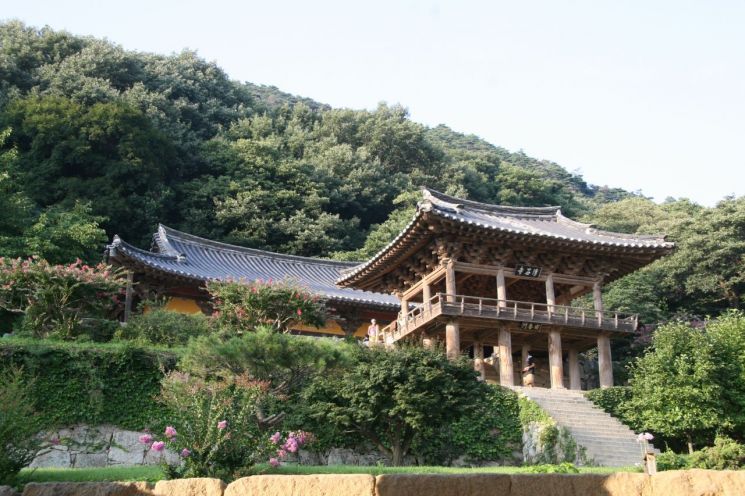
Buseoksa Temple in Yeongju is a UNESCO World Heritage site. The gate pavilion, Anyangru, is located in front of the Muryangsujeon Hall of Buseoksa. It is a two-story structure with three bays in front and two bays on the side, featuring a multi-bracketed (dapo) hipped-and-gabled roof style, and is cited as a representative example of 16th-century temple gate pavilion architecture. The dapo style refers to an architectural method where bracket sets are placed above and between columns. According to "Gyeamillok (1615)" and "Buseoksa Anyangru Jungchangi (1644)," Anyangru was built on the site of Gangungak, a single-story building destroyed by fire in 1555. The Cultural Heritage Administration stated, "It is deemed to have sufficient treasure value due to the layout that bends the temple's entrance axis to lead into the Muryangsujeon area, the style of entering under the pavilion floor, and the techniques of bracket and main beam construction characteristic of the mid-Joseon period and earlier."
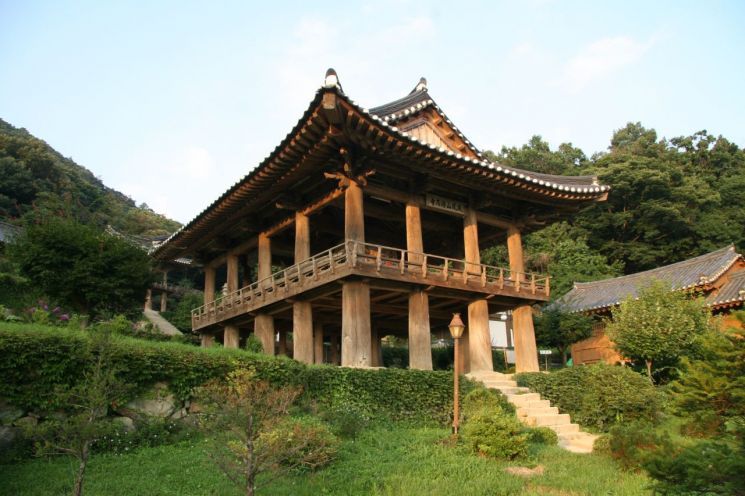
Nearby, Beomjonggak is a bell pavilion building with a two-story structure, three bays in front, and four bays on the side, featuring a multi-bracketed (ikgong) hipped-and-gabled roof style. A bell pavilion refers to a pavilion where a large bell is hung. Beomjonggak is recorded as "Jongnu (鍾樓)" and "Jonggak (鐘閣)" in "Gyeamillok" and "Buseoksagi (1651)." According to "Buseoksa Jonggak Jungsugi (1746)," it was destroyed by fire in 1746 and rebuilt the following year. Records such as "Cheongnyangsan Yurok (1780)" mention the presence of a metal bell, but its whereabouts have been unknown since the 19th century. Notable features include the passage through the middle bay of the lower floor leading via stairs to Anyangru, and the decorative floral-patterned hwarancho (vine-shaped) brackets called hwaban placed between the roof brackets to support the weight. The Cultural Heritage Administration evaluated, "The interior of the roof still retains dancheong (traditional multicolored paintwork) believed to be from the reconstruction period, confirming its significant historical, artistic, and academic value."
© The Asia Business Daily(www.asiae.co.kr). All rights reserved.



















