Expansion of Commercial Area from Yeongdong Bridge North End to Hwayang Intersection in Gwangjin-gu, Followed by Zoning Upgrade Promotion Around Junggok-dong to Kickstart Regional Development
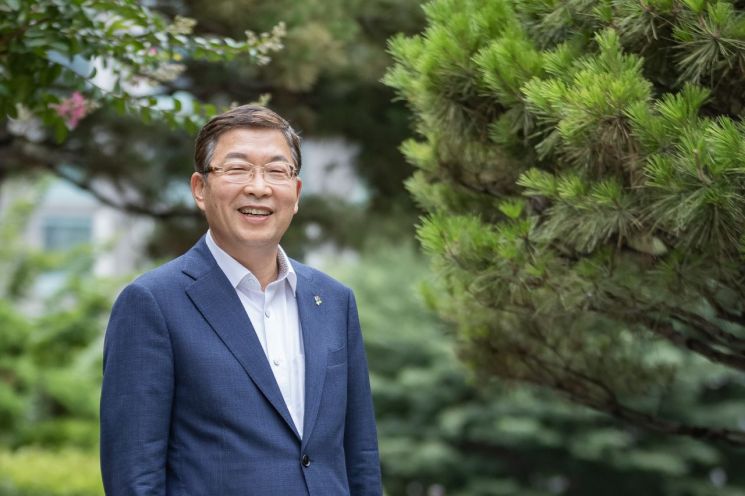
[Asia Economy Reporter Park Jong-il] Kim Kyung-ho, Mayor of Gwangjin District, is intensifying efforts to enhance the value of the Gwangjin area.
Mayor Kim has prepared a draft revision of the district unit plan to expand the commercial area from the north end of Yeongdong Bridge to Hwayang Intersection, Hwayang-dong 50-beonji, promoting the development of a "commercial specialized center," and to upgrade the zoning around Junggok Station to foster it as a medical specialized hub.
This marks a significant step toward genuinely increasing the value of Gwangjin-gu. Mayor Kim’s determination to upgrade zoning within the district, which previous mayors could not achieve, is being demonstrated through action, and it is expected to be warmly welcomed by local residents.
In particular, as Mayor Kim was selected by Mayor Oh Se-hoon and elected as the head of Gwangjin District, it is urgent for him to establish the foundation for regional development during Mayor Oh’s tenure.
Accordingly, Mayor Kim’s activities for the development of Gwangjin-gu are expected to accelerate.
◆Expansion of Commercial Area from North End of Yeongdong Bridge to Hwayang Intersection, Hwayang-dong 50-beonji
The district announced the “Urban Management Plan (Dongil-ro District Unit Plan Area and Plan) Decision (Draft) and Strategic Environmental Impact Assessment Report (Draft)” on July 28 to expand the commercial area from the north end of Yeongdong Bridge to Hwayang Intersection, Hwayang-dong 50-beonji, and promote the development of a “commercial specialized center.” Public viewing and opinion collection from residents were conducted for two weeks until August 11.
The district unit plan area of the urban management plan decision (draft) is the “Dongil-ro District,” covering 89,597㎡ around Hwayang-dong 50-beonji, stretching from the north end of Yeongdong Bridge to Hwayang Intersection.
The “Dongil-ro District” serves as a central axis at the north end of Yeongdong Bridge, connecting Gangnam downtown and the northeastern area, as well as Seongsu IT District and Konkuk University Station.
The district aims to strengthen the central functions of the Seongsu and Konkuk University areas by upgrading the zoning of the “Dongil-ro District” to commercial and semi-residential areas, fostering it as a high-density mixed-use specialized center, inducing the placement of insufficient convenience and support facilities, and activating streets to expand youth-centered knowledge, culture, and community spaces.
◆Creation of Comprehensive Medical Complex in Junggok Station District
Additionally, the district unit plan area for Junggok Station District covers approximately 410,000㎡ around Junggok Station, where the National Mental Health Center and Health and Welfare Administration Town are located, forming a comprehensive medical complex.
The public notice contents focus on ▲ fostering a new center to strengthen the Junggok district center function and expanding the district unit plan area ▲ upgrading zoning to semi-residential areas through special planning zones ▲ activating medical business and living medical functions along Neungdong-ro and living medical function centers along Myeonmok-ro ▲ designating special zones for joint development to improve residential environments.
Through this plan (draft), Junggok-dong in Gwangjin-gu intends to develop Neungdong-ro as an axis for medical industry and business advancement and set Myeonmok-ro as an axis for living medical and neighborhood commercial development, nurturing it as a medical specialized hub with close proximity between workplaces and residences.
Moreover, by adjusting zoning, the district plans to realize mixed-use development linked to the comprehensive medical complex, expand insufficient living SOC such as roads and parks, and create a livable residential environment, thereby implementing a systematic revitalization policy for the Junggok area.
The district will reflect residents’ opinions gathered through the public viewing, establish the plan, actively consult with Seoul City, and aims to revise and decide the Junggok Station District unit plan by the end of this year.
In the future, the district plans to actively promote proactive urban redevelopment for the development of Junggok-dong, Gwangjin-gu through expanding public parking lots in Junggok-dong, newly establishing a district unit plan for Neungdong-ro, and mixed-use development of large idle sites (Hwayang Substation).
Kim Kyung-ho, Mayor of Gwangjin District, said, “Although Junggok-dong in Gwangjin-gu is home to the nation’s first comprehensive medical complex, it remains significantly underdeveloped compared to other areas. Through the revision of the Junggok Station District unit plan, we plan to expand the area around Junggok Station as a medical function specialized and commercial business permissible area, developing it into a new medical specialized center.”
© The Asia Business Daily(www.asiae.co.kr). All rights reserved.

















